

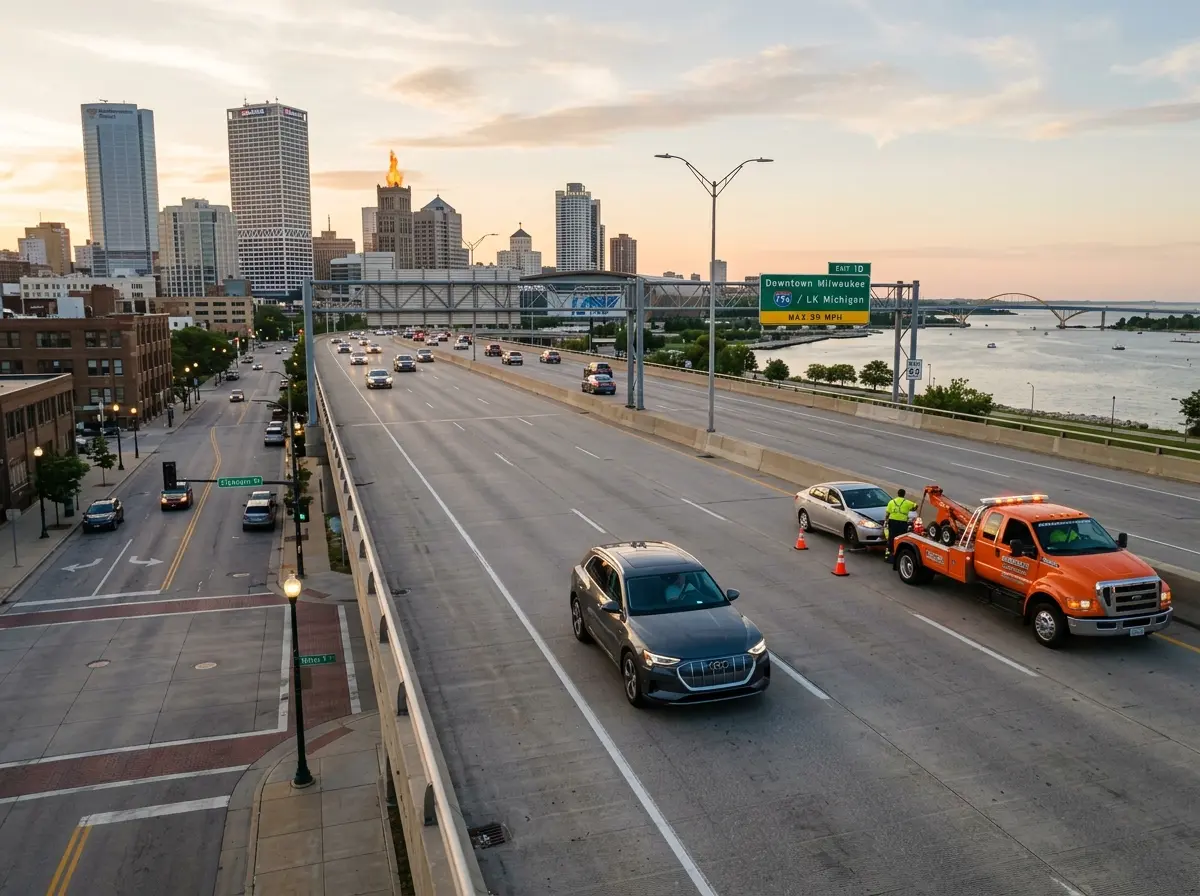
Milwaukee is not a forgiving city for unprepared drivers. Between the bone-chilling winters that turn roads into ice rinks, the spring potholes that can swallow a tire whole, the congestion on I-94 during rush hour, and the mix of urban intersections and rural county roads just 20 minutes outside the city, driving in Milwaukee demands a level of skill, preparation, and situational awareness that you simply don’t need in most American cities.
We put this guide together because we respond to preventable roadside emergencies every single day. At MG Towing & Recovery, our team of locally based towing and roadside professionals has seen firsthand what happens when Milwaukee drivers aren’t prepared for what this city’s roads can throw at them. A bald tire on a snowy overpass. A battery that gave out in a parking garage at midnight. A fender-bender at a notorious intersection that could have been avoided entirely.
This is the most comprehensive road safety and driving guide written specifically for Milwaukee, Wisconsin. We cover general safe driving practices that every driver should know, the unique challenges of driving in Milwaukee’s traffic and road conditions, a deep-dive into winter driving safety, what to do in a breakdown or accident, and what to look for in vehicle maintenance before trouble finds you.
Whether you’ve been driving Milwaukee streets for 30 years or just moved here from somewhere with a friendlier climate, there’s something in here for you.
Related Articles:
Guide to Emergency Roadside Assistance in Milwaukee
Guide to Towing and Recovery in Milwaukee
Understanding Milwaukee’s Roads — What Makes This City Different
Before we get into driving tips, it’s worth understanding what makes Milwaukee’s road environment uniquely challenging. This isn’t just a general driver safety guide, it’s written for these specific roads, these specific weather conditions, and these specific hazards.
The Highway Network
Milwaukee’s highway system is anchored by I-94, I-43, I-894, and US Highway 45, which converge in and around the city in a system that becomes severely congested during morning and evening rush hours.
The Marquette Interchange where I-94, I-43, and I-894 meet is one of the busiest interchanges in the state and a frequent site of accidents and breakdowns. Elevated sections of these highways are among the first to ice over in winter, often before road crews can treat them.
The Pothole Problem
Milwaukee’s freeze-thaw cycle is brutal on road surfaces. Water seeps into cracks, freezes and expands, and tears the pavement apart from the inside. Every spring, Milwaukee roads are riddled with potholes that can cause tire blowouts, bent rims, and suspension damage.
The worst-affected corridors are typically on Milwaukee’s north and south sides, on secondary streets that don’t get the same maintenance priority as major arterials.
If you hit a pothole hard enough to blow a tire or damage your vehicle, you can actually file a damage claim with the City of Milwaukee provided you can document that the pothole was previously reported and not repaired within a reasonable time. Keep a note of the location and date.
The Neighborhoods
Milwaukee is a city of distinct neighborhoods, and road conditions vary dramatically between them. Major corridors like Wisconsin Avenue, Capitol Drive, and Bluemound Road carry heavy traffic and have been improved in recent years.
Side streets in older residential neighborhoods can be narrow, poorly lit, and slow to be plowed after snowfall. Knowing the character of the roads in different parts of the city helps you adjust your driving accordingly.
Core Safe Driving Practices Every Milwaukee Driver Needs
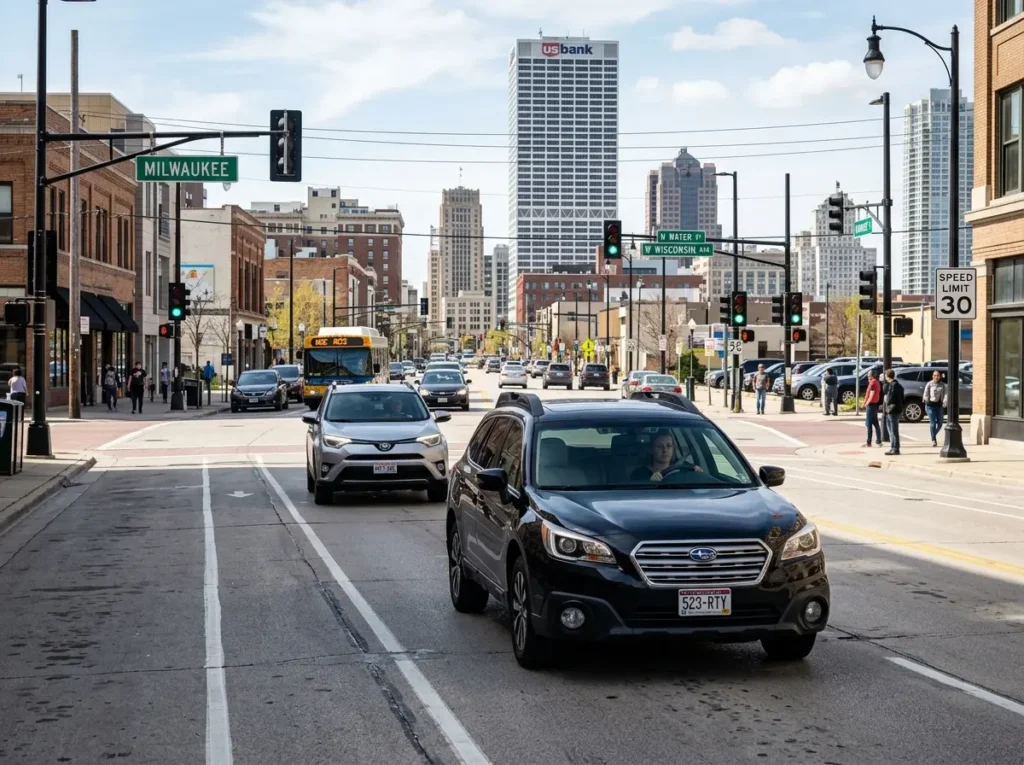
Good road safety habits are the foundation that everything else builds on. These aren’t new concepts but they are practices that are regularly ignored on Milwaukee roads, and their absence causes real accidents every day.
1. Following Distance
The standard rule is the three-second following distance pick a fixed point ahead, watch the car in front pass it, and count three seconds before you pass the same point.
In wet conditions, extend that to six seconds. On snow or ice, double it again. Milwaukee rush hour traffic regularly compresses following distances to dangerous levels on I-94 and I-43, and rear-end collisions are the predictable result.
2. Distracted Driving
Wisconsin law prohibits texting while driving, and Milwaukee traffic enforcement actively monitors for phone use at intersections. Beyond the legal risk, the practical reality is that at 40 mph, looking at your phone for two seconds means traveling the length of a basketball court without watching the road. In a city with pedestrians, cyclists, and frequent stop-and-go traffic, that’s an unacceptable risk.
3. Speed Management
Speed limits in Milwaukee are enforced, and speed cameras have been deployed at high-risk school zones and corridors across the city in recent years. More importantly, posted speed limits represent safe speeds for ideal road conditions.
In rain, snow, fog, or heavy traffic, the safe speed is whatever allows you to stop in the distance you can see which is often significantly lower than the posted limit.
4. Intersection Awareness
Milwaukee has several intersections with historically high accident rates. Among them: North Avenue and Teutonia Avenue, Capitol Drive and Sherman Boulevard, and multiple points along Fond du Lac Avenue.
Approach busy Milwaukee intersections with extra caution especially at night, in winter, and when visibility is limited. Look both ways before entering, even on a green light. Red-light running remains a serious problem in Milwaukee.
Winter Driving in Milwaukee — The Complete Survival Guide
If there’s one section of this guide that could save your life, this is it. Winter driving in Milwaukee is the single biggest driving challenge in this city. Between November and March and sometimes into April, Milwaukee roads can transform from a normal urban driving environment into an extremely high-risk situation within a matter of hours.
We respond to more roadside emergencies, accident scenes, and vehicle recoveries during winter months than at any other time of year. Most of them are preventable.
Before You Leave the House: Winter Driving Preparation
- Clear all snow and ice from your entire vehicle, not just the windshield. Snow flying off your roof onto the vehicles behind you is dangerous and can result in a citation in Wisconsin.
- Allow extra time for your engine to warm up in extreme cold, particularly if your vehicle is older or has known battery or oil issues.
- Check your tire pressure before every winter drive. Cold temperatures drop tire pressure significantly overnight, and underinflated tires dramatically reduce traction on snow and ice.
- Confirm your windshield wiper fluid is rated for winter temperatures. Standard wiper fluid freezes at 32°F and becomes useless on a Wisconsin winter day.
- Know where you’re going and check road conditions via the Wisconsin DOT 511 system before you leave.
Driving on Icy Roads: What Works and What Doesn’t
Black ice is Milwaukee’s most dangerous winter driving hazard. It forms when moisture on the road surface freezes into a transparent layer that’s nearly invisible, especially at night. It concentrates on bridges, overpasses, shaded areas, and low-lying sections of road where cold air pools.
On Milwaukee’s highway network, the elevated sections of I-94 through downtown and the approaches to the Hoan Bridge are notorious black ice locations.
On ice, everything about your driving must change:
- Reduce speed dramatically even 5 mph on black ice can mean the difference between stopping safely and sliding through an intersection.
- Increase following distance to at least 8 to 10 seconds. Stopping distances on ice can be 10 times longer than on dry pavement.
- Accelerate and decelerate gently. Sudden inputs braking hard, accelerating quickly, turning sharply cause wheels to lose traction on ice.
- If you start to skid, steer into the skid. Counterintuitive but correct turn the wheel in the direction the rear of the car is sliding toward.
- Do not pump anti-lock brakes (ABS). Apply firm, steady pressure and let the system do its job.
Driving in Snowstorms: Milwaukee Blizzard Protocol
Milwaukee averages over 45 inches of snowfall per year, with individual storms capable of dropping 6 to 12 inches or more in a single event. Heavy snowfall reduces visibility, covers lane markings, fills potholes and makes them invisible, and dramatically reduces traction even with good tires.
The honest advice for driving in a Milwaukee blizzard is simply this: if you don’t have to drive, don’t. But when you must be on the road in severe snow:
- Keep your headlights on and use low beams in heavy snow, high beams reflect off snowflakes and reduce visibility further
- Follow the tracks of vehicles ahead of you, as they indicate where the road is
- Avoid passing snowplows they move slowly for good reason and the road immediately behind them is vastly safer than what’s ahead
- Know Milwaukee’s snow emergency routes. When a snow emergency is declared, vehicles parked on designated routes are towed. Move your car before the emergency begins.
- Keep your gas tank at least half full in winter. A full tank adds weight over the rear wheels for better traction, and ensures you won’t run out of fuel if you get stuck in traffic during a storm.
AWD and 4WD: The Most Common Winter Driving Misconception
All-wheel drive and four-wheel drive dramatically improve your ability to accelerate on slippery surfaces. They do absolutely nothing to improve your ability to stop.
This misconception that AWD makes you safe on ice is responsible for a significant number of winter accidents in Milwaukee every year. Drivers with AWD vehicles approach icy roads at normal speeds, need to brake, and discover that stopping distance is exactly the same as any other vehicle.
AWD is an advantage. It is not a substitute for winter tires, reduced speed, and appropriate following distance.
What to Do If Your Car Breaks Down in Milwaukee?
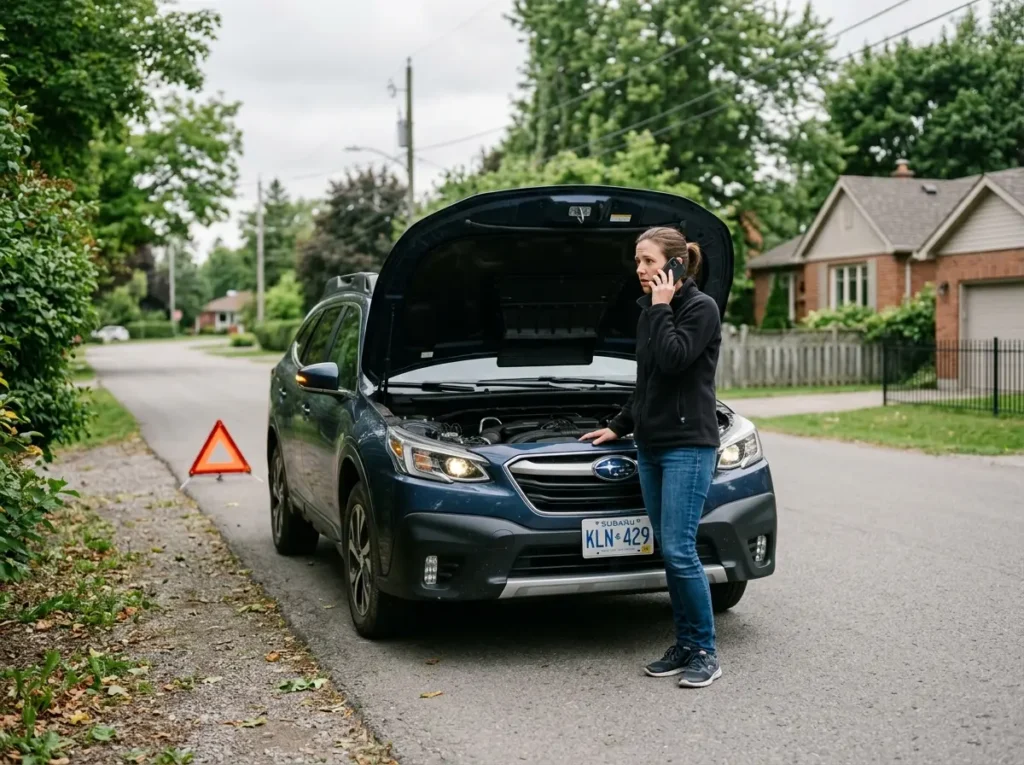
No amount of preparation completely eliminates the possibility of a vehicle breakdown. Knowing how to respond in the first few minutes of a breakdown is critical especially on Milwaukee’s busy highways where the shoulder is narrow and traffic moves fast.
Immediate Steps When Your Car Breaks Down
- Signal and move right immediately. As soon as you recognize a problem engine warning light, loss of power, strange noise, flat tire, activate your turn signal and steer toward the right shoulder. Do this calmly and gradually, not suddenly.
- Get as far off the road as possible. The further from the travel lane you can get, the safer you are. On I-94, even a few extra feet of separation from traffic makes a significant difference.
- Turn on your hazard lights immediately. This is the single most important thing you can do for your safety. Wisconsin law requires hazard lights when a vehicle is stopped on or near the roadway.
- Stay in your vehicle if you’re on a highway. The inside of your car even a broken-down car provides significant protection from passing traffic. Do not stand behind or beside your vehicle on a high-speed highway.
- Note your exact location. Identify the highway, direction of travel, nearest exit or mile marker, and any visible landmarks. This information gets help to you faster.
- Call for emergency car help. Contact MG Towing & Recovery at (414) 973-1902 for fast roadside assistance or emergency towing in Milwaukee.
Roadside Emergency Safety on Milwaukee Highways
If you must exit your vehicle for example, to retrieve a spare tire from the trunk, do so only from the side of the car that faces away from traffic. Move quickly, stay aware of approaching vehicles, and return to the vehicle or move well away from the roadway as soon as possible. Never stand between your vehicle and the travel lane.
If you have road flares or LED safety triangles, place them 100 to 200 feet behind your vehicle in the travel lane direction to warn approaching drivers. In darkness or poor visibility conditions, this can prevent a secondary accident involving your stationary vehicle.
What to Do After a Car Accident in Milwaukee?
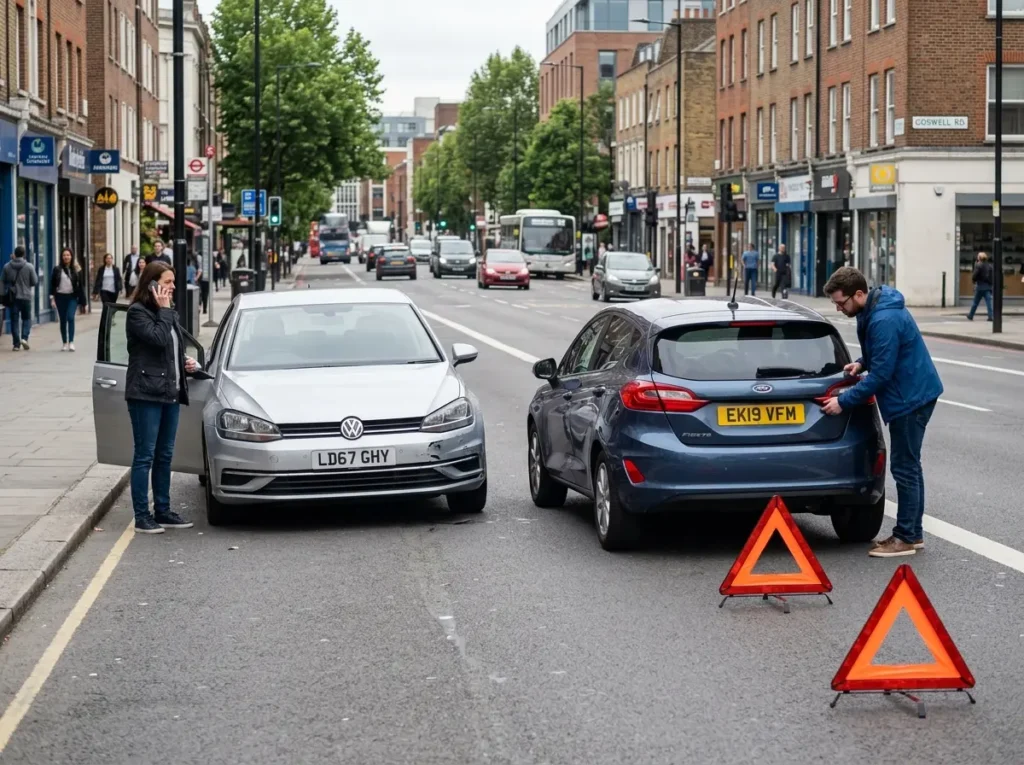
Milwaukee traffic safety statistics consistently show thousands of reported crashes per year across the city. Knowing what to do in the immediate aftermath of an accident before you call your insurance company, before you call a tow truck, can protect your safety, your legal rights, and your wallet.
- Check for injuries first. Your safety and the safety of any passengers comes before anything else. If anyone is injured, call 911 immediately.
- Move vehicles out of traffic if safe to do so. In Wisconsin, if your vehicles are drivable and the accident is minor, you are required to move them out of the travel lane. This prevents secondary accidents.
- Turn on hazard lights and secure the scene. Place flares or triangles behind the vehicles if available.
- Call the police. For any accident involving injury, significant vehicle damage, or an uncooperative driver, call Milwaukee Police Department or the Wisconsin State Patrol if on a highway. A police report is important for insurance purposes.
- Exchange information. Get the other driver’s name, contact information, license plate, insurance company, and policy number. Take photos of both vehicles, the scene, and any visible damage.
- Do not admit fault. Even if you think you may have contributed to the accident, do not say so at the scene. Fault is determined by the insurance companies and, if necessary, the courts.
- Call for accident towing if needed. If either vehicle is not drivable, you’ll need emergency towing in Milwaukee. MG Towing & Recovery responds to accident scenes across Milwaukee County and can transport your vehicle safely.
Vehicle Maintenance for Safe Driving in Milwaukee — What to Check Before Winter Hits
Most of the roadside emergencies we respond to in Milwaukee have one thing in common: they were preventable. A battery that should have been replaced six months ago. Tires with 2/32 of tread depth in January. Brakes that had been grinding for weeks. Regular vehicle maintenance for safe driving isn’t glamorous, but it’s the single most effective way to reduce your risk on Milwaukee roads.
Tire Safety Tips for Milwaukee Drivers
Your tires are the only part of your vehicle actually touching the road. Everything else steering, braking, acceleration happens through four contact patches roughly the size of your hand. Tire condition is the most important safety variable on any vehicle.
- Tread depth: The legal minimum in Wisconsin is 2/32 of an inch, but for safe winter driving you want at least 4/32. Test it with a quarter insert it into a tread groove with Washington’s head down. If you can see the top of his head, your tires are at or below 4/32 and need replacement before winter.
- Tire pressure safety tips: Check your tire pressure monthly and before any long drive. The correct pressure for your vehicle is on the sticker inside the driver’s door frame, not the maximum pressure listed on the tire sidewall.
- Winter tires: All-season tires are a compromise. If you drive regularly in Milwaukee winter conditions, dedicated winter tires which remain pliable in cold temperatures and have aggressive tread patterns designed for snow and ice provide dramatically better traction than all-seasons below 45°F.
- Tire rotation: Rotate your tires every 5,000 to 7,500 miles to ensure even wear across all four tires.
Checking Brakes Before Winter
Braking distance on ice and snow is already dramatically longer than on dry pavement. Worn brake pads or rotors make it even longer. If you hear squealing, grinding, or clicking when you apply the brakes, get them inspected immediately don’t wait until after the first snowfall.
Most mechanics recommend having your brakes inspected every fall as part of a pre-winter vehicle safety inspection. Brake pad replacement is inexpensive compared to the cost of an accident caused by inadequate stopping power on an icy Milwaukee road.
Battery Maintenance for Cold Weather
Car batteries are rated in Cold Cranking Amps (CCA) the measure of how much power the battery can deliver at 0°F. As batteries age, their CCA rating degrades. A battery that meets its rated specs at room temperature may fall well short when it’s negative ten degrees in a Milwaukee parking garage in January.
Have your battery tested every fall, particularly if it’s more than three years old. Most auto parts stores will test your battery for free. If the battery is showing reduced capacity, replace it before winter not after it leaves you stranded in a snowstorm.
Also check your battery terminals for corrosion the white or blue-green buildup that appears at the connections. Corroded terminals increase electrical resistance and can cause starting problems even with a healthy battery.
When You Need Help on Milwaukee Roads — MG Towing & Recovery Is Ready
We’ve covered a lot of ground in this guide because safe driving in Milwaukee genuinely requires this much knowledge. The city’s winters are serious. Its roads have real hazards. And breakdowns happen to even the most prepared drivers.
When they do, MG Towing & Recovery is the locally owned Milwaukee towing and roadside company that Milwaukee drivers trust. We know every road in this guide personally. We’ve pulled vehicles out of every ditch, restarted batteries on every highway, and responded to accident scenes at every major intersection we’ve mentioned here.
Our team is available 24 hours a day, 7 days a week, every day of the year including during the worst winter storms Milwaukee can produce. We offer emergency towing in Milwaukee, full roadside assistance services, accident recovery, snow and ditch recovery, and everything else a Milwaukee driver might need on the side of the road. Save our number right now, before you need it: (414) 973-1902. We’re the team you want already in your phone when something goes wrong on a Milwaukee road.
Frequently Asked Questions About Driving in Milwaukee
Below are some of the most frequently asked questions from our valued clients in Milwaukee.
How do I check road conditions in Milwaukee before driving?
The Wisconsin DOT 511 system (dial 511 or visit 511wi.gov) provides real-time road conditions, construction alerts, and winter weather information for roads across the state including all Milwaukee-area highways. The City of Milwaukee also provides snow emergency alerts through its website and local news stations.
Are winter tires required by law in Wisconsin?
No, winter tires are not legally required in Wisconsin. However, they are strongly recommended for Milwaukee drivers who regularly drive in winter conditions. All-season tires lose significant traction below 45°F, and dedicated winter tires can reduce stopping distances by up to 25% on snow and ice compared to all-seasons.
What is a Milwaukee snow emergency and what does it mean for drivers?
A Milwaukee snow emergency is declared when significant snowfall requires priority plowing of designated emergency snow routes. When a snow emergency is active, vehicles parked on snow emergency routes are subject to towing. Emergency routes are marked with signs and the declaration is announced through local media, the city’s website, and social media. Check Milwaukee’s snow emergency status at city.milwaukee.gov.
How often should I have my vehicle inspected for winter in Milwaukee?
We recommend a dedicated pre-winter vehicle safety inspection every fall ideally in October before temperatures drop consistently below freezing. This inspection should cover battery health, tire tread and pressure, brake condition, wiper blades, coolant level and freeze rating, and all exterior lights. Many Milwaukee mechanics and auto parts stores offer seasonal inspection services.
Is it safe to warm up my car in a garage in winter?
No. Running a vehicle in an enclosed or partially enclosed garage even with the garage door open can cause dangerous carbon monoxide buildup. Carbon monoxide is odorless and colorless, and CO poisoning can occur very quickly. Always move your vehicle outside before warming it up.
What should I do if I slide off the road during a Milwaukee winter storm?
Stay in your vehicle unless it is in a dangerous location such as a travel lane or near a hazard. Turn on your hazard lights. Keep the exhaust pipe clear of snow if your engine is running. Call for professional ditch recovery or roadside emergency assistance do not attempt to rock the vehicle free on an icy surface. MG Towing & Recovery provides 24/7 snow recovery and ditch recovery services across Milwaukee and surrounding Wisconsin communities.
How do I report a pothole in Milwaukee?
Potholes on City of Milwaukee streets can be reported through the Milwaukee 311 app or by calling 414-286-CITY (2489). For potholes on state highways (I-94, I-43, I-894, US-45), contact the Wisconsin DOT. Reporting potholes not only gets them repaired faster it creates a public record that may be relevant if your vehicle is damaged.
Closing Thoughts — Milwaukee Roads Demand Milwaukee-Ready Drivers
Driving safely in Milwaukee isn’t just about following the rules, it’s about understanding the specific environment you’re operating in. The winters here are serious. The roads have real character. And the gap between a prepared driver and an unprepared one becomes very visible the first time a real winter storm rolls through and the highways fill with cars that shouldn’t have been out in the first place.
Use this guide as a reference. Share it with new Milwaukee drivers in your life. Check your tires before November. Keep your battery tested. And save a local towing and roadside assistance number in your phone before you need it.
MG Towing & Recovery — (414) 973-1902 — available 24/7, every day of the year, for every roadside emergency Milwaukee roads can create.