

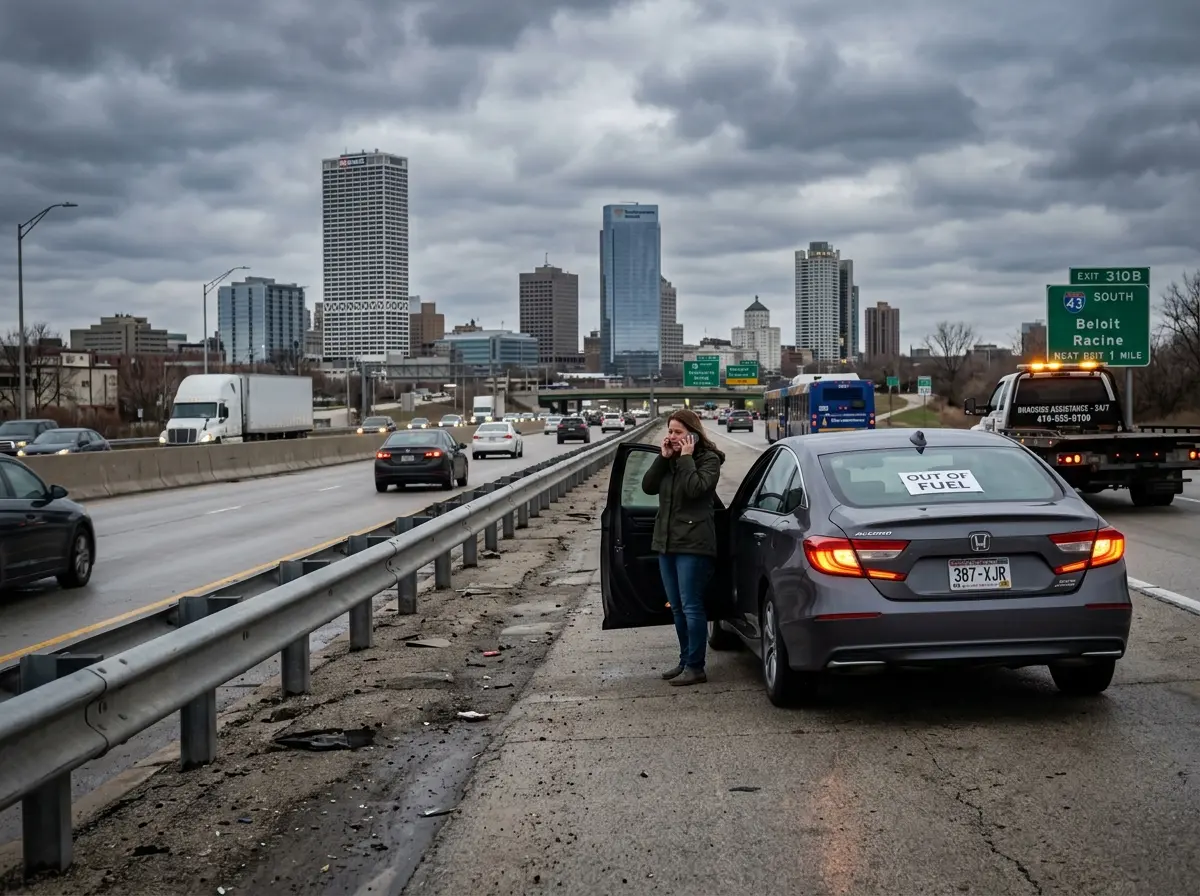
Your Complete Safety Guide to Running Out of Gas in Milwaukee – From the First Warning Sign to Getting Back on the Road
You knew the fuel gauge was getting low. You told yourself you would stop at the next station. Then the next one. Then traffic on I-94 slowed to a crawl, and somewhere between downtown Milwaukee and the interstate interchange, your engine sputtered, coughed, and died. Or maybe it happened faster a gauge that read a quarter tank five miles ago and deceived you right up to the moment the car stopped moving.
Running out of gas on a Milwaukee highway is more common than most drivers want to admit. It happens to experienced drivers, cautious drivers, and drivers with perfectly maintained vehicles.
Life gets busy, routes change unexpectedly, and modern fuel gauges can be less accurate than drivers assume. The important thing is not that it happened it is what you do in the next two to five minutes that determines whether this becomes a minor inconvenience or a genuine roadside emergency.
This guide covers exactly what to do if you run out of gas on a Milwaukee highway or city road: the immediate safety steps, who to call, what to expect from emergency fuel delivery, how much it costs, how insurance may cover it, and most importantly the practical habits that prevent it from happening again. Whether you are stranded right now or reading this to prepare for the future, this is the guide you need.
Related Article: What to Do If Your Car Breaks Down in Milwaukee?
The Warning Signs Before You Run Out of Gas
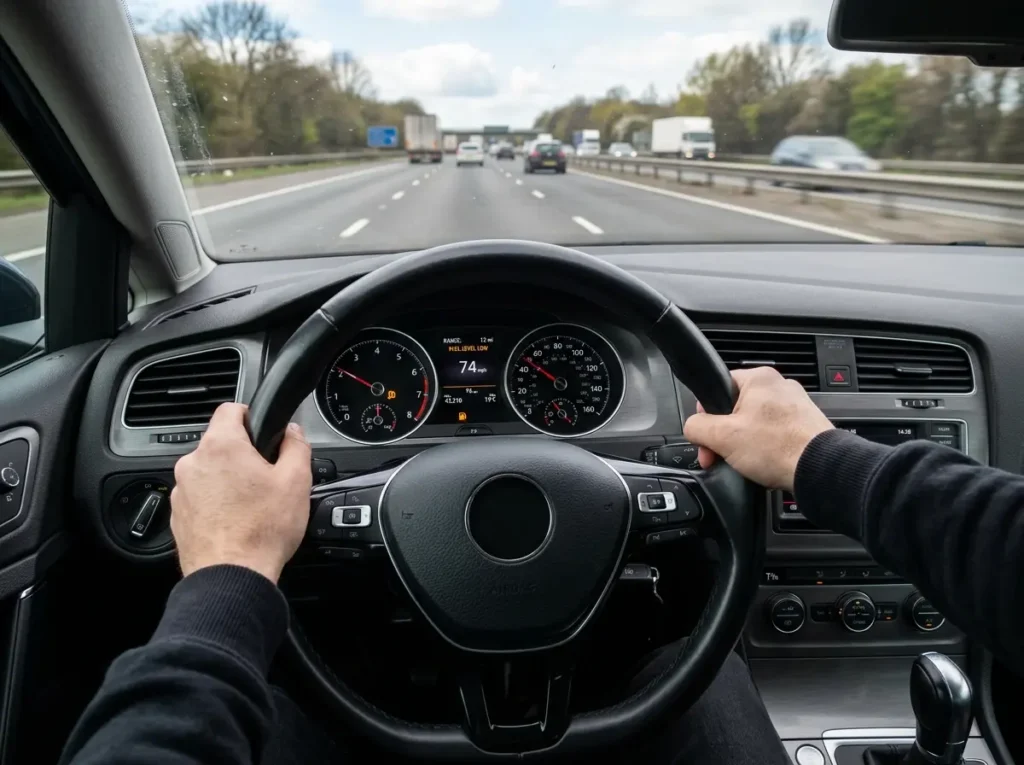
Most drivers who run out of gas on a Milwaukee highway do not do so suddenly. There is almost always a series of warning signs that were noticed, acknowledged, and then rationalized away. Understanding these signs and taking them seriously is the first layer of prevention.
Your Fuel Warning Light Is Not a Suggestion
Every modern vehicle has a low fuel warning light that illuminates when the tank drops to a critical threshold typically between 10 and 15 percent of total capacity, which translates to roughly one to three gallons depending on your tank size. For most vehicles, this means you have somewhere between 25 and 50 miles of driving remaining when the light first comes on.
That buffer sounds generous until you factor in Milwaukee traffic. On I-94, I-43, or I-894 during rush hour, an unexpected backup can consume those 25 to 50 miles of fuel far faster than the distance traveled suggests.
Highway idling and stop-and-go traffic are significantly less fuel efficient than steady-speed driving, meaning your actual remaining range when the warning light activates in heavy traffic may be substantially less than the estimate.
Treat the fuel warning light as an instruction, not a suggestion. When it illuminates, your next stop should be a gas station not the next convenient one, but the very next one you can safely reach.
Signs Your Car Is About to Run Out of Gas While Driving
In the final moments before a vehicle runs completely dry, most engines give a handful of physical cues that experienced drivers recognize:
- Sputtering or hesitation during acceleration, the engine struggles to maintain power as fuel delivery becomes inconsistent
- Surging engine RPMs without corresponding acceleration, a sign of fuel starvation in the combustion cycle
- The vehicle seems to lose power gradually rather than cutting out suddenly, particularly noticeable on highway on-ramps or inclines
- The engine cuts out briefly then restarts, a common pattern in the final moments before a complete stall
- Complete engine cutout, power steering and power brakes both become significantly harder to operate at this point
If you experience any of these symptoms and your fuel gauge is at or near empty, act immediately. Do not wait to confirm the problem. Begin moving toward the shoulder.
| Your Power Steering and Brakes Still Work But Differently: When your engine cuts out from fuel starvation, your power steering pump and power brake booster stop working. The steering wheel will feel dramatically heavier, and the brake pedal will require much more force than normal. Do not panic manual steering and braking still function, they just require more physical effort. Stay calm, apply firm and steady brake pressure, and steer toward the shoulder gradually. |
Step-by-Step: What to Do Immediately After Running Out of Gas
The thirty seconds after your engine cuts out on a Milwaukee highway are the most important. How you handle this moment determines whether the situation stays manageable or escalates into something genuinely dangerous. Follow these steps in order.
- Do not panic: A sudden loss of engine power at highway speed is alarming, but your vehicle can still be steered and braked. Stay focused.
- Activate your hazard lights immediately: This should be the very first thing you do, even before steering toward the shoulder. Other drivers need to know something is wrong.
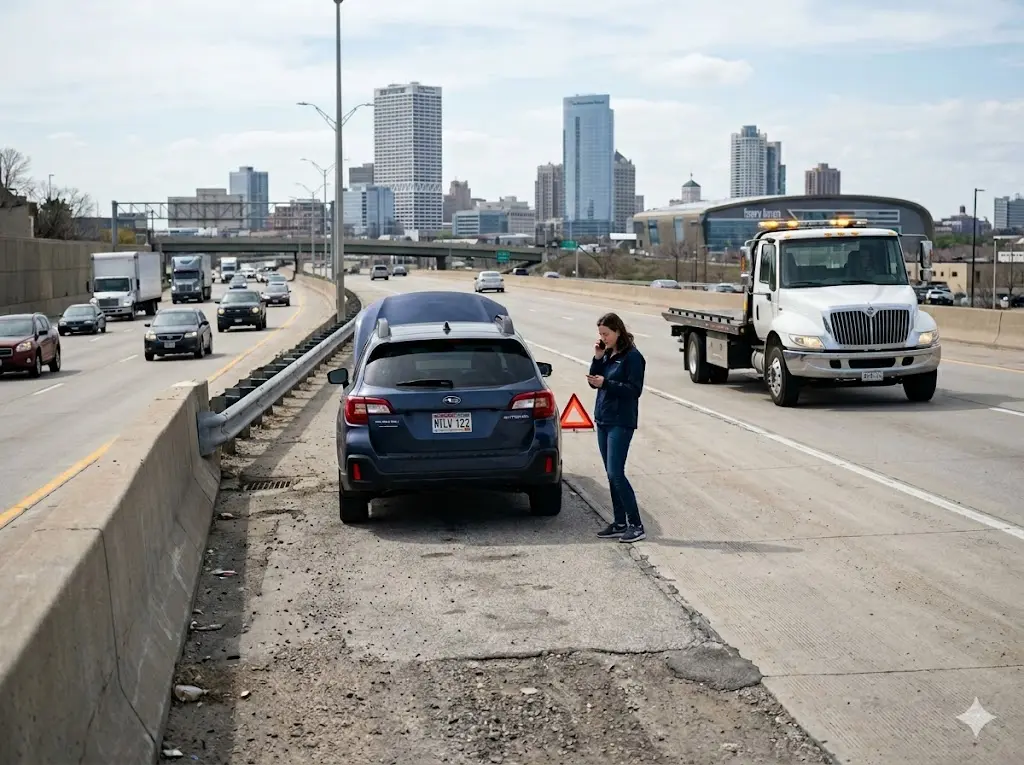
- Steer gradually toward the right shoulder: Do not make sudden movements. Use the vehicle’s remaining momentum to coast as far off the active traffic lanes as possible. Even a partial exit from the traffic lane dramatically reduces your risk.
- Apply the brakes firmly but not suddenly: Remember that without engine power, brake assist is reduced press the pedal with deliberate, steady force rather than a light tap.
- Stop as far from active traffic as possible: On Milwaukee highways like I-94, I-43, and I-894, the shoulder may be narrow. Get as close to the right-side barrier or guardrail as you safely can without striking it.
- Parking Brakes: Apply your parking brake once stopped on the shoulder.
- Warning triangles or Road flares: If you have warning triangles or road flares in your vehicle, place them behind your car at 50 to 100-foot intervals to alert approaching traffic. This is especially important at night or in low-visibility conditions.
- Stay inside your vehicle with your seatbelt on: A highway shoulder is one of the most dangerous places to stand. Remain in the car unless you smell fuel or smoke in which case, exit through the passenger side away from traffic and move well clear of the vehicle.
- Inform: Call for emergency fuel delivery or roadside assistance from inside the vehicle.
| Do NOT Walk Along the Highway to Find Gas: Walking along a Milwaukee highway shoulder to search for a gas station is extremely dangerous and should never be attempted. Highway shoulders have no pedestrian protection, visibility is limited, and drivers often do not expect to encounter pedestrians on high-speed roads. Stay with your vehicle, stay inside, and call for fuel delivery. Help can reach you faster than you can walk to safety. |
Calling for Emergency Fuel Delivery in Milwaukee
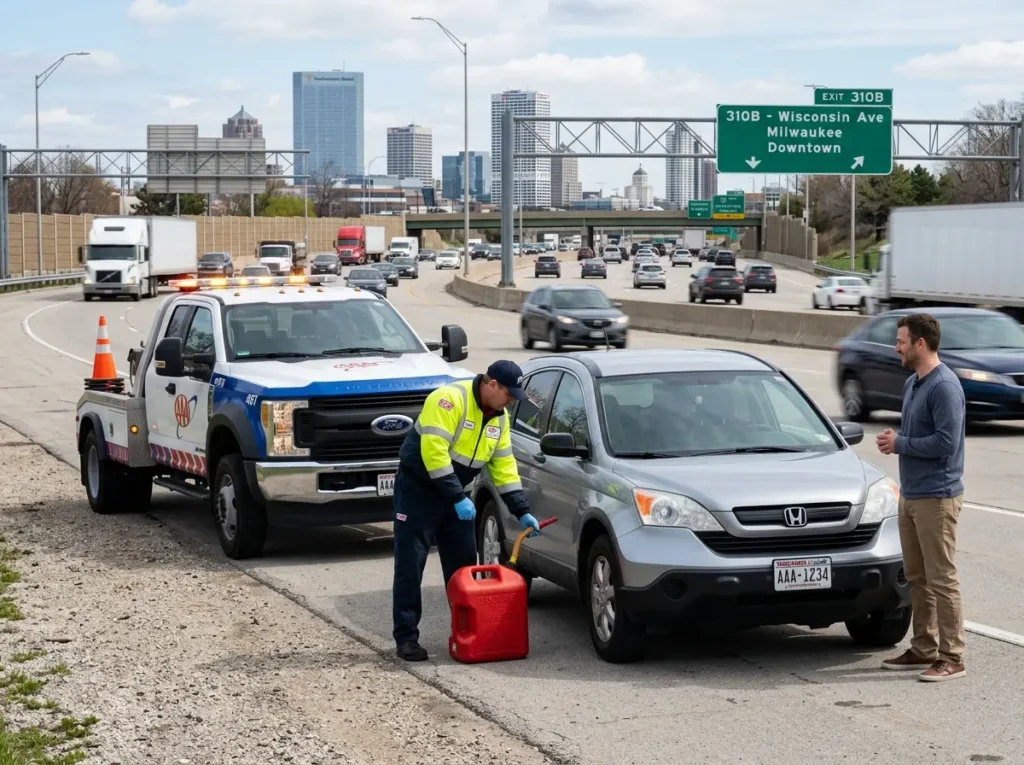
Once you are safely stopped on the shoulder with your hazard lights on, your next action is to call for emergency fuel delivery. This is the fastest, safest, and most practical solution to being out of gas on a Milwaukee highway and it is far simpler than most drivers expect.
Who to Call for Emergency Gas Delivery in Milwaukee?
You have several options for getting fuel delivery in Milwaukee, ranging from local roadside providers to national membership plans:
- MG Towing & Recovery: A local Milwaukee roadside assistance provider offering 24/7 emergency fuel delivery across the city and surrounding metro area. Local dispatch means faster response times than national programs routing through distant call centers. One call brings fuel directly to your location.
- Your auto insurance roadside assistance line: If your policy includes a roadside assistance endorsement, running out of gas is a covered service. Check your insurance card for the 24/7 roadside number many insurers cover fuel delivery with no out-of-pocket cost or a small copay.
- AAA: Wisconsin AAA members can call for fuel delivery as part of their membership benefits. Response times vary by location and time of day.
- Credit card roadside assistance: Some premium credit cards include complimentary roadside assistance that covers fuel delivery. Check your card’s benefits portal before winter.
What to Tell the Dispatcher When You Call?
When you call for out of gas roadside assistance, give the dispatcher the following information clearly:
- Your exact location, the highway name, nearest mile marker, exit number, or cross street visible from your position. If you are unsure, open your maps app and share your GPS coordinates.
- The direction you are traveling, northbound, southbound, eastbound, or westbound so the driver can approach from the correct direction
- Your vehicle’s make, model, year, and color so the technician can identify your car quickly on a busy highway shoulder
- Your fuel type regular gasoline, premium gasoline, or diesel. This is critical. Putting the wrong fuel in your vehicle can cause serious and expensive engine damage.
- Any safety concerns, is it dark? Is traffic fast and heavy? Are you near a curve with limited sight distance? This information helps the dispatcher prioritize your call.
How Long Will Emergency Fuel Delivery Take in Milwaukee?
For a local Milwaukee provider like MG Towing & Recovery, typical response times for emergency fuel delivery in the metro area range from 30 to 45 minutes. Response times can be longer during peak traffic hours, severe weather events, or when multiple calls are being handled simultaneously.
During Milwaukee’s worst winter storms, response times may extend, another reason to call immediately rather than waiting to see if help arrives on its own.
National roadside programs that dispatch through central call centers rather than local providers typically have longer response times, particularly in weather events when local contractors are at full capacity. A local Milwaukee roadside provider consistently outperforms national dispatch in response speed for Milwaukee locations.
| While You Wait: Stay inside your locked vehicle with your seatbelt on and your hazard lights flashing. Do not accept rides from strangers who stop to offer help wait for the professional service you called. If the location feels unsafe or you feel threatened at any point, call 911 in addition to your roadside provider. |
What Happens During an Emergency Fuel Delivery Service?
If you have never used a gas delivery service before, knowing what to expect removes any uncertainty from the process.
What the Technician Brings?
An emergency fuel delivery technician arrives with a portable fuel can or tank containing enough gasoline or diesel to get your vehicle to the nearest filling station typically one to three gallons. This is not a full tank fill-up. The purpose of emergency fuel delivery is to provide enough fuel to restart your engine and drive safely to a gas station where you can fill the tank completely.
Make sure you communicate your fuel type when you call. Gasoline and diesel vehicles are not interchangeable, and putting diesel in a gasoline vehicle or gasoline in a diesel vehicle can cause serious and expensive engine damage that emergency fuel delivery does not cover. If you are uncertain of your fuel type, check the fuel door on your vehicle, your owner’s manual, or the labeling near the fuel cap.
The Delivery Process
When the technician arrives, they will verify your vehicle and location, confirm your fuel type, add the fuel to your tank, and help you restart the engine. In most cases the restart is immediate once fuel is added though if the vehicle has been sitting for an extended period, it may take a few extra cranking attempts as fuel pressure is restored to the fuel lines.
Once the engine is running, drive directly to the nearest gas station to fill up completely. Do not attempt to continue your journey on the emergency fuel alone the one to three gallons delivered is a minimum for safe travel to a station, not a comfortable driving reserve.
What If the Engine Does Not Restart?
On rare occasions, a vehicle that has run completely dry may not restart immediately after fuel is added. This can happen when:
- The fuel pump ran dry and needs a few minutes to reprime wait two to three minutes with the ignition in the ON position (not cranking) to allow the pump to pressurize the fuel system before attempting to start
- The vehicle has a vapor lock condition, less common in modern fuel-injected vehicles but possible in hot weather
- There is an underlying mechanical issue beyond the empty tank in which case the vehicle may need to be towed to a repair shop
A professional technician can assess whether the vehicle should restart normally with the added fuel or whether a tow is the appropriate next step. MG Towing & Recovery provides both fuel delivery and towing services, so if the situation requires transitioning from fuel delivery to a tow, one call still handles everything.
Out of Gas in Milwaukee? We Bring Fuel to You — 24/7. MG Towing & Recovery – Emergency Fuel Delivery & Roadside Assistance, Milwaukee Area
Cost of Emergency Fuel Delivery in Milwaukee
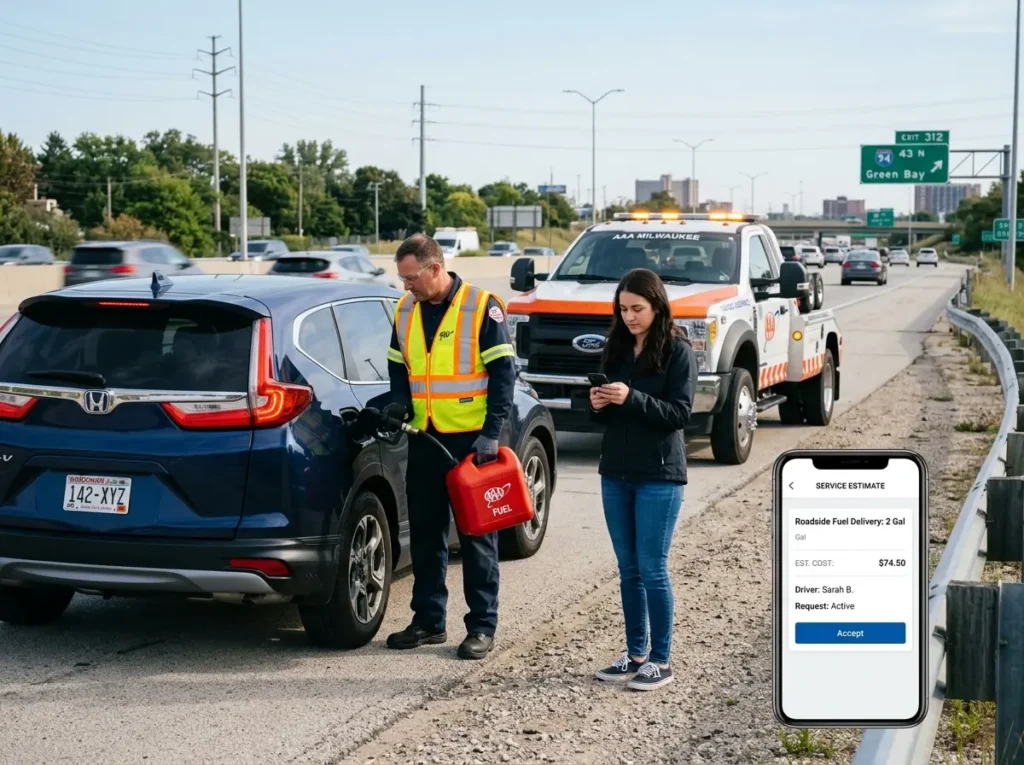
One of the most common questions drivers ask when calling for gas delivery service is how much it will cost. The answer is generally less than most people expect particularly compared to the cost and hassle of being towed.
Typical Fuel Delivery Cost Breakdown
| Service Component | Typical Cost | Notes |
| Emergency fuel delivery service fee | $40 – $80 | Base service call charge |
| Cost of fuel delivered | $5 – $15 additional | 1–3 gallons at current pump price |
| After-hours / late-night surcharge | $15 – $35 additional | Nights, weekends, major holidays |
| Total typical daytime cost | $45 – $95 | Service fee + fuel included |
| Total typical after-hours cost | $60 – $130 | With surcharge applied |
| Covered by roadside add-on insurance | Often fully covered | Check your per-incident limit |
| Covered by AAA membership | Often fully covered | By membership tier |
Is Emergency Fuel Delivery Covered by Insurance?
For drivers with a roadside assistance endorsement on their auto insurance policy, emergency fuel delivery is typically a fully covered service. The service call fee and the cost of the fuel delivered are both covered up to the policy’s per-incident limit which for most standard roadside add-ons is sufficient to cover the full cost of a standard local fuel delivery.
AAA membership covers emergency fuel delivery as well, with the fuel itself either provided at no charge or at a nominal cost depending on membership tier.
Credit card roadside benefits vary widely some cover fuel delivery in full, others cover only the service call and not the fuel cost. Always confirm the specifics of your coverage by calling the number on the back of your card or insurance card.
| Affordable Roadside Assistance in Milwaukee: Adding a roadside assistance endorsement to your auto insurance policy is one of the best values in personal finance for Milwaukee drivers. The annual premium for roadside coverage typically costs between $36 and $120 per year less than the cost of a single out-of-pocket fuel delivery call. If you do not currently have this coverage, add it before Milwaukee’s next winter season. |
Can I Walk to a Gas Station and Bring Fuel Back?
Technically yes but practically, this is often a poor choice, and on a Milwaukee highway shoulder, it can be a genuinely dangerous one.
Walking along a high-speed highway shoulder exposes you to real traffic risk, particularly in low visibility, at night, or in winter conditions. A gallon gas can carried back to your vehicle on foot also requires having a gas can available, which most drivers do not carry.
The cost of professional emergency fuel delivery in Milwaukee is modest, the response time is fast, and it keeps you safely inside your vehicle while help comes to you. In almost every scenario, calling for fuel delivery is faster, safer, and more practical than attempting to retrieve fuel on foot.
Milwaukee-Specific Highway Considerations
Running out of gas in Milwaukee carries some location-specific factors that drivers should understand. Milwaukee’s highway network and surrounding conditions create a set of considerations that go beyond a generic highway breakdown guide.
Milwaukee’s Busiest Highways and Their Shoulder Conditions
Milwaukee’s primary interstate corridors I-94, I-43, I-894, and US-41 all have different shoulder widths, barrier configurations, and traffic volumes that affect the safety of a highway shoulder stop.
I-94 through downtown Milwaukee has some of the narrowest shoulders on the system, with noise walls and barriers on both sides leaving limited room. I-894 through the southwestern suburbs typically has wider shoulders with more room to maneuver.
On Milwaukee County’s expressway system, which includes some non-interstate routes maintained at highway speeds, shoulders are sometimes even narrower and lighting is less consistent than on the interstates. If you lose power on any of these routes, prioritize getting fully off the roadway even if it means taking the next exit on minimal momentum.
Wisconsin DOT Highway Helpers Program
The Wisconsin Department of Transportation operates a Highway Helper program on Milwaukee-area interstates during peak travel hours. Highway Helper patrol vehicles drive the highway system looking for stranded motorists and can provide limited assistance including a small amount of fuel in some cases at no charge.
However, Highway Helpers operate on a patrol schedule and cannot be dispatched to your specific location. They may find you or they may not.
Do not rely on Highway Helpers as your primary plan. Call for professional roadside assistance immediately and treat a Highway Helper encounter as a welcome bonus rather than a guaranteed rescue.
Running Out of Gas in Milwaukee Winter Conditions
A fuel emergency in a Milwaukee winter carries additional stakes. If temperatures are below freezing and you are stranded on a highway shoulder without engine heat, the vehicle interior will drop to dangerous temperatures within thirty to sixty minutes depending on conditions. Keep these winter-specific points in mind:
- If temperatures are dangerously cold, call 911 in addition to your roadside provider particularly if you have children, elderly passengers, or anyone with a medical condition in the vehicle.
- Keep a blanket or emergency thermal wrap in your vehicle during winter months it costs almost nothing and provides critical protection during a cold-weather wait.
- Do not run the engine to stay warm unless you have confirmed the exhaust pipe is completely clear of snow, carbon monoxide poisoning from a blocked exhaust on a snow-covered car has killed drivers who thought they were simply keeping warm
- Communicate to the dispatcher that the temperature is dangerously cold this flags your call as a higher priority
| Carbon Monoxide Warning: Never run your engine for heat while stationary in heavy snow without first confirming the exhaust pipe is completely free of snow and ice blockage. Carbon monoxide from a blocked exhaust pipe is colorless, odorless, and lethal within minutes at high concentrations. If you must run the engine to stay warm, crack a window slightly and visually confirm the exhaust is clear before and during engine operation. |
How to Prevent Running Out of Gas in Milwaukee?
The best emergency fuel delivery call is the one you never have to make. These practical habits eliminate most out-of-fuel emergencies before they happen.
1. The Half-Tank Rule
The single most effective fuel management habit is simple: never let your tank drop below the half-tank mark before refueling. This feels like a conservative threshold and it is, deliberately so.
A half-tank means you always have 30 to 60 miles or more of comfortable driving range before any fuel concern arises. It also means your fuel pump is always submerged in fuel rather than occasionally drawing from near-empty, which extends pump life on vehicles where the pump sits inside the tank.
In Milwaukee’s winters, the half-tank rule carries additional value. Cold temperatures affect fuel delivery system performance, and a near-empty tank in extreme cold is more prone to fuel-line condensation issues. Keeping the tank half-full or better is a simple habit that pays dividends year-round.
2. Do Not Trust Your Fuel Gauge Completely
Modern fuel gauges are generally accurate but not perfectly so. Gauge sensors can stick, particularly in colder temperatures, and some vehicles are known to read higher than actual fuel levels at certain points in the tank’s range. If you notice your gauge reading higher than expected for how long or far you have driven, trust your driving data not the gauge alone.
Many newer vehicles display a range estimate in miles alongside the traditional gauge. These estimates are based on recent driving patterns and are useful as a cross-reference, but they too can be optimistic in stop-and-go Milwaukee traffic compared to the highway driving patterns the estimate was calculated on.
3. Plan Your Fuel Stops on Long Milwaukee-Area Trips
Milwaukee’s highway network connects to a wide suburban and rural commuter shed where gas stations can be spaced farther apart than city drivers expect.
If you are heading out on I-43 northbound toward Sheboygan, I-94 west toward Madison, or US-41 south toward Kenosha, identify your fuel stop locations before you leave. Do not rely on finding a station when you need one plan specifically where you will stop.
Gas station apps like GasBuddy, Waze, and Google Maps can show you the nearest stations and their current prices along your route. A two-minute planning check before a long trip eliminates the guesswork entirely.
4. Set a Fuel Reminder
If you frequently find yourself pushing the fuel gauge lower than you intend, set a recurring reminder in your phone tied to specific days or mileage intervals.
Some drivers fill up every Monday regardless of the gauge level. Others refuel every time they reach a certain odometer digit. Whatever the trigger, building a fuel routine removes the need to make fuel decisions reactively which is when the low-gauge rationalization game begins.
| Emergency Prep for Milwaukee Drivers: Keep a small emergency kit in your vehicle that includes: a compact flashlight, a reflective safety vest, warning triangles or road flares, a phone charging cable and power bank, a thermal emergency blanket (critical for Milwaukee winters), and the phone number for MG Towing & Recovery saved as a contact. This two-pound kit in your trunk has the potential to prevent or resolve almost any roadside emergency. |
Frequently Asked Questions: Running Out of Gas in Milwaukee
Is it illegal to run out of gas on a Wisconsin highway?
There is no specific statute that makes running out of gas on a Wisconsin highway illegal in itself. However, stopping on a highway shoulder when not necessary due to an emergency can be cited as a traffic violation.
How much gas does emergency fuel delivery bring?
Standard emergency fuel delivery typically brings one to three gallons of fuel — enough to start the engine and drive to the nearest gas station, but not a full fill-up. The purpose is mobility, not a complete refuel. Drive directly to the nearest station after receiving emergency fuel and fill your tank completely before continuing your trip.
What if I drive a diesel vehicle and need emergency fuel?
Emergency fuel delivery is available for diesel vehicles as well as gasoline vehicles. Always specify your fuel type clearly when you call both to ensure the right fuel is delivered and to prevent the dangerous and expensive mistake of receiving the wrong fuel type.
Will my car be damaged if it runs completely out of gas?
In most modern fuel-injected vehicles, running completely out of gas does not cause immediate mechanical damage if the vehicle is quickly refueled. However, repeatedly running a vehicle to empty stresses the fuel pump, which relies on the surrounding fuel for cooling and lubrication.
How do I find the nearest gas station if my phone battery is dying?
If your phone battery is critically low, use the remaining charge to call for emergency fuel delivery first that is more important than finding a station yourself. If you have any charge remaining after making the call, use your maps app to identify the nearest station as a reference for the dispatcher or for walking directions if truly necessary. A small portable power bank in your vehicle’s emergency kit prevents this problem entirely.
One Call Gets You Back on the Road
Running out of gas on a Milwaukee highway is a stressful and potentially dangerous situation but it is also one of the most completely solvable roadside emergencies that exists. With the right response in the first thirty seconds, a safe place to stop, and one phone call to a trusted local provider, most drivers are back on the road within an hour.
The keys are simple: know the warning signs and act on them early, keep your emergency fuel delivery contact number saved before you ever need it, understand that help can come directly to you on any Milwaukee highway, and build the fuel habits that make this kind of emergency rare in the first place.
MG Towing & Recovery provides 24/7 emergency fuel delivery across Milwaukee and the surrounding metro area. Whether you are on I-94 at midnight or stranded on a side street on a Sunday afternoon, we will bring fuel directly to your location fast. We also provide towing service if your vehicle needs more than just fuel so one call covers every scenario. Save our number today, and never be stuck without a plan.