



If your car has ever clicked instead of cranked on a cold morning, you already know the panic of a dying battery. After years of jump-starting cars on roadsides and helping drivers troubleshoot dead batteries, I can tell you one thing for sure: most people wait too long to replace theirs.
This guide breaks down exactly how often you should replace a car battery based on your vehicle type, your climate, and your driving habits. No fluff, just the real numbers and signs that matter.
Average Car Battery Lifespan
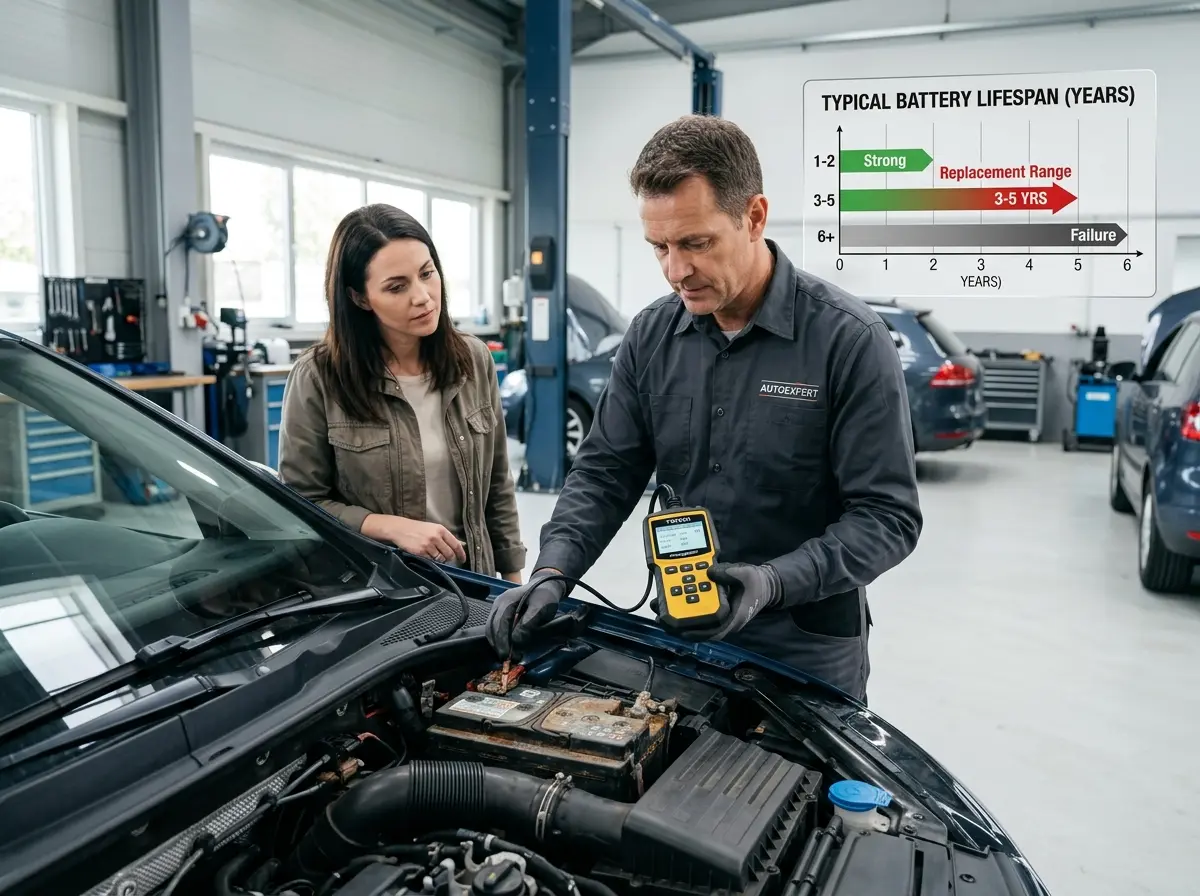
A standard car battery lasts somewhere between 3 and 5 years. That number shifts a lot depending on where you live, what you drive, and how you drive it.
In ideal conditions, a quality battery can push past 6 years. In harsh conditions, you might be lucky to get 2. Most drivers fall somewhere in the middle, which is why the 3-to-5 year rule is the safest planning window.
If your battery is older than 4 years, it’s smart to get it tested at every oil change. A simple load test takes 5 minutes and can save you from being stranded.
Battery Life by Car Type
Different vehicles put different demands on their batteries. A small sedan with basic features sips power, while a fully loaded SUV with heated seats and a dozen sensors drinks it.
1. Sedans
Sedans are the easiest on batteries. They are lighter, have smaller engines, and usually fewer power-hungry features. Expect a typical sedan battery to last 4 to 5 years with normal use.
2. SUVs
SUVs work batteries harder. Bigger engines need more cranking power, and modern SUVs are loaded with screens, cameras, and sensors that pull current even when parked. Plan for 3 to 5 years.
3. Trucks
Trucks, especially diesel trucks, often run dual battery setups. The high compression of diesel engines demands serious cranking amps. Single-battery gas trucks usually last 3 to 5 years, while diesel batteries may need replacing closer to the 3-year mark.
4. Hybrid & Electric Vehicles
This one surprises a lot of people. Hybrids and EVs still have a regular 12-volt battery for accessories and computer systems, and it usually lasts 3 to 5 years. The big high-voltage drive battery is a different story and typically lasts 8 to 15 years or more.
Quick Reference: Battery Life by Vehicle Type
| Vehicle Type | Average Battery Life | Notes |
|---|---|---|
| Sedan | 4 to 5 years | Lighter electrical load |
| SUV | 3 to 5 years | More accessories drain power |
| Gas Truck | 3 to 5 years | Higher cranking demand |
| Diesel Truck | 2 to 4 years | Often dual batteries |
| Hybrid (12V) | 3 to 5 years | Main drive battery lasts much longer |
| EV (12V) | 3 to 5 years | Drive battery is separate |
Battery Life by Climate
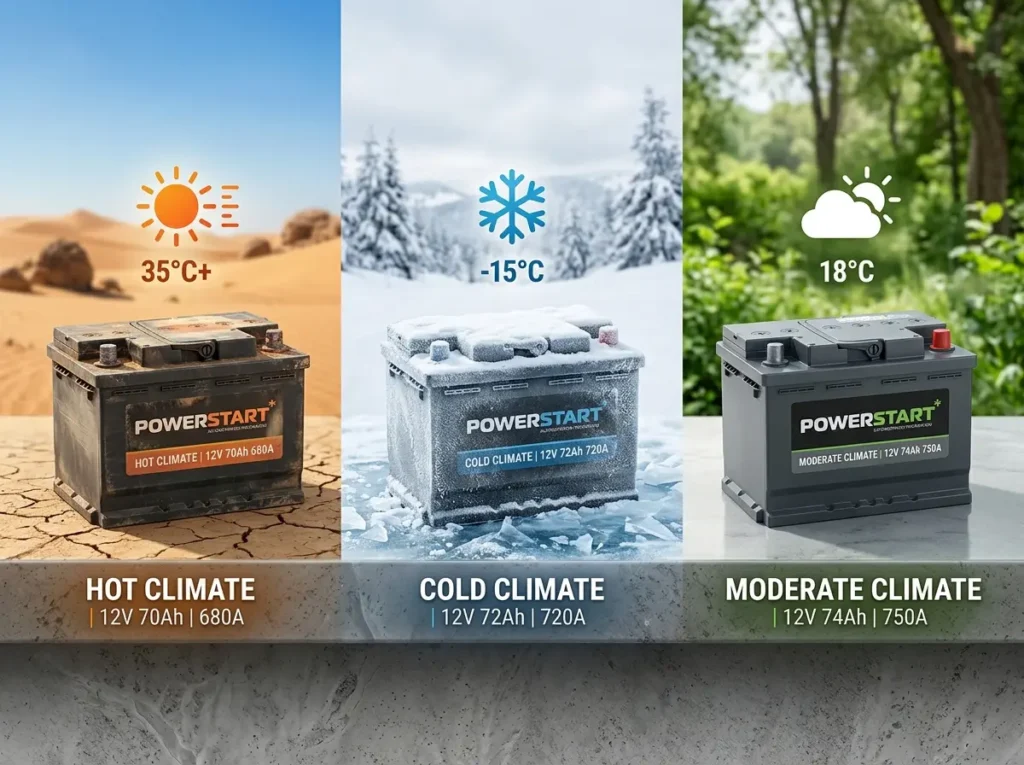
Climate is the single biggest factor that decides when to replace a car battery. Temperature wears down the chemistry inside your battery faster than almost anything else.
1. Hot Climates
Heat is actually worse for batteries than cold. High temperatures speed up the chemical reactions inside, evaporate the electrolyte fluid, and corrode internal parts. If you live somewhere like Phoenix, Dubai, or Karachi, your battery may only last 2 to 3 years.
2. Cold Climates
Cold weather doesn’t kill batteries as fast as heat, but it exposes weak ones quickly. A battery loses up to 50 percent of its starting power at freezing temperatures. In places like Minnesota or northern Canada, plan on 3 to 4 years before replacement.
3. Moderate Climates
If you live somewhere with mild summers and gentle winters, congratulations, your battery will probably last the longest. Coastal California, parts of Europe, and similar regions often see batteries last 4 to 6 years.
Also Read: How Long Should You Drive After a Jump Start?
Battery Lifespan by Climate
| Climate | Expected Lifespan | Main Threat |
|---|---|---|
| Hot and dry | 2 to 3 years | Fluid evaporation |
| Cold and snowy | 3 to 4 years | Reduced cranking power |
| Moderate | 4 to 6 years | Normal aging |
| Humid coastal | 3 to 5 years | Terminal corrosion |
Signs Your Car Battery Needs Replacement
Catching the warning signs of a bad car battery early can save you a tow bill and a missed appointment. Here are the symptoms I see most often on roadside calls.
- Slow engine crank when starting
- Dim headlights, especially at idle
- Dashboard warning light for the battery
- Clicking sound when you turn the key
- Electronics resetting or acting glitchy
- Swollen or bloated battery case
- Rotten egg smell near the battery
- Corrosion buildup on the terminals
Not sure if your battery is failing? Get quick roadside battery testing and jump-start help available 24/7 across Milwaukee and nearby areas. Call Now: 414-973-1902
Signs vs Urgency Level
| Warning Sign | Urgency Level | What to Do |
|---|---|---|
| Slow crank | High | Test battery within a week |
| Dim lights at idle | Medium | Get tested at next service |
| Clicking, no start | Critical | Replace immediately |
| Swollen case | Critical | Replace immediately, do not drive far |
| Corroded terminals | Low to Medium | Clean terminals, retest |
| Frequent jump-starts | Critical | Replace now |
Factors That Affect Battery Life
Beyond climate and car type, your daily habits matter a lot. Here are the biggest culprits behind early battery death:
- Short trips that never let the alternator fully recharge
- Leaving lights or accessories on overnight
- Aftermarket sound systems and dash cams pulling parasitic drain
- Loose or corroded battery cables
- Skipping regular vehicle maintenance
- Long periods of the car sitting unused
How to Extend Battery Life?
You can’t fight time, but you can squeeze every month out of your battery with a few simple habits.
- Drive your car for at least 20 minutes once a week
- Turn off all accessories before shutting off the engine
- Clean battery terminals every 6 months with a wire brush
- Tighten battery hold-down clamps to prevent vibration damage
- Use a trickle charger if the car sits for more than 2 weeks
- Park in a garage or shade when possible
- Get the charging system tested yearly
Pro tip from the field: If you only drive a few miles at a time, your alternator never fully recharges the battery. Once a week, take a longer drive on the highway. It genuinely adds months to battery life.
When to Replace vs Recharge?
This is one of the most common questions I get. A dead battery doesn’t always mean a bad battery.
If your battery died because you left the lights on, a recharge or jump-start usually brings it back fine. If your battery keeps dying with no clear reason, or it’s older than 4 years, replacement is the smarter choice.
A quick test at any auto parts store will tell you if the battery still holds a charge under load. If it fails the load test, no amount of charging will save it.
Cost of Car Battery Replacement
Battery prices vary based on size, brand, and vehicle type. Here are realistic ranges based on what I see at shops and parts stores today.
| Battery Type | Price Range (USD) | Best For |
|---|---|---|
| Standard lead-acid | $100 to $200 | Most sedans and older cars |
| AGM (Absorbent Glass Mat) | $200 to $350 | Modern cars with stop-start |
| EFB (Enhanced Flooded) | $150 to $250 | Mid-range modern vehicles |
| Premium / performance | $300 to $500 | Luxury vehicles, trucks |
| Hybrid 12V battery | $200 to $400 | Toyota, Honda hybrids |
Installation usually adds $20 to $75, though many auto parts stores install it free if you buy from them.
Quick Replacement Checklist
Run through this list before deciding:
- Battery is over 3 years old
- You’ve needed a jump-start in the past month
- Headlights dim at idle
- Engine cranks slowly in the morning
- Dashboard warning light is on
- You see corrosion or swelling
- You live in an extreme climate
If you check 2 or more boxes, it’s time for a new battery.
Frequently Asked Questions
Q. How do I know exactly how old my car battery is?
Look at the sticker on top of the battery. You’ll see a code like “C24” which means March 2024. The letter is the month (A through L) and the number is the year.
Q. Can a battery last more than 5 years?
Yes, especially in moderate climates with regular highway driving. Some premium AGM batteries hit 7 years, but they’re the exception, not the rule.
Q. Does idling charge my battery?
Barely. Idling produces very little charging output. Actual driving at higher RPMs is what truly recharges your battery.
Q. Should I replace both batteries in a diesel truck at the same time?
Yes. Mismatched batteries shorten the life of the newer one because the older battery drags it down.
Q. Is it safe to replace a car battery yourself?
For most vehicles, yes, if you follow safety steps. Modern cars with start-stop systems or heavy electronics may need a professional reset after replacement.
Final Takeaway
For most drivers, a car battery should be replaced every 3 to 5 years. Hot climates push that down to 2 to 3 years, while moderate weather and gentle driving habits can stretch it to 6 years.
Don’t wait for a no-start morning to find out. Get your battery tested once a year after it hits the 3-year mark. A 5-minute test is far cheaper than a tow truck and a missed day of work.
If your battery is showing any of the warning signs above, replace it now. Your future self, standing in a parking lot at night, will thank you.
Stranded or dealing with a dead battery? MG Towing and Recovery provides fast towing, jump-starts, and roadside help, call now and get back on the road quickly. Call Now: 414-973-1902