

Getting stuck in snow is one of the most common winter headaches American drivers face. Every year, millions of vehicles end up spinning helplessly in driveways, on side streets, and along highway shoulders the moment the temperature drops and the snow piles up. If you have ever felt that sinking feeling when your tires whir but your car will not budge, you are far from alone.
As a towing and roadside assistance team that has pulled thousands of vehicles out of snowbanks, ditches, and ice-covered parking lots over the years, we have seen every kind of stuck imaginable. We know exactly what works, what makes things worse, and how to recover a vehicle without damaging it or putting yourself in danger. This guide shares those hands-on lessons so you can learn how to get a car out of snow safely and confidently, whether you are dealing with a light dusting or a deep snowstorm.
In this article you will learn why cars get stuck, how to assess your situation, a complete step-by-step recovery process, the tools that actually help, the mistakes that strand drivers even longer, and when it is time to call a professional. Safety comes first in every step, because no vehicle is worth a serious injury.
Why Cars Get Stuck in Snow?
Understanding why your vehicle is stuck helps you choose the right recovery method. In most cases, several factors combine to leave a car spinning in place.
1. Loss of Traction
Snow and ice dramatically reduce the friction between your tires and the road. Tires need grip to move a vehicle forward, and when that grip disappears, the wheels spin without generating any forward motion. This is the single most common reason cars get stuck.
2. Ice Under the Tires
A thin, often invisible layer of ice frequently forms directly beneath the tires, especially when a car has been parked for a while or when wheel spin melts snow that quickly refreezes. Ice offers almost zero traction, which is why a car can feel completely glued in place even in shallow snow.
3. Deep Snow Accumulation
When snow gets deep enough to reach the underside of the vehicle, the chassis can rest on the snow and lift weight off the tires. This is called high centering. Once a car is high centered, the drive wheels lose contact pressure with the ground and simply cannot push the vehicle forward.
4. Improper Tire Selection
All-season and summer tires harden in cold temperatures and lack the deep, biting tread that grips snow. Drivers using worn tires or tires not rated for winter conditions get stuck far more easily than those running dedicated winter tires.
5. Driver Mistakes
Hitting the gas too hard, turning the wheels sharply, or panicking and spinning the tires repeatedly are some of the most frequent reasons a minor stuck situation becomes a major one. Good technique often matters more than raw power.
Assess the Situation Before Taking Action
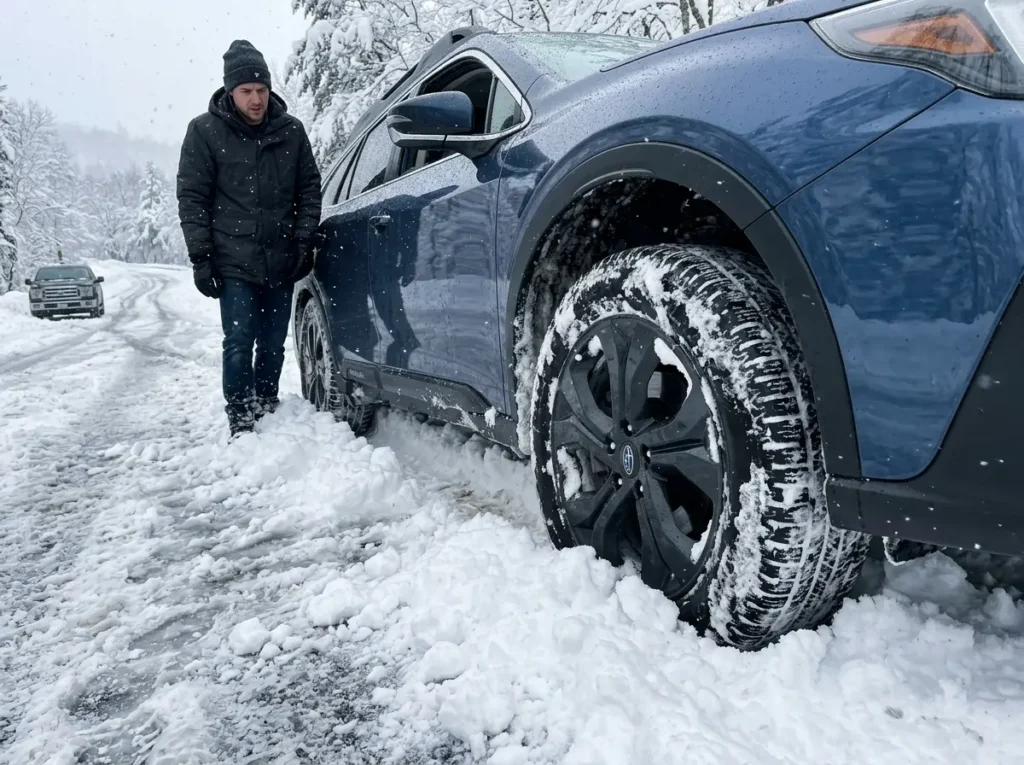
Before you touch the accelerator, take 60 seconds to evaluate what you are dealing with. A calm assessment prevents the panic moves that dig cars deeper.
Vehicle position. Note whether your car is on a flat surface, an incline, or partially in a ditch. A vehicle on a slope or angled into a ditch may require professional recovery rather than a DIY attempt.
Snow depth. Check how deep the snow is around and under the car. If snow is touching the underbody, you are likely high centered and will need to clear snow before any other method works.
Tire condition. Look at your tires. Are they winter tires, all-seasons, or worn down? Are they sitting on packed snow, fresh snow, or glare ice? This tells you how much traction help you will need.
Weather conditions. Consider visibility, ongoing snowfall, temperature, and traffic. If you are on a busy road in whiteout conditions, your priority is staying safe and visible, not freeing the car immediately.
Safety checks. Make sure your exhaust pipe is completely clear of snow before running the engine. A blocked tailpipe can push deadly carbon monoxide back into the cabin. Turn on your hazard lights, and if you must exit the vehicle on a roadway, watch for passing traffic at all times.
Step-by-Step Guide to Get a Car Out of Snow
Follow these steps in order. Each one builds on the last, and skipping ahead is what causes most failed recovery attempts.
1. Stop Spinning the Tires Immediately
The instinct to floor it is understandable, but spinning tires is your worst enemy. Excessive spin melts the snow under the tire, which refreezes into slick ice and polishes the surface smooth. Within seconds you can turn a recoverable situation into a hopeless one. The moment you feel the tires losing grip, ease off the accelerator completely.
2. Clear Snow Around the Vehicle
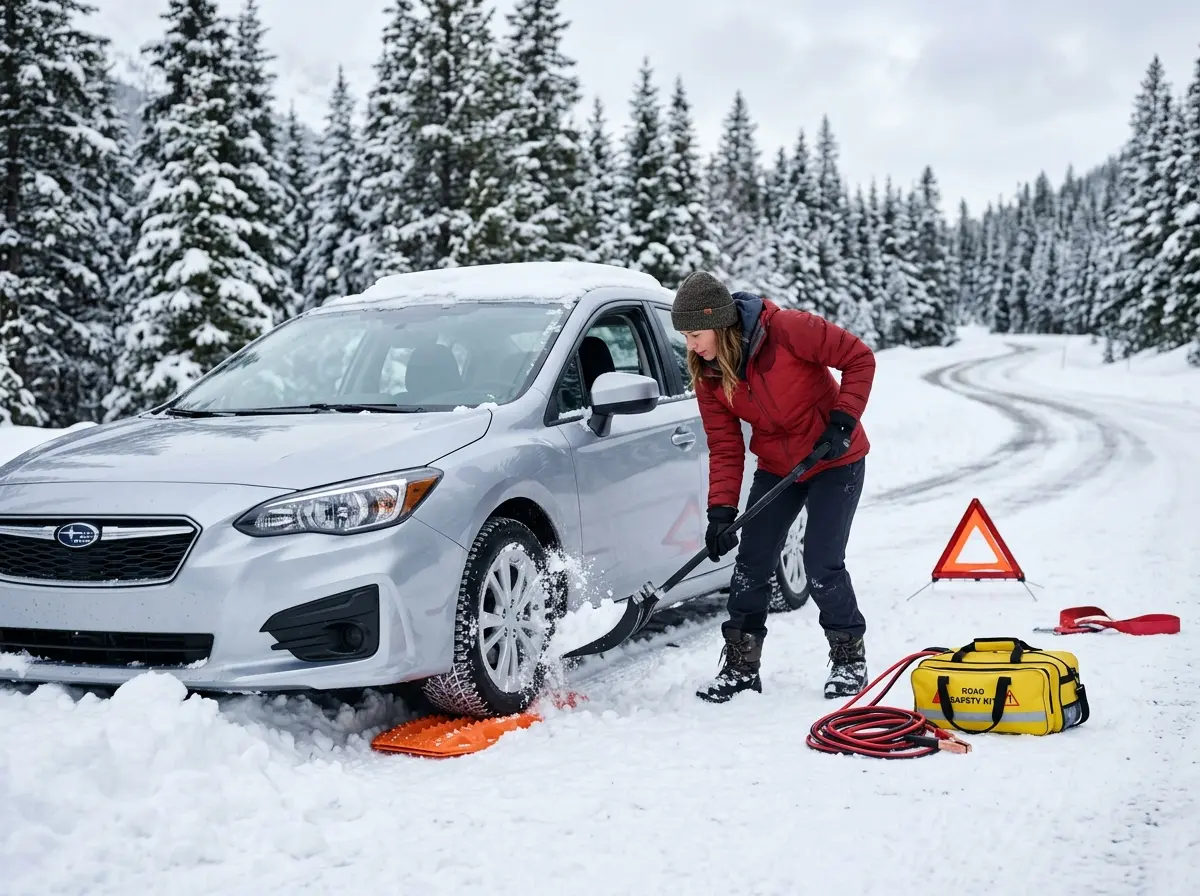
Use a shovel, ice scraper, or even your hands to remove snow from in front of and behind all four tires. Clear a path roughly two to three feet long in the direction you intend to drive. If the car is high centered, dig the packed snow out from under the chassis so the tires can carry the vehicle’s weight again. This step alone frees a surprising number of vehicles.
3. Straighten the Wheels
Turned wheels create extra resistance and dig into snow on the sides of the tires. Point your front wheels straight ahead so the tires roll along their natural path with the least resistance. This small adjustment can make the difference between moving and staying stuck.
4. Improve Tire Traction
This is where most recoveries are won. Place a gritty or firm material under and just ahead of the drive tires to give them something to bite into. Options that work well include:
- Sand. Excellent grit that provides reliable traction on snow and ice.
- Salt. Helps melt ice for grip, though it works slowly in very cold temperatures.
- Kitty litter. Non-clumping clay litter adds grit, though it can get slushy once wet. Keep a bag in your trunk.
- Cardboard. A flattened box under the tires offers a firmer surface than loose snow.
- Floor mats. Your own rubber car mats, placed grit-side or textured-side up directly against the tire, are one of the fastest field fixes. Be aware they can shoot out backward, so stand clear.
- Traction boards. Purpose-built recovery boards are by far the most effective option, with aggressive teeth that grip the tire and distribute weight on top of the snow.
Wedge your chosen material snugly against the tire in the direction you want to travel, then accelerate gently.
5. Use the Rocking Technique Safely
Rocking builds momentum to free a stuck car. Shift into drive (or first gear) and ease forward as far as the car will go, then shift into reverse and back up as far as it will go. Repeat this forward-and-back motion, letting the car build a little more distance each cycle. Keep your throttle inputs gentle and your wheels straight.
Important: rocking puts stress on the transmission and drivetrain. Pause between shifts, never force the gear lever, and stop if you smell burning or hear strain. If a few rocking cycles do not free the car, move on to another method rather than overheating your transmission.
6. Lower Tire Pressure Slightly
Reducing tire pressure increases the tire’s contact patch, spreading its footprint and improving grip in deep snow. This is a useful trick when you are genuinely stuck and out of other options.
When it helps: Deep, soft snow where a wider footprint keeps the tire from sinking.
Risks: Underinflated tires can unseat from the rim, especially on sharp turns, and you will be driving on dangerously low pressure until you can reinflate.
Recommended PSI: Drop from your normal pressure (often around 32 to 35 PSI) to roughly 18 to 20 PSI for recovery only. Never go below about 15 PSI. Reinflate to the manufacturer’s recommended pressure as soon as you are free and able, which is why a portable air compressor belongs in your winter kit.
7. Use Snow Chains if Available
If you carry snow chains, a stuck situation is exactly what they are made for. Fit them onto your drive wheels following the manufacturer’s instructions, making sure they are snug and properly seated. Chains bite through snow and ice to deliver outstanding traction. Drive slowly and gently once installed, since chains are not meant for high speeds, and remove them once you reach clear pavement to avoid damaging the chains or the road.
8. Push the Vehicle Safely
With one person at the wheel applying gentle throttle and others pushing, manual muscle can free a lightly stuck car. Safety warnings matter here:
- Everyone pushing should stand to the side and behind the vehicle, never directly behind a tire that could throw debris.
- Communicate clearly with the driver before any throttle is applied.
- Push in time with the rocking motion for maximum effect.
- Lift with your legs, keep your footing on a cleared patch, and never push on a slope where the car could roll back.
- Keep children and bystanders well clear.
9. Use a Tow Strap Correctly
A tow strap lets another vehicle pull yours free, but improper use can cause serious injury or vehicle damage. Attach the strap only to designated tow hooks or recovery points, never to a bumper, axle, or suspension part. Use a rated recovery strap, not a chain or rope. Both drivers should agree on signals beforehand.
The pulling vehicle should take up slack slowly and apply steady, gradual force rather than a violent jerk, which can snap hardware and send metal flying. Everyone not in a vehicle should stand well clear of the strap, since a failed strap or hook becomes a dangerous projectile.
Related Article: How to Get a Car Out of Mud: Complete Guide for Drivers
Stuck right now and these steps aren’t working? Don’t risk damaging your transmission or vehicle. MG Towing & Recovery has pulled thousands of cars out of Milwaukee snowbanks, ditches, and ice. Call us 24/7 at (414) 973-1902 and we’ll get you out safely.
Recovery Methods Comparison Table
| Recovery Method | Cost | Best For |
| Shoveling | Low ($15 to $40) | High centered cars and clearing tire paths |
| Traction Boards | Moderate ($40 to $150) | Deep snow, ice, and repeated use |
| Kitty Litter | Low ($10 to $20) | Quick traction on packed snow |
| Snow Chains | Moderate ($40 to $120) | Deep snow and steep, slippery grades |
| Tow Strap | Low to Moderate ($20 to $60) | Cars in ditches with a second vehicle present |
| Professional Towing | High ($75 to $300+) | Severe stucks, damage risk, and unsafe conditions |
Essential Tools to Keep in Your Car During Winter
A well-stocked winter kit turns a stressful stuck situation into a quick fix. Here is what we recommend every driver carry through the cold months.
| Tool | Purpose | Estimated Cost | Recommended |
|---|---|---|---|
| Snow Shovel | Clears snow around and under the vehicle | $15 to $40 | Highly recommended |
| Traction Boards | Provides instant grip under drive tires | $40 to $150 | Highly recommended |
| Tow Strap | Allows another vehicle to pull you free | $20 to $60 | Recommended |
| Ice Scraper | Removes ice and snow from windows and tires | $5 to $20 | Essential |
| Gloves | Keeps hands warm and protected while working | $10 to $30 | Essential |
| Flashlight | Lights the work area in low visibility | $10 to $30 | Highly recommended |
| Portable Air Compressor | Reinflates tires after lowering pressure | $30 to $80 | Recommended |
| Emergency Blanket | Keeps you warm if stranded | $10 to $25 | Essential |
When to Call a Professional Tow Truck?
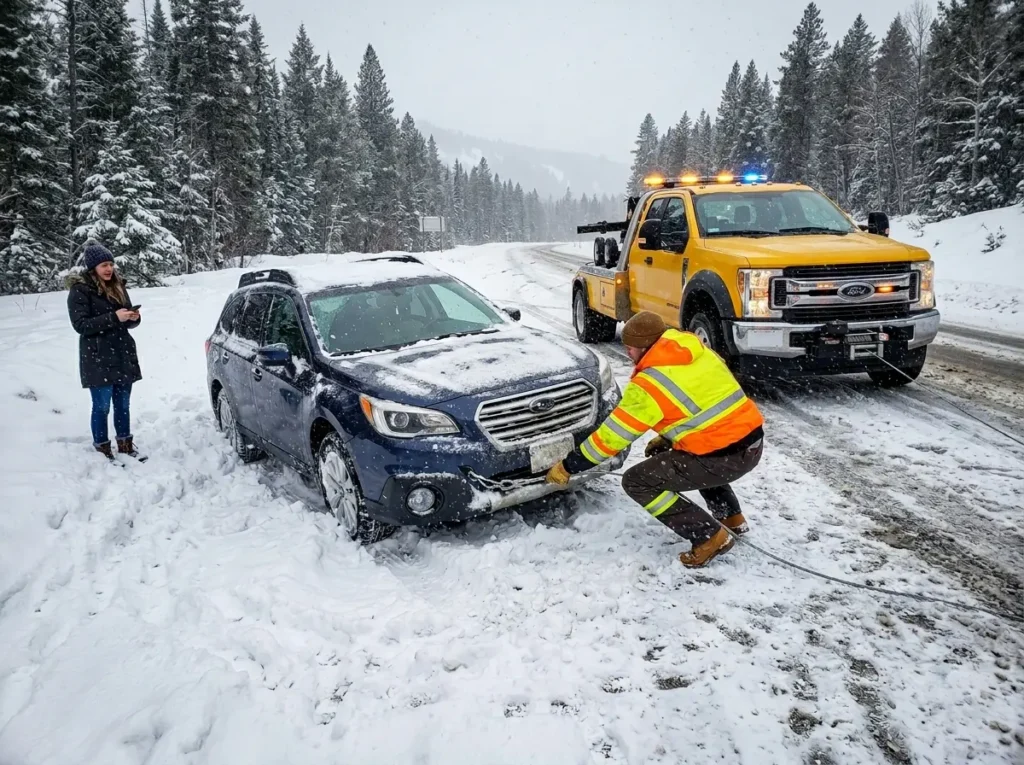
Some situations are beyond a safe DIY recovery, and recognizing them protects both you and your vehicle. Call a professional tow truck or roadside assistance when you face any of the following.
Deep snow. When snow is too deep to dig out or the car is severely high centered, professional equipment will free it without strain or damage.
Vehicle damage risk. If recovery attempts risk harming your transmission, drivetrain, or body panels, it is cheaper to call a pro than to repair the damage.
Poor weather visibility. In whiteout or heavy snowfall, working outside near traffic is genuinely dangerous. Stay in your warm, visible vehicle and wait for help.
Unsafe conditions. Icy slopes, fast-moving traffic, extreme cold, or a vehicle hanging in a ditch all call for trained help with the right gear.
Remote locations. If you are far from help with limited supplies, call early before conditions or daylight deteriorate. A professional roadside assistance company can reach you, recover the vehicle safely, and get you back on the road.
If any of these describe your situation, don’t wait. MG Towing & Recovery serves Milwaukee, Racine, Kenosha, Wauwatosa, Oak Creek, and all of southeastern Wisconsin with fast, 24/7 winter recovery and honest, upfront pricing. Request a Tow Now → (414) 973-1902 or get a free quote online.
Winter Driving Tips to Avoid Getting Stuck Again
The best recovery is the one you never need. These prevention strategies keep you moving all winter.
- Install four matching winter tires, which dramatically outperform all-seasons on snow and ice thanks to softer rubber and deeper tread.
- Keep your gas tank at least half full to add weight over the drive wheels and prevent fuel line freeze.
- Accelerate and brake gently, leave extra following distance, and slow down well before turns.
- Avoid stopping on inclines when you can, since getting moving again from a dead stop on a hill is much harder.
- Clear all snow off your vehicle before driving, including the roof and lights.
- Check the forecast and avoid traveling during active storms whenever possible.
- Finally, keep your winter emergency kit stocked and your phone charged so you are ready for anything.
Frequently Asked Questions
Q. How do I get traction on snow?
Place sand, kitty litter, cardboard, floor mats, or traction boards directly against your drive tires in the direction you want to go, then accelerate gently. Traction boards are the most effective option, while winter tires prevent most traction loss in the first place.
Q. Does kitty litter help in snow?
Yes, non-clumping clay kitty litter adds grit under the tires and can provide enough traction to get unstuck on packed snow. It works less well once it gets wet and slushy, so traction boards or sand are more reliable.
Q. Can snow chains damage tires?
Properly fitted snow chains are safe for tires when used at low speeds on snow and ice. Damage usually occurs when chains are too loose, driven too fast, or used on bare pavement, so install them snugly and remove them on clear roads.
Q. Is rocking a car bad for the transmission?
Rocking can stress the transmission and drivetrain if done aggressively. Keep throttle gentle, pause between shifts, never force the lever, and stop after a few cycles if it is not working to avoid overheating the transmission.
Q. When should I call roadside assistance?
Call roadside assistance when the car is severely high centered, stuck in a ditch, on an icy slope, in heavy traffic, in whiteout conditions, or when DIY attempts risk vehicle damage or your safety. Calling early is safer than struggling for hours.
Q. Why does my car get stuck so easily in snow?
Cars get stuck easily due to loss of traction, hidden ice under the tires, deep snow, worn or non-winter tires, and driver mistakes like sudden acceleration. Switching to winter tires and using gentle inputs prevents most stuck situations.
Q. How do I prevent getting stuck in snow again?
Install four winter tires, drive gently, keep your tank at least half full, avoid stopping on hills, clear all snow off the car, and carry a winter recovery kit. Avoiding travel during active storms is the surest prevention.
Conclusion
Knowing how to get a car out of snow comes down to staying calm, working methodically, and putting safety first. Stop spinning the tires, clear the snow, straighten your wheels, add traction under the drive tires, and gently rock the vehicle free. With the right tools in your trunk and the right technique, most stuck situations can be solved in minutes without damaging your car.
That said, no recovery is worth risking your safety. When the snow is too deep, the conditions too dangerous, or the vehicle at risk of damage, calling a professional roadside assistance and towing service is the smart move.
Our experienced team recovers stranded drivers in every kind of winter weather, and we would rather get you out safely than see you struggle. Keep this guide handy, stock your winter kit, drive carefully, and you will be ready for whatever the season throws at you.