



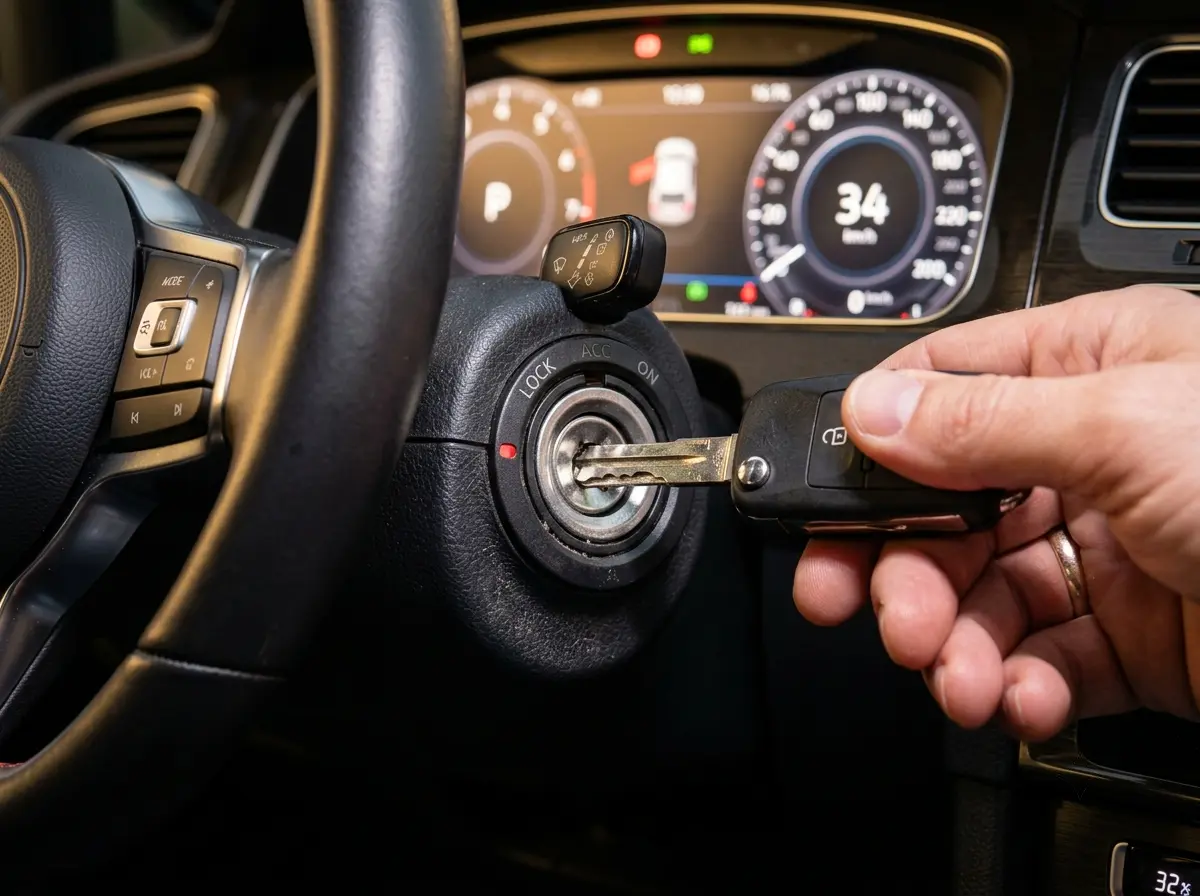
You turn off the engine, reach for your key, and it will not budge. If you are dealing with a car key stuck in the ignition right now, take a breath. In most cases, this problem takes less than five minutes to fix and costs nothing. A key stuck in the ignition is usually caused by a steering wheel lock under pressure, a shifter that is not fully in Park, or a weak battery, not a broken car.
As a roadside assistance company, we handle this exact call. Our dispatchers often walk drivers through the fix over the phone before a service truck ever leaves the lot. When the phone fix does not work, we send help for a jump start, a locksmith, or a tow. This guide gives you the same checklist our technicians use: every common cause, safe step by step removal methods, the mistakes that turn a free fix into a repair bill, realistic US costs, and clear signs that it is time to call a professional.
Why Your Car Key Gets Stuck in the Ignition?
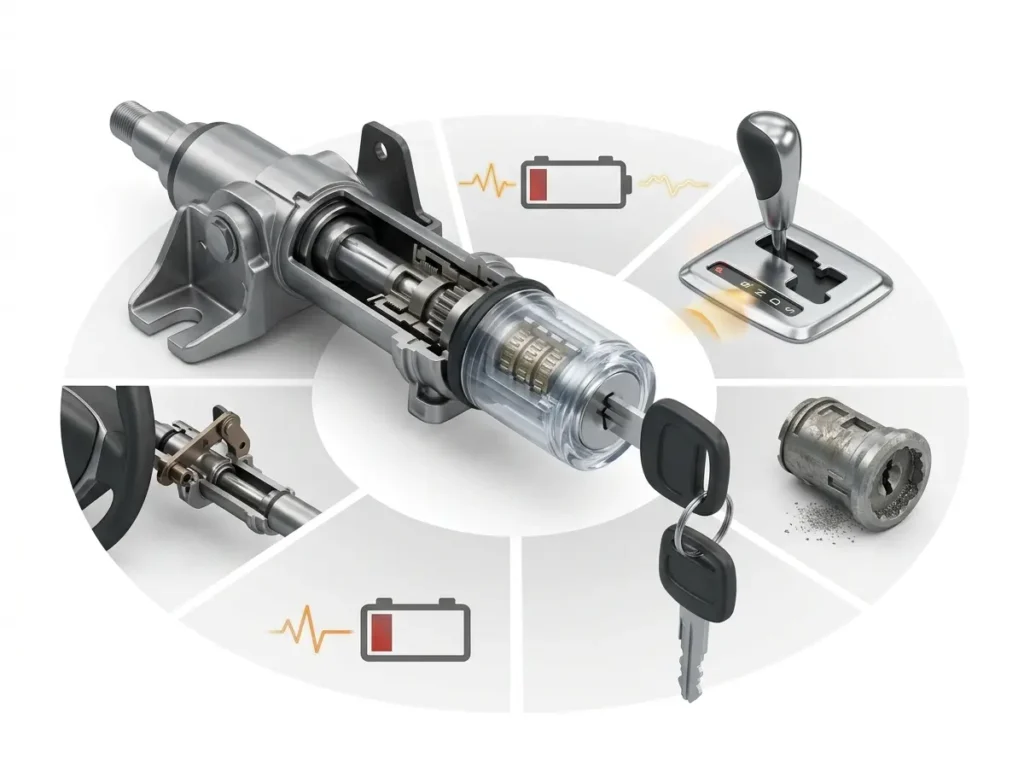
The most common causes of a car key stuck in the ignition are an engaged steering wheel lock, a transmission that is not fully in Park, a dead or weak battery, and a worn key or ignition cylinder. Less common causes include a faulty shift interlock, ignition switch failure, dirt inside the lock, and freezing weather.
Understanding the cause matters because each one has a different fix. Here is how technicians think through the problem, starting with the most likely culprits.
1. The Steering Wheel Lock Is Engaged
This is the first thing we check on almost every stuck key call. Every car sold in the US has an anti theft steering lock built into the column. When you park with the front wheels turned, or bump the wheel after shutting off the engine, spring tension loads the locking pin inside the steering column. That pressure binds the ignition cylinder, so the key cannot rotate to the release position. The giveaway: the steering wheel feels locked and rigid, moving only a small amount in either direction.
2. The Transmission Is Not Fully in Park
Federal Motor Vehicle Safety Standard No. 114 requires vehicles with an automatic transmission to prevent key removal unless the transmission is locked in Park. It is a rollaway protection rule, and it works well. The catch is that your shifter can look like it is in Park while the internal linkage sits a fraction of an inch short. This happens often after parking on a hill without setting the parking brake first: the parking pawl loads up under the car’s weight and holds the shifter slightly out of position. The key interlock never receives the “in Park” signal, so the key won’t release.
3. Dead Battery or Low Voltage
A dead car battery is behind more stuck keys than most drivers expect. On many modern vehicles, the key release is electronic: a small solenoid must receive power to free the key from the cylinder. If the battery is dead, the solenoid cannot fire, and the key stays trapped even though nothing is mechanically wrong. A weak battery or corroded terminals can cause the same problem intermittently, especially on cold mornings when voltage drops. Look for the classic clues: dim dashboard lights, a slow or clicking crank, or a car that won’t start at all. Battery trouble is one of the most common roadside assistance calls in the country, and most car batteries last only three to five years.
4. A Worn or Damaged Key
Your key is made of softer metal than the lock it operates, and it endures thousands of insertions over a car’s life. The cuts and ridges slowly round off. Eventually the worn key no longer positions the tiny wafers inside the cylinder correctly, and the lock cannot return to its release position. A duplicate cut from an already worn key inherits the same problem. Bent keys, cracked keys, and keys with burrs from being dropped or used as a box cutter cause the same jamming. The right fix is a fresh key cut from your vehicle’s key code, not another copy of the tired original.
5. A Worn or Failing Ignition Cylinder
Inside the ignition lock cylinder is a row of small spring loaded wafers (flat tumblers) that read your key. After a decade or more of daily use, the springs fatigue and the wafers stick, chip, or crack. A single broken wafer can jam the whole cylinder solid. This failure almost never happens without warning: drivers usually report weeks or months of jiggling the key to start the car before the day it refuses to release. Catching those early symptoms matters, because a cylinder replaced on your schedule costs far less than one replaced in a parking lot at midnight.
6. Dirt, Debris, and Pocket Grime
Keys live in pockets, purses, cup holders, and gym bags. Lint, dust, sand, and sticky residue ride into the ignition cylinder on the key blade and build up over time. Enough grime will bind the wafers and make the key drag, stick, or refuse to release. If your key feels gritty going in, contamination is a likely suspect.
7. A Faulty Shift Interlock
The shift interlock is the safety system that connects your brake pedal, shifter, and ignition. Its job is to make sure you cannot remove the key unless the car is safely in Park, and cannot shift out of Park without pressing the brake. The system relies on a park position switch, a small solenoid, wiring, and a fuse. When any of those parts fail, the car may believe it is still in gear, so it refuses to release the key. A clue worth checking: on many vehicles, the interlock circuit shares components with the brake light circuit, so brake lights that recently stopped working can point to the same fault.
8. Ignition Switch Failure
The ignition switch is the electrical component that sits behind the lock cylinder. The two parts are often confused, but they fail differently. A worn switch can stop the key from rotating fully back to the Lock or Off position, which means the key never reaches the point in its travel where it releases. Warning signs include flickering dashboard lights, accessories that cut in and out, and a car that stalls or struggles to start intermittently. Problems in this part of the ignition system deserve respect: General Motors recalled about 2.6 million vehicles in 2014 because faulty switches could slip out of the run position while driving, shutting off the engine and disabling airbags.
9. A Damaged Transponder Key or Anti Theft Lockout
Most vehicles built since the late 1990s use a transponder key with a small chip that communicates with the car’s immobilizer. A failing chip usually causes a no start condition and a flashing security light rather than a physically stuck key. However, a cracked key head, a damaged aftermarket key shell, or a confused immobilizer can interfere with the shutdown sequence on some models, and the system will not release the key until it completes its cycle. If your security light is on and the key is stuck, mention both symptoms when you call for help. They are probably related.
10. Cold Weather
Freezing temperatures cause stuck keys in three ways. Moisture inside the cylinder freezes and glues the wafers in place. Old grease inside the lock thickens and drags. And cold saps battery voltage right when electronic key release systems need it: a typical battery delivers only about half its normal cranking power near 0°F. If the ignition key sticks only on frosty mornings, winter is your culprit.
11. Lack of Lubrication
Ignition cylinders need occasional lubrication, and almost nobody provides it. Years of dry metal on metal contact lets the wafers drag instead of glide. The fix costs a few dollars: a puff of dry graphite or a silicone based lock lubricant once or twice a year keeps everything moving. We cover the right way to apply it (and the wrong products to avoid) in the removal steps below.
12. Internal Mechanical Failure
Finally, parts simply break. Return springs snap, detents wear flat, and on many vehicles the shifter connects to the transmission through a cable that stretches or develops worn bushings over time. A stretched shift cable means Park at the shifter is not quite Park at the transmission, so the interlock never lets go. Some automakers have issued recalls for shifter cables, interlocks, and ignition components over the years, so it is worth running your VIN through NHTSA’s free recall lookup tool if sticking becomes a pattern.
Quick Reference: Causes, Symptoms, and First Fixes
| Likely Cause | Telltale Symptoms | First Fix to Try |
|---|---|---|
| Steering wheel lock | Wheel feels locked and rigid, key will not turn at all | Rock the wheel gently while turning the key |
| Not fully in Park | Shifter feels loose, “P” not lit on the dash | Press the brake and reseat the shifter firmly in Park |
| Dead or weak battery | Dim lights, clicking sound, car won’t start | Jump start the car, then remove the key |
| Worn or bent key | Key sticks in door locks too, edges look rounded | Have a new key cut from the vehicle’s key code |
| Worn ignition cylinder | Weeks of jiggling the key to start the car | Dry lubricant now, locksmith soon |
| Faulty shift interlock | Shifting problems, brake lights out | Check the fuse, use the shift lock override |
| Dirt or debris | Key feels gritty going in and out | Clean the key, use compressed air and dry lube |
| Cold weather | Sticks only on freezing mornings | Warm the key, use lock de-icer |
How to Remove a Stuck Car Key Safely: Step by Step
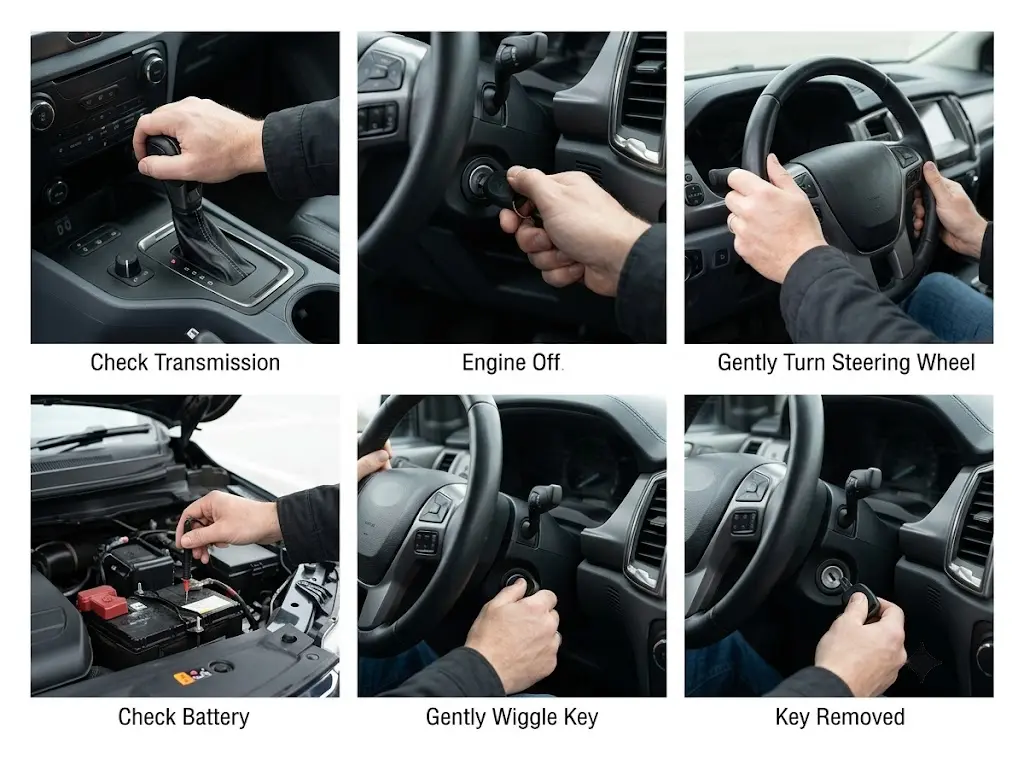
Quick answer: Shift firmly into Park, press the brake, and turn the key while gently rocking the steering wheel left and right. If that fails, check the battery, wiggle the key softly while pressing it slightly inward, and apply a small amount of dry lock lubricant. Never force the key.
Work through these steps in order. They are sequenced from most likely fix to least likely, and each one explains why it works so you know what you are actually doing.
Step 1: Make Sure the Car Is Fully in Park
Press the brake pedal, move the shifter into Neutral, then push it firmly back into Park until it seats. Watch the instrument cluster and confirm the “P” indicator lights up. Try the key again.
Why it works: the key interlock only releases when the park position switch confirms the transmission is in Park. Cycling the shifter reseats the linkage and gives the switch a fresh, clean signal. This single step ends a large share of the stuck key calls we take.
Step 2: Relieve Pressure on the Steering Wheel
Grip the wheel and rock it gently left and right while turning the key toward the off position with your other hand. You should feel one direction give slightly. Hold light pressure that way and turn the key.
Why it works: the steering column’s anti theft pin binds the ignition cylinder when the wheel is loaded with spring tension. Rocking the wheel unloads the pin for a moment, which frees the cylinder to rotate and release the key.
Step 3: Check for a Dead or Weak Battery
Look at the dashboard. If the lights are dim or dark, test the headlights or horn. Weak or dead responses mean the battery cannot power the electronic key release. Jump start the car with cables or a jump pack, and the key should come out normally once the system has voltage.
Why it works: many vehicles use a solenoid that must be energized to release the key. No voltage, no release. After the jump, have the battery and charging system tested. A battery that failed once will fail again, usually at a worse time.
If your battery is dead or your key still won’t come out after trying these steps, don’t risk damaging your ignition. MG Towing & Recovery provides fast 24/7 roadside assistance, including jump starts, lockout service, and emergency towing throughout Milwaukee and the surrounding areas. Our experienced technicians can often solve the problem on-site and get you safely back on the road.
Step 4: Use the Gentle Wiggle Technique
Press the key slightly inward, as if inserting it a little deeper, then wiggle it softly up and down while turning it toward the release position. Use fingertip pressure only. Think of it as coaxing, not forcing.
Why it works: worn wafers inside the cylinder sometimes hang up a hair out of position. Pushing the key inward and adding tiny vertical movement lets the spring loaded wafers reset and line up so the cylinder can turn.
Step 5: Apply the Right Lubricant
Use dry graphite powder or a silicone based lock lubricant. Give the keyhole one short puff or spray, insert and remove the key several times, then wipe the blade clean and try again.
Why it works: lubricant restores glide to dry, sticky wafers. A note on WD-40, since everyone asks: a small shot of it can free a stuck key in an emergency, but its oily residue attracts dust and grime over time, which makes the cylinder stickier later. Use it if it is all you have, then plan on a proper cleaning and a dry lubricant afterward.
Step 6: Inspect the Key Itself
Look closely at the key while it sits in the cylinder, and again once it is out. Check for bends, cracks, burrs, and heavy rounding on the cut edges. Compare it against a spare key if you have one.
Why it works: a bent or worn key changes the depth of every cut, which misaligns the wafers and jams the lock. Never try to straighten a bent key while it sits in the ignition. If the key looks damaged, retire it as soon as it comes out, and have a locksmith or dealer cut a replacement from the vehicle’s key code so the new key matches factory specs instead of worn ones.
Step 7: Restart the Engine and Shut Down Again
If the car will start, start it. Let it idle for a few seconds, then turn it off smoothly and make sure the key rotates all the way back to the Lock or Off position before you pull.
Why it works: sometimes the ignition switch never returned fully to its final detent on your last shutdown, and the key cannot release from a halfway position. A complete start and stop cycle resets the switch to its proper resting point.
Step 8: Check the Fuse and Try the Shift Lock Override
Find the shift lock override slot, usually a small removable cap next to the shifter (your owner’s manual shows the exact location). Press a screwdriver or the key tip into the slot, hold the brake, cycle the shifter, and try the key. While you are at it, check the fuse box for a blown interlock or brake circuit fuse. Some vehicles also have an emergency key release lever reachable through a small hole under the steering column; again, the owner’s manual is your map.
Why it works: the override manually defeats a failed interlock solenoid, and a fuse swap costs pocket change. One caution: do not disconnect the battery hoping to reset things. On cars with an electronic key release, cutting power can lock the key in more firmly.
Step 9: Know When to Stop
Stop immediately if the key flexes, if resistance increases, if you hear cracking, or if you have spent 15 to 20 minutes without progress. At that point the odds of breaking the key exceed the odds of freeing it.
Why it matters: a brass key that snaps off inside the cylinder converts a free fix into a locksmith extraction, a replacement key, and possibly a new cylinder. Knowing when to make the call is a skill, and it is the cheapest one in this article.
Signs You Need Professional Help

Call a professional if the key broke off in the ignition, the key is bent, the key will not turn at all, the engine will not shut off, you notice electrical symptoms, or the key keeps sticking repeatedly. These signs point to internal damage that DIY methods cannot fix and often make worse.
DIY has limits, and recognizing them protects your wallet. Call in help when you notice any of the following.
The key broke off inside. Extraction requires purpose built tools that grip the flat sides of the blade fragment. Digging with tweezers, screws, or the classic “superglue on a stick” trick usually pushes the fragment deeper or glues the cylinder shut. An automotive locksmith can typically extract a broken key and cut a replacement in a single visit.
The key is visibly bent. Straightening a bent automotive key rarely restores the precise cut depths the wafers need, and reinserting it risks a snap.
The key won’t turn in any position. If the steering wheel trick fails and the wheel is not under load, the cylinder itself has likely failed internally.
The engine will not shut off. If the vehicle won’t turn off when you turn the key, the ignition switch has failed, and this is the one scenario where we tell callers to stay with the vehicle. Keep the transmission in Park, set the parking brake, and get professional help. Do not start disconnecting things under the hood while the engine runs.
You notice electrical symptoms. Flickering gauges, accessories cutting out, or intermittent no starts alongside a sticking key point to the switch or wiring, which is mechanic territory.
The key sticks over and over. Repeated sticking is a progression, not a coincidence. Wafers and springs wear gradually, and the failure curve only bends one way.
DIY or Professional? A Quick Decision Table
| Situation | DIY Friendly? | Best Professional |
|---|---|---|
| Steering wheel lock or shifter not in Park | Yes | None needed |
| Dead battery | Yes, with jumper cables or a jump pack | Roadside assistance |
| Dirty or dry cylinder | Yes, with dry lubricant | Locksmith if it persists |
| Worn key | Partly: order a new key cut from code | Locksmith or dealer |
| Broken key in the ignition | No | Automotive locksmith |
| Ignition cylinder replacement | Rarely, older vehicles only | Locksmith or mechanic |
| Ignition switch or electrical fault | No | Mechanic or dealership |
| Engine will not shut off | No | Mechanic, with roadside assistance |
If your key is broken, won’t turn, or remains stuck after following the steps above, forcing it can damage the ignition cylinder and lead to a much more expensive repair.
MG Towing & Recovery offers fast emergency roadside assistance, professional towing, jump starts, lockout services, and vehicle recovery throughout Milwaukee. We’ll get you the help you need quickly and safely, whether your vehicle can be fixed on-site or needs professional towing. Call MG Towing & Recovery Now 414-973-1902
Ignition and Key Repair Costs in the USA
The table below reflects typical published price ranges from US repair estimators, locksmith companies, and cost guides. Treat these as planning numbers: your actual price depends on vehicle make and model, your region’s labor rates, the time of day (after hours emergency calls cost more), and whether you use a mobile locksmith, an independent shop, or a dealership.
| Service | Typical US Cost Range |
|---|---|
| Jump start (roadside service) | $0 with a coverage plan; roughly $50-$150 without |
| Locksmith key extraction | $50-$200 for extraction alone |
| Extraction plus a new basic key | $100-$150 total |
| Extraction plus transponder key and programming | $200-$250 total |
| Basic metal key cut | $10-$50 |
| Transponder key with programming | $75-$300 |
| Key fob or smart key replacement | $200-$500 or more |
| Ignition rekey | $50-$150 |
| Ignition lock cylinder replacement | $150-$500 typical; complex jobs can exceed $600 |
| Ignition switch replacement | $150-$450 |
| Battery replacement (installed) | Roughly $150-$400 depending on battery type |
| Local tow (if needed) | Often covered by roadside plans; typically $75-$200 without |
A few honest notes on these numbers. Dealerships generally charge more than independent locksmiths for the same key work, sometimes double. Car key replacement costs climb quickly with transponder and smart keys because of chip programming. European and luxury brands sit at the top of every range for parts and programming reasons. And ignition cylinder jobs on vehicles where airbags or anti theft modules complicate access can run well past the typical range. When you call for a quote, have your year, make, model, and VIN ready; precise information gets you a precise price.
How to Prevent a Stuck Key in the Future?
Quick answer: Keep your keychain light, lubricate the ignition once or twice a year with dry graphite or silicone lube, replace worn keys early, always shift fully into Park, and test your battery twice a year. These simple habits prevent nearly all stuck key problems.
Preventive Maintenance Checklist
| Habit | How Often | Why It Helps |
|---|---|---|
| Lighten the keychain | Today | Reduces leverage and wear on the cylinder and switch |
| Dry lubricant in the ignition | Every 6-12 months | Keeps wafers moving freely |
| Wipe the key blade clean | Monthly | Stops grime transfer into the lock |
| Replace worn keys, cut from code | At first signs of sticking | Restores factory cut depths |
| Full stop, parking brake, then Park | Every drive | Ensures the interlock reads Park correctly |
| Battery test | Every 6 months | Protects the electronic key release |
| Battery replacement | Every 3-5 years | Prevents no start and no release failures |
| VIN recall check at NHTSA | Once a year | Free fixes for known ignition defects |
Related Article: How to Replace a Car Key Battery?
Frequently Asked Questions
Can I spray WD-40 into the ignition?
In an emergency, a very small amount of WD-40 can free a stuck key. It is a poor long term choice because its oily residue attracts dust and grime, which makes the lock stickier over time. Dry graphite powder or a silicone based lock lubricant is the better product for ignition cylinders. If you do use WD-40, follow up later with a proper cleaning.
How do I remove a broken key from the ignition?
If a piece of the blade protrudes, you may be able to grip its flat sides with fine needle nose pliers and pull straight out. If the fragment sits flush or deeper, stop and call an automotive locksmith, who uses extractor tools designed for this exact job. Avoid glue tricks and improvised probes: they usually push the piece deeper or damage the cylinder.
Should I call a locksmith or a tow truck?
Call an automotive locksmith for key and cylinder problems: broken keys, worn keys, stuck keys, and cylinder replacement. Most are mobile and cost less than a dealership. Call for a tow (or roadside assistance) when the problem is electrical, the engine will not shut off, or the car cannot be made safe where it sits. A roadside assistance dispatcher can help you choose.
Is it safe to leave the key in the ignition overnight?
It is a real risk. National Insurance Crime Bureau data shows more than 100,000 US vehicles were stolen in a single recent year with keys or fobs left inside, and a visible key invites opportunistic theft. A key resting in the On or Accessory position can also drain the battery overnight. If you must leave it, park somewhere secure, remove valuables, and fix it the next day.
What is a shift interlock, and can I bypass it?
The shift interlock is a safety system that prevents shifting out of Park without the brake pressed and blocks key removal unless the car is in Park. Most vehicles include a shift lock override slot near the shifter for emergencies, described in your owner’s manual. The override gets you moving, but the underlying fault (often a fuse, switch, or solenoid) still needs repair.
Can You Drive with a Key Stuck in the Ignition?
If the engine starts and runs normally, the car is usually drivable for a short trip, but leaving the key stuck is risky. It invites theft, drains the battery if the switch rests in the wrong position, may signal a failing ignition switch, and leaving a running car unattended is illegal in many US states and cities.
The Bottom Line
A car key stuck in the ignition feels alarming, but it is one of the most fixable problems in all of car ownership. Start with the calm, methodical checks in this guide: Park, steering wheel, battery, then gentle persuasion and the right lubricant. Respect the stopping point. The drivers who end up with expensive repairs are almost always the ones who kept twisting after the car said no.
If you work through the steps and the key still will not release, or if you spot any of the professional help signs above, make the call. An automotive locksmith, your mechanic, or a roadside assistance provider can solve in one visit what force cannot solve at all. And if you are stranded right now, that is exactly what roadside assistance exists for: a jump start, a locksmith dispatch, or a safe tow is one phone call away, any hour of the day.