

A tow operator’s complete step-by-step playbook for freeing a stuck vehicle, getting traction fast, and knowing the exact moment to stop digging and call for help.
Key Takeaways
- Stop spinning immediately. Wheel spin digs you deeper and overheats the transmission.
- Traction beats power. Recovery boards, gravel, or floor mats under the drive tires solve most cases.
- Lower tire pressure to 15–20 PSI widens the contact patch and grips soft ground.
- Rock gently between drive and reverse instead of flooring it.
- Call a pro when the frame is sitting on mud, the car is buried to the axles, or you’re in a remote area.
Few things spike a driver’s stress like the sound of tires whirring uselessly while the car sinks deeper. Our experts have pulled hundreds of vehicles out of mud, from sedans on flooded shoulders to lifted trucks buried past the rocker panels, and the same truth holds every time: panic and throttle make it worse, while patience and traction get you free.
This guide walks you through exactly what to do, in order, from the first second you feel the tires lose grip to the point where professional recovery is the smart call. You’ll learn the recovery steps that actually work, the cheap items that create instant traction, realistic recovery costs, and the mistakes that turn a five-minute fix into a tow bill.
Why Cars Get Stuck in Mud?
Cars get stuck in mud when the tires lose traction against soft, saturated soil and the wheels spin without moving the vehicle forward. Once that happens, every rotation of the tire carves a deeper rut instead of pushing you out.
Four factors usually combine to trap a vehicle:
- Loss of traction. Mud acts like a lubricant between the tire and solid ground. The tire can’t bite, so the engine’s power turns into spin rather than movement.
- Tire tread issues. Worn or low-profile street tires pack with mud almost instantly. A clogged tread is effectively a slick tire.
- Vehicle weight distribution. Front-heavy cars push their drive tires down into soft spots, while light rear ends spin freely. Heavier vehicles also sink faster once the surface gives way.
- Wet soil conditions. Clay and silt hold water and turn to a suction-like paste. The more the tire churns, the more that paste grips the wheel and body.
This is more common than most drivers think. AAA responds to more than 30 million roadside assistance calls every year, and a significant share involve vehicles disabled off the pavement on soft shoulders, fields, and flooded roads, especially during spring thaw and storm season.
What to Do Immediately When Your Car Gets Stuck in Mud?
The moment you feel the tires slip, the most important action is to lift off the gas. Your first 30 seconds decide whether this is an easy self-recovery or a tow.
Safety steps first
- Stop accelerating and put the car in park (or neutral with the brake) so you can think.
- Turn on your hazard lights, especially if any part of the car sits in or near a travel lane.
- Keep passengers buckled and inside unless the vehicle is in a safe, stable spot.
- Step out carefully. Mud is slick, and traffic on rural roads is the real danger, not the mud itself.
Mistakes to avoid in the first minute
- Don’t floor the throttle hoping to “power through.” That’s how cars bury to the axle.
- Don’t crank the steering wheel hard. Straight tires roll easier than angled ones.
- Don’t let anyone stand directly in front of or behind a vehicle you’re about to rock.
Initial assessment
Walk around the car and check three things: how deep the tires are sunk, whether the chassis or bumper is touching the ground, and which wheels are driven (front, rear, or all). If the frame is resting on mud or the tires are buried past their centerline, self-recovery is unlikely and you should plan to call for help.
Related Article: What Is a Winch Out Service? The Complete Guide for Drivers
Step-by-Step Guide to Get a Car Out of Mud
Work through these steps in order. Most stuck cars are free by step five. Stop and reassess after each one.
1. Stop Spinning the Tires
Spinning tires generate heat, dig ruts, and can overheat an automatic transmission within minutes. The instant you’re not moving forward, get off the gas. This single habit prevents the majority of “stuck” cars from becoming “buried” cars.
2. Clear Mud Around the Tires
Use a small shovel, your hands, or even a hubcap to dig the mud away from in front of (or behind) the drive tires in your intended direction of travel. Create a gentle ramp out of the rut rather than a vertical wall the tire has to climb.
3. Create Traction Under the Tires
Pack firm material directly under and ahead of the drive tires. Gravel, sand, cat litter, wood planks, floor mats, or even cardboard all work. The goal is a solid surface the tread can grip instead of slick mud. Wedge it tight against the tire so it doesn’t shoot out when you accelerate.
4. Lower Tire Pressure Safely
Dropping pressure to roughly 15–20 PSI flattens the tire and spreads its footprint, giving more rubber contact with the ground. This is one of the fastest off-road traction tricks there is. Only do it if you can reinflate soon, and never run aired-down tires at highway speed.
5. Rock the Vehicle Back and Forth
Shift gently between drive and reverse, using light, steady throttle to build a rocking momentum. As the car moves a few inches each way, the swing grows until it climbs out of the rut. Keep the front wheels straight and avoid revving hard.
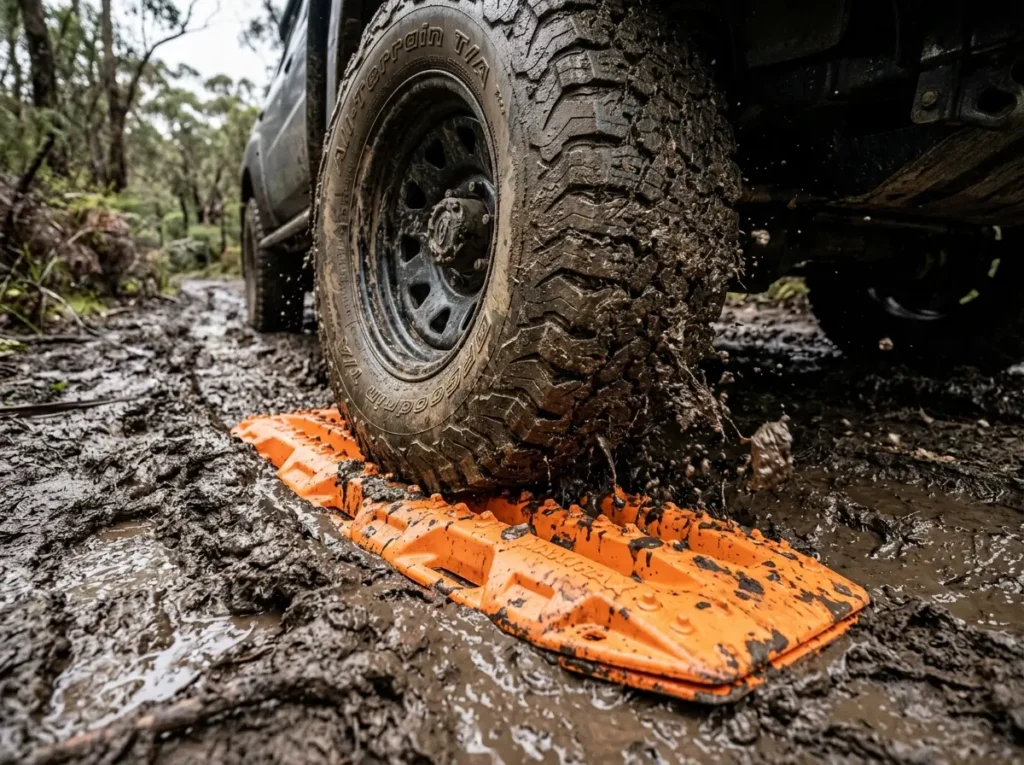
6. Use Recovery Boards or Traction Mats
Recovery boards (such as MAXTRAX-style ramps) are the single most effective DIY tool. Clear space, jam the ramp under the leading edge of the drive tire, and drive onto it slowly. They turn deep, hopeless ruts into a solid exit in seconds.
7. Use a Tow Strap Correctly
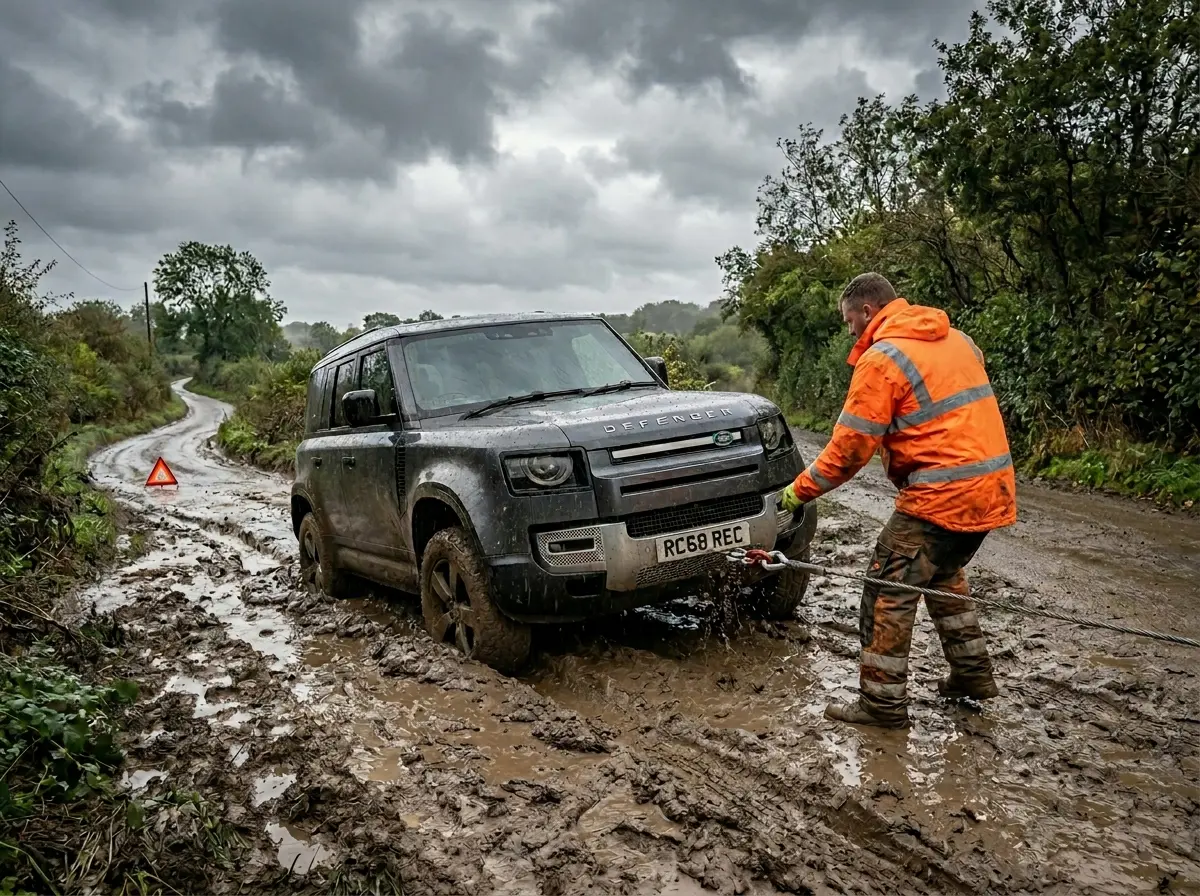
If another vehicle can reach you, connect a rated recovery strap to factory tow hooks or recovery points only, never a bumper, axle, or trailer ball. Both drivers should keep slack out gradually and pull in a straight line. A snapped strap or broken hitch becomes a deadly projectile.
8. Use a Vehicle Winch
If you have a winch, anchor the cable to a sturdy tree (with a tree-saver strap) or another anchored vehicle. Keep the line low, stand clear, lay a heavy blanket over the cable to dampen any break, and winch slowly under steady tension. This is how most off-road recoveries are done safely.
9. Call Professional Recovery Services
If you’ve worked through these steps and the car won’t budge, stop. Continued effort risks transmission, drivetrain, and body damage that costs far more than a recovery call. A professional with a winch truck or flatbed will have you out quickly and safely.
Need a Winch-Out Instead of Digging Deeper? Sometimes the safest recovery option is calling an experienced towing team. MG Towing & Recovery offers professional winch-outs, vehicle recovery, and roadside assistance to get your vehicle free without unnecessary damage. Call Now: 414-973-1902
Best Items to Use for Traction
You don’t need expensive gear to get unstuck. Here’s how common traction aids compare based on real recovery use.
| Item | Effectiveness | Cost Range | Best Situation |
|---|---|---|---|
| Recovery boards | Excellent | $80–$250 | Deep mud, repeat off-road use |
| Cat litter | Good | $5–$15 | Shallow mud, icy patches, light cars |
| Sand | Good | $3–$10 | Loose, slick surfaces near the tire |
| Gravel | Very good | $0–$10 | Soft soil where firm grip is needed |
| Cardboard | Fair | Free | Emergencies, very shallow mud |
| Floor mats | Good | Free (you own them) | Quick fix when nothing else is handy |
| Wooden planks | Very good | $0–$20 | Spreading weight, bridging deep ruts |
Note: floor mats and cardboard can fly out at speed. Keep everyone clear of the rear of the vehicle when you accelerate onto them.
Common Mistakes That Make It Worse
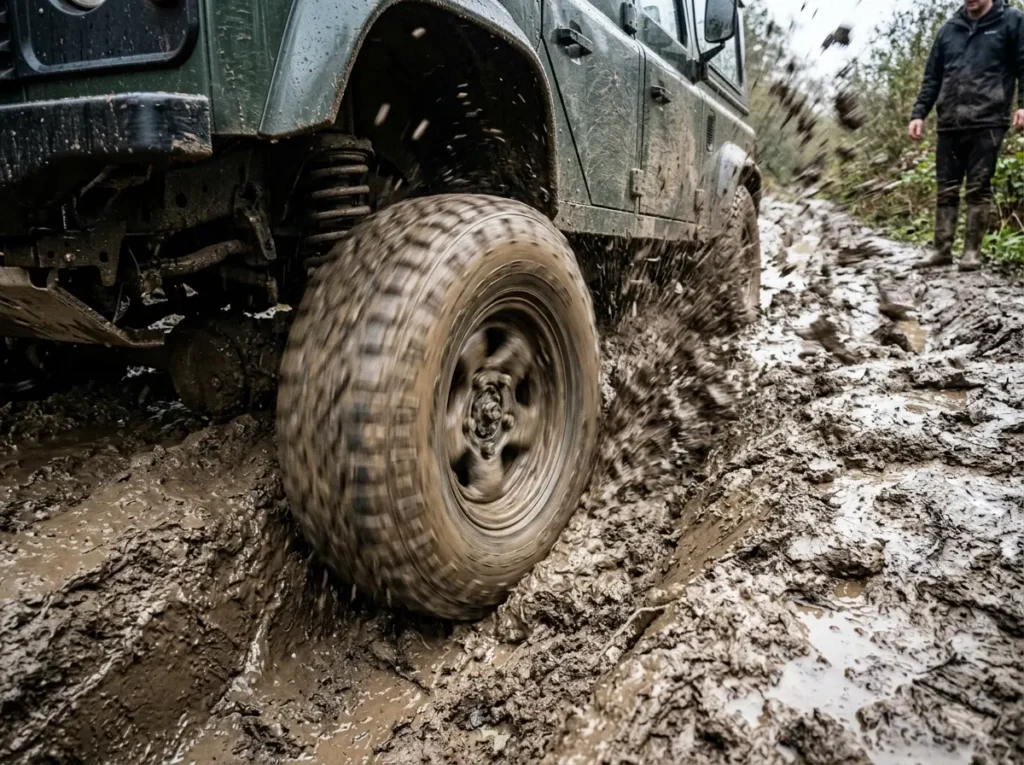
In our experience, most cars that need a tow truck were recoverable until the driver made one of these errors:
- Excessive wheel spin. The number one cause of a buried vehicle. Spinning melts traction away and digs the hole deeper.
- Incorrect towing points. Hooking a strap to a bumper, suspension arm, or tow ball bends panels, breaks parts, and launches metal at people.
- Sudden acceleration. Flooring the gas breaks any grip the tire had. Smooth, gradual power is what climbs out of mud.
- Unsafe towing attempts. Using rope, chains, or unrated straps that snap under load. Always use a recovery-rated strap.
- Ignoring safety risks. Standing in the line of pull, working in a travel lane, or pushing a car uphill. No recovery is worth an injury.
When to Call a Professional Recovery Service?
Call a professional recovery or towing service when self-recovery becomes unsafe or risks expensive damage. Specifically, reach out when:
- The mud is deep and the tires are buried past their centerline or the chassis is sitting on the ground.
- There’s a risk of vehicle damage to the transmission, drivetrain, or underbody from continued effort.
- An AWD or 4WD vehicle is fully buried. Even all-wheel drive can’t climb out once all four tires lose contact.
- You’re in a remote location without anchors, traction material, or another vehicle to assist.
- Safety is a concern due to traffic, weather, rising water, darkness, or terrain.
A winch-out service or off-road recovery team has the equipment to free your car in minutes, often for less than the cost of repairing what a botched DIY attempt can break.
Typical Recovery Costs
Recovery pricing varies by location, time of day, and how badly the car is stuck. These are realistic U.S. industry averages to set expectations.
| Service Type | Average Cost | Typical Response Time |
|---|---|---|
| Winch-out service | $50–$250 | 30–60 min |
| Light-duty recovery | $75–$200 | 30–60 min |
| Off-road recovery | $150–$600+ | 1–3 hours |
| Emergency roadside assistance | $0–$150* | 30–90 min |
| Flatbed towing | $100–$300 + mileage | 30–90 min |
Often included free with AAA or a manufacturer roadside plan. Prices vary by region, distance, and severity. Remote or after-hours calls cost more. Always confirm the rate before the truck rolls.
Frequently Asked Questions
How do I get traction in mud without recovery boards?
Pack firm material under and ahead of your drive tires. Gravel, sand, cat litter, wooden planks, floor mats, or cardboard all create a grippable surface. Clear the mud first, wedge the material tight against the tire, then accelerate gently onto it.
Can lowering tire pressure help?
Yes. Lowering tire pressure to about 15–20 PSI flattens the tire and widens its contact patch, giving more grip on soft ground. It’s one of the most effective free traction tricks. Only do it if you can reinflate soon, and don’t drive at highway speed on aired-down tires.
Is it bad to keep spinning tires in mud?
Yes, very bad. Spinning tires dig deeper ruts, generate heat that can overheat an automatic transmission, and remove what little traction you had. The moment the car stops moving forward, get off the gas and try a different approach.
Can a front-wheel-drive car get out of deep mud?
It can, but it’s harder. Front-wheel-drive cars carry weight over the drive tires, which helps, yet low ground clearance and street tires struggle in deep mud. Use traction aids, lower tire pressure, and rock the car gently. If it’s buried past the centerline, call for recovery.
When should I stop trying and call for help?
Stop when the tires are buried past their centerline, the chassis is resting on the ground, the transmission is heating up, or you’re in an unsafe spot. Continuing risks expensive drivetrain and body damage. At that point, a professional recovery is the cheaper, safer choice.
Final Thoughts
Getting a car out of mud comes down to three principles we have relied on across years of recoveries: stop the spin, add traction, and stay safe. Most drivers can free themselves with nothing more than a shovel, some gravel or floor mats, and a little patience with the throttle.
Know your limits, though. The moment continued effort threatens your transmission, your safety, or your wallet, a professional winch-out is the smarter move. Keep a recovery strap, a small shovel, and a set of traction boards in your trunk, and a stuck car turns from a ruined afternoon into a minor delay.
Drive carefully on soft shoulders and flooded roads, and when in doubt, don’t risk it. The cheapest recovery is the one you never needed.


One thought on “How to Get a Car Out of Mud: Complete Guide for Drivers”