



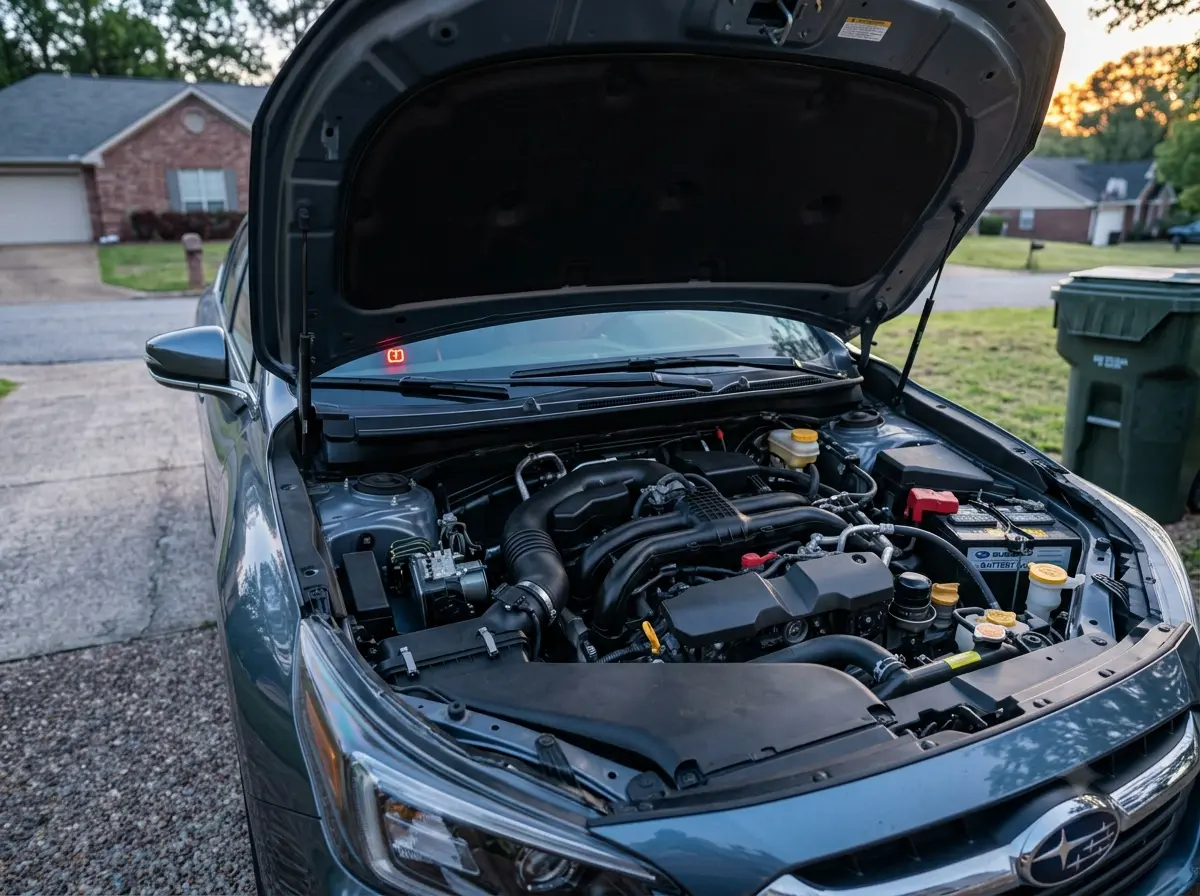
A car battery that dies overnight is almost always caused by a parasitic electrical drain, lights left on, a failing alternator diode, an aging battery, or a poor connection. Here is how to find the real reason and fix it.
You walked out this morning, turned the key, and got nothing but a click or a slow, groaning crank. The night before, the car ran fine. That sinking feeling of a dead car battery in the morning is one of the most common problems drivers deal with, and the frustrating part is that the cause is usually invisible while you sleep.
The good news: overnight battery drain follows predictable patterns. In most cases it comes down to something pulling power from the battery while the engine is off, a battery that no longer holds a charge, or a charging system that never topped it off in the first place. This guide walks through every common cause, shows you how to test for it with a basic multimeter, and explains how to stop it from happening again.
What Causes a Car Battery to Drain Overnight?
The most common causes of car battery draining overnight are parasitic drain, lights left on, a faulty alternator, an old battery, electrical faults, bad connections, and modern plug-in electronics.
1. Parasitic Battery Drain
Parasitic drain is electrical current that keeps flowing after the car is off and everything should be asleep. A small amount is normal. Excessive parasitic drain is the number one reason a healthy battery goes flat overnight.
Normally, modules settle into low-power sleep mode within 20 to 60 minutes of locking the car. The problem starts when a module refuses to sleep, a relay sticks closed, or a circuit shorts.
Normal vs. excessive:
- Normal: roughly 20 to 50 milliamps (0.02 to 0.05 amps) once asleep.
- Borderline: 50 to 85 milliamps.
- Excessive: above about 85 milliamps drains most batteries over a few nights; several hundred milliamps can kill a battery in one night.
Common sources: stuck glove box or trunk light, aftermarket stereo or amplifier wired wrong, faulty door switch, malfunctioning module, stuck relay, or a dash cam on constant power.
2. Lights Left On
A light left on overnight is the simplest and most common cause, and it’s easy to miss because many of these lights are out of sight.
- Interior and dome lights, often stuck on by a faulty door switch.
- Trunk and cargo lights, hidden when the trunk doesn’t fully latch.
- Glove box light, kept lit by a stuck switch.
- Headlights or parking lights on older cars without auto-off.
3. Faulty Alternator
A bad alternator can drain your battery overnight even though its job is to charge it. Inside are diodes that allow current one direction only. When a diode fails, current leaks backward from the battery while the car is off. Signs: dimming headlights, battery warning light, or a battery that keeps dying even after replacement.
4. Old or Weak Battery
Car batteries typically last 3 to 5 years. As they age, they lose their ability to hold a full charge, making them more likely to die overnight, especially in cold weather.
Common signs of a weak battery include:
- Slow engine cranking
- Frequent jump-starts
- Dim headlights or interior lights
- A swollen battery case
- A battery that’s more than four years old
Cold temperatures can make an aging battery fail even sooner because it produces less power while the engine needs more energy to start.
5. Electrical Problems
Electrical faults can cause a parasitic drain, meaning your battery continues losing power even when the car is turned off.
Some common causes include:
- Damaged or chafed wiring leaking current to ground.
- Short circuits creating a continuous current path.
- Faulty relays stuck closed.
- Aftermarket accessories (remote starters, alarms, stereos) installed incorrectly.
6. Bad Battery Connections
Loose or corroded battery terminals can prevent the battery from charging properly while you drive. As a result, the battery may not have enough power to start the vehicle the next morning.
Watch for:
- Corroded terminals (white or blue-green powder) blocking current.
- Loose cables causing intermittent charging.
- Poor grounding causing undercharging and erratic behavior.
7. Modern Vehicle Electronics
Many modern vehicles have electronic devices that continue using a small amount of power even when parked. If one of these devices draws too much electricity, it can drain the battery overnight.
Common examples include:
- Dash cameras in parking mode.
- Hardwired GPS trackers.
- Phone chargers in always-live outlets.
- Aftermarket alarm and security systems.
- Entertainment systems wired to constant power.
If your battery repeatedly dies overnight, it’s worth checking these accessories to make sure they’re working correctly.
How Much Battery Drain Is Normal Overnight?
A normal overnight parasitic drain is about 20 to 50 milliamps once the car is asleep. Above roughly 85 milliamps is excessive.
| Vehicle Condition | Typical Current Draw | Problem Level |
|---|---|---|
| Modules fully asleep (normal) | 20 – 50 mA (0.02 – 0.05 A) | Normal |
| Just shut off (modules awake) | up to several hundred mA, drops in 30 – 60 min | Normal (briefly) |
| Borderline draw | 50 – 85 mA | Watch it |
| Excessive parasitic drain | 85 mA – 500 mA | Problem |
| Severe fault or light left on | 1 A or more | Battery dies fast |
Rule of thumb: a healthy battery tolerates a 50 mA draw for many days, but a 1-amp draw can flatten it in a single night.
Related Article: How to Maintain Car Battery in Cold Weather?
Common Causes of Overnight Battery Drain vs. Symptoms vs. Solutions
| Cause | Warning Signs | How to Fix |
|---|---|---|
| Parasitic drain | Dies after sitting hours; fine while driving | Measure draw, pull fuses to find the circuit |
| Light left on | Visible glow; trunk/door not latched | Check dome, trunk, glove box lights; fix switch/latch |
| Faulty alternator | Battery light, dim headlights, dies after replacement | Test diodes; replace alternator |
| Old/weak battery | Slow cranking, 3–5+ years old, dies in cold | Load-test; replace |
| Wiring/short | Blown fuses, flickering, burnt smell | Inspect wiring; have a shop trace the short |
| Bad connections | Corrosion, hard starts, loose clamp | Clean terminals, tighten, check ground |
| Aftermarket electronics | Drain began after install | Disable parking mode; rewire to switched power |
How to Diagnose a Car Battery Drain?
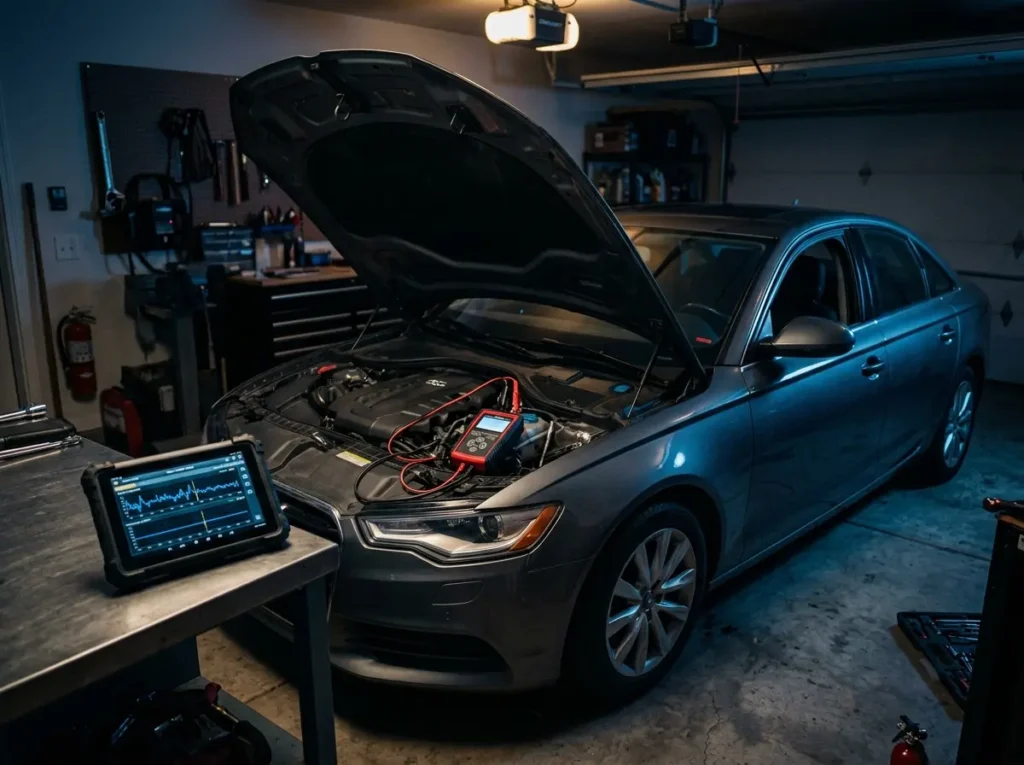
You can diagnose most overnight drains at home with a digital multimeter in about 30 minutes.
Step 1: Visual inspection. Check for corrosion, loose cables, a swollen case, and any lights left on inside or in the trunk.
Step 2: Check battery voltage. Engine off, a healthy battery reads about 12.6 volts. 12.4V is partly discharged; 12.2V or lower is significantly down.
Step 3: Test the charging system. Engine running, you should see about 13.7 to 14.7 volts. No rise means the alternator isn’t charging.
Step 4: Measure parasitic draw.
- Turn everything off, remove the key, keep doors “closed.”
- Set the meter to DC amps (10A jack).
- Disconnect the negative cable and connect the meter in series between the post and cable.
- Wait 20 to 40 minutes for modules to sleep; reading should drop toward 50 mA.
- If it stays well above 85 mA, you have excessive drain.
Safety note: never start the engine with the meter connected in series on amps. The starter will blow the meter’s fuse.
Step 5: Find the faulty circuit. With the meter reading the drain, pull fuses one at a time. When current drops to normal, that fuse controls the bad circuit. Check the manual for what it powers.
Related Article: How to Test a Car Battery at Home?
How to Prevent Your Car Battery From Dying Overnight
- Check the battery regularly and load-test yearly, especially before winter.
- Keep terminals clean with a baking soda paste and wire brush; tighten clamps.
- Unplug chargers and disable dash cam parking mode when the car will sit.
- Do a nighttime walk-around to catch dome, trunk, and glove box lights.
- Drive long enough to recharge; use a battery maintainer for cars that sit.
- Park in a garage when possible.
When Should You Replace Your Car Battery?
Replace it when it’s more than three to five years old, fails a load test, or repeatedly dies despite a healthy charging system.
Signs: 4+ years old with sluggish starts, multiple jump-starts, a failed load test, a swollen or cracked case, dimming lights at idle, or dying overnight after ruling out a parasitic drain.
When to Call a Professional Mechanic or Roadside Assistance
Call a pro when testing points to a deeper fault, the drain persists after a new battery, or you’re not comfortable around the electrical system.
Bring in a mechanic if you can’t isolate the drain to one fuse, suspect a short or bad diode, fuses keep blowing or you smell burning, the issue started after a collision, or you’re stranded now (call roadside assistance).
Frequently Asked Questions
How do I find what is draining my car battery?
Connect a multimeter in series with the negative cable, let the car sleep, and read the draw. Above ~85 mA, pull fuses until the reading drops.
Can a bad alternator drain a battery overnight?
Yes. A failed diode lets current leak backward from the battery while the engine is off.
How long can a car sit before the battery dies?
A healthy battery usually lasts two to four weeks; a weak one or one with excessive drain may die in days or one night.
Can cold weather drain a car battery?
Yes. Cold reduces cranking power while the engine demands more to start.
Why does my car battery keep dying even after I replaced it?
It points to a problem outside the battery: a parasitic drain, faulty alternator, or bad connection.
How do I test for a car battery drain without a multimeter?
Check for lights left on and corroded terminals, and get a free load test at an auto parts store. A true parasitic test needs a meter.
Stranded right now in Milwaukee or southeastern Wisconsin? You don’t have to wait. MG Towing & Recovery provides 24/7 jumpstart, battery service, and towing across Milwaukee, Racine, Kenosha, and surrounding areas – with honest, upfront pricing and no hidden fees. Call (414) 973-1902.