

Yes, you can rent a flatbed tow truck, but it is not as simple as walking into a rental counter and driving off with a rollback.
Whether you actually get one depends on five things: where you live, what license you hold, whether you can show proof of insurance, the rental company’s own policies, and how much the truck weighs when loaded. Miss any one of those, and the answer flips to no.
Here is the honest picture from someone who has spent years around these trucks: most national rental companies will happily rent you a flatbed truck, meaning a flat cargo deck for hauling lumber, pallets, or equipment. Very few will rent you a true rollback tow truck with a hydraulic tilting bed and a winch. Those live almost entirely inside towing fleets and specialty dealers.
In this guide, you will learn who can rent one, what it really costs, what the license and insurance rules look like, which companies are worth calling, what to inspect before you sign, and the specific situations where renting is a mistake and hiring a professional is the safer, cheaper call.
What Is a Flatbed Tow Truck?
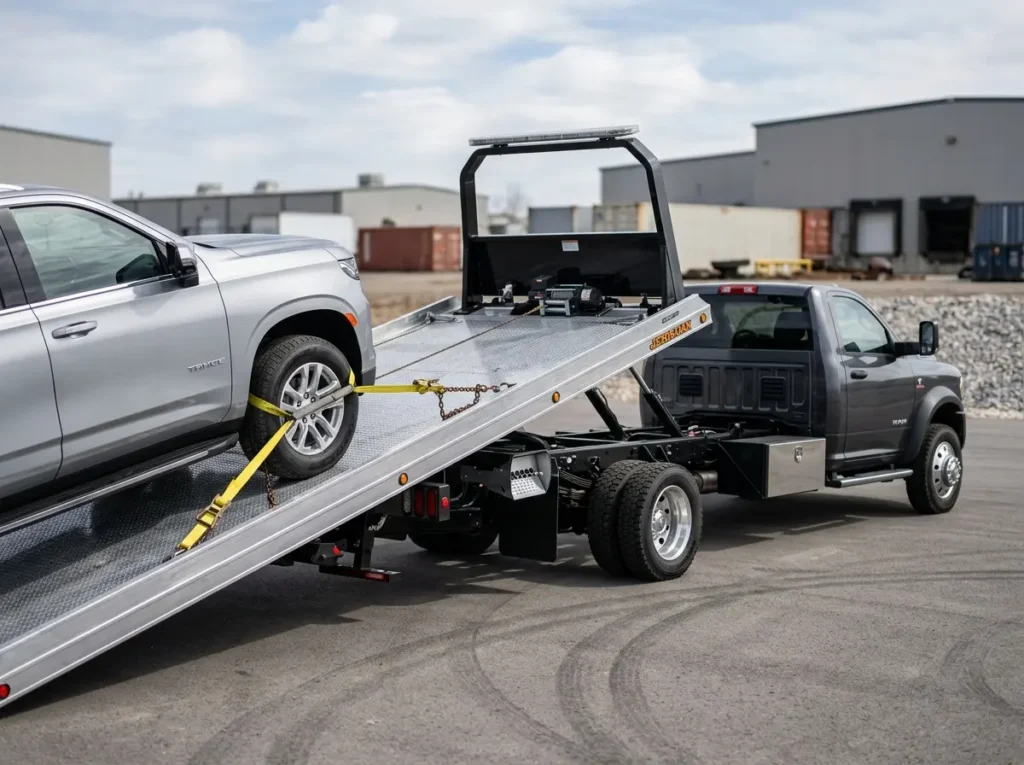
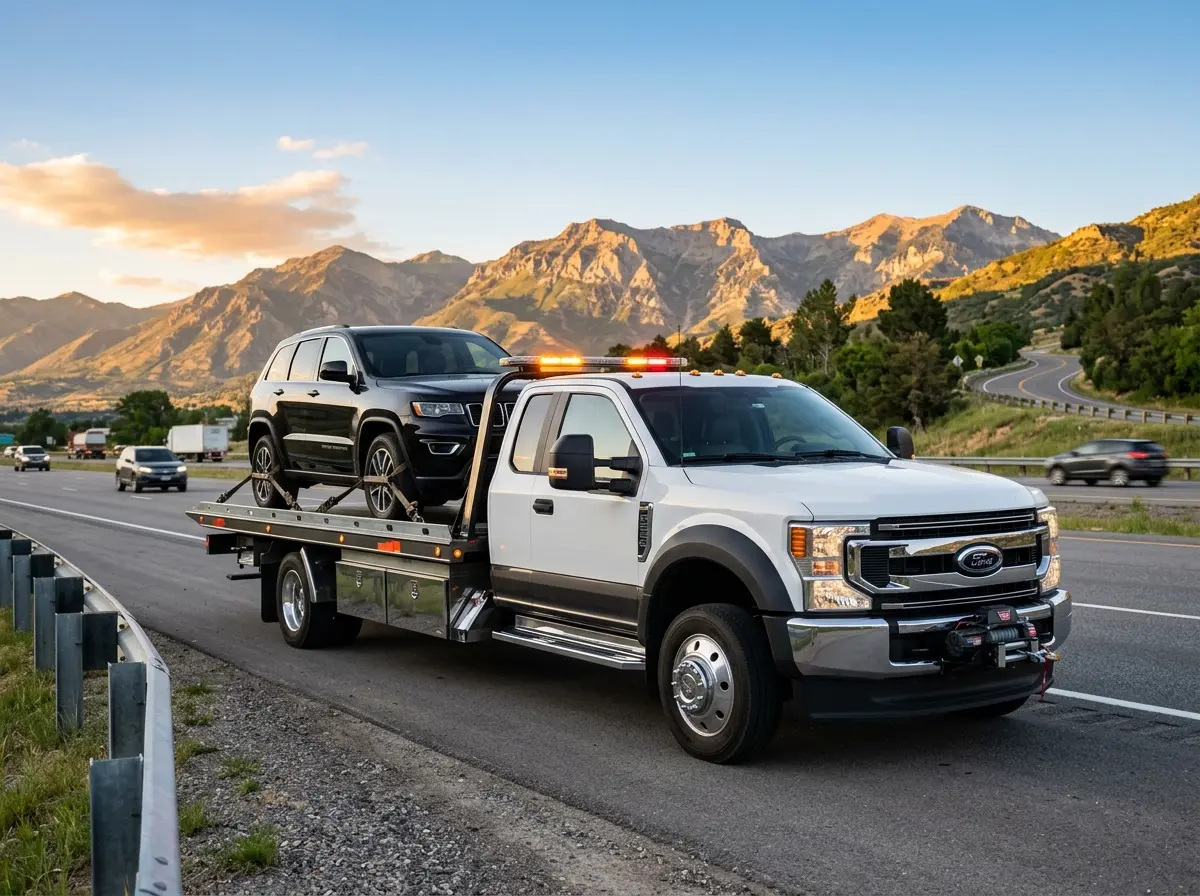
A flatbed tow truck, also called a rollback or a slide-back carrier, has a long steel or aluminum bed mounted behind the cab. Hydraulics tilt that bed backward until it touches the ground, forming a ramp. A winch then pulls the disabled vehicle up onto the deck. The bed slides forward and levels off, and the car rides fully off the ground.
That last part is why flatbeds dominate modern towing. Nothing on the towed vehicle rotates, drags, or takes stress.
Flatbed tow truck vs. flatbed cargo truck
| Feature | Flatbed Tow Truck (Rollback) | Flatbed Cargo Truck |
|---|---|---|
| Bed movement | Tilts and slides hydraulically | Fixed, does not move |
| Winch | Yes, standard | Rarely |
| Loading a dead car | Yes, winch pulls it up | No, needs ramps or a forklift |
| Rental availability | Very limited | Widely available |
| Typical renter | Towing operators, dealers | Contractors, movers, farms |
If a rental agent tells you they have “flatbeds available,” ask directly: does the bed tilt, and does it have a winch? Most of the time, the answer is no.
Read the complete guide: What Is Flatbed Towing and When Is It Needed?
Can Anyone Rent a Flatbed Tow Truck?
No. Rental companies screen renters, and rollbacks get the tightest screening of any truck on the lot.
You will generally need:
- A valid driver’s license appropriate to the truck’s weight class
- Minimum age of 21, and often 25 for medium-duty commercial trucks
- A major credit card in your own name
- Proof of insurance that covers a commercial rental vehicle
- Sometimes a business account, DOT number, or motor carrier authority
Individuals renting for personal use hit the most walls. Businesses with an established commercial rental account clear them fastest.
Who Usually Rents Flatbed Tow Trucks?
In practice, the renter pool is narrow:
- Towing companies covering a truck that is down for repairs or handling a seasonal surge
- Car dealerships moving inventory between lots or to auction
- Auto auction and transport businesses needing extra capacity for a week
- Repair shops and body shops picking up customer vehicles
- Fleet operators relocating equipment or non-running assets
- Car collectors and racers, occasionally, when a specialty rental yard allows it
Notice the pattern. Almost everyone on that list already carries commercial insurance and already knows how to load a vehicle. That is not a coincidence. It is the profile rental companies are willing to underwrite.
Also read: How to Start a Roadside Assistance Business?
When You Should Hire a Professional Instead?
Be blunt with yourself here. Call a towing company when:
- The vehicle is stuck, wrecked, rolled, or off-road. Recovery is a skill, not a rental feature.
- You have never operated a winch or tilt bed. The learning curve involves a two-ton object on an incline.
- The tow is one-time and short distance. A local tow will almost always beat a day rate.
- The vehicle is damaged or leaking, which creates liability you probably are not covered for.
- You are in traffic or on a highway shoulder. Roadside fatalities are a real hazard, and professionals train for it.
- Weather is bad. Wet steel decks and gravity do not negotiate.
- You are unsure about the legal side. Guessing on DOT rules is expensive.
Need a Flatbed Tow Instead of a Rental?
Renting a rollback truck isn’t always the safest or most affordable option. If you’re moving a disabled, damaged, or non-running vehicle in Milwaukee or the surrounding areas, MG Towing & Recovery provides professional flatbed towing with experienced operators and fully equipped rollback trucks.
Instead of dealing with rental paperwork, insurance requirements, and loading risks, let our team handle everything safely from pickup to drop-off.
Call MG Towing & Recovery today for fast, reliable flatbed towing. 414-973-1902
Rental Requirements Explained
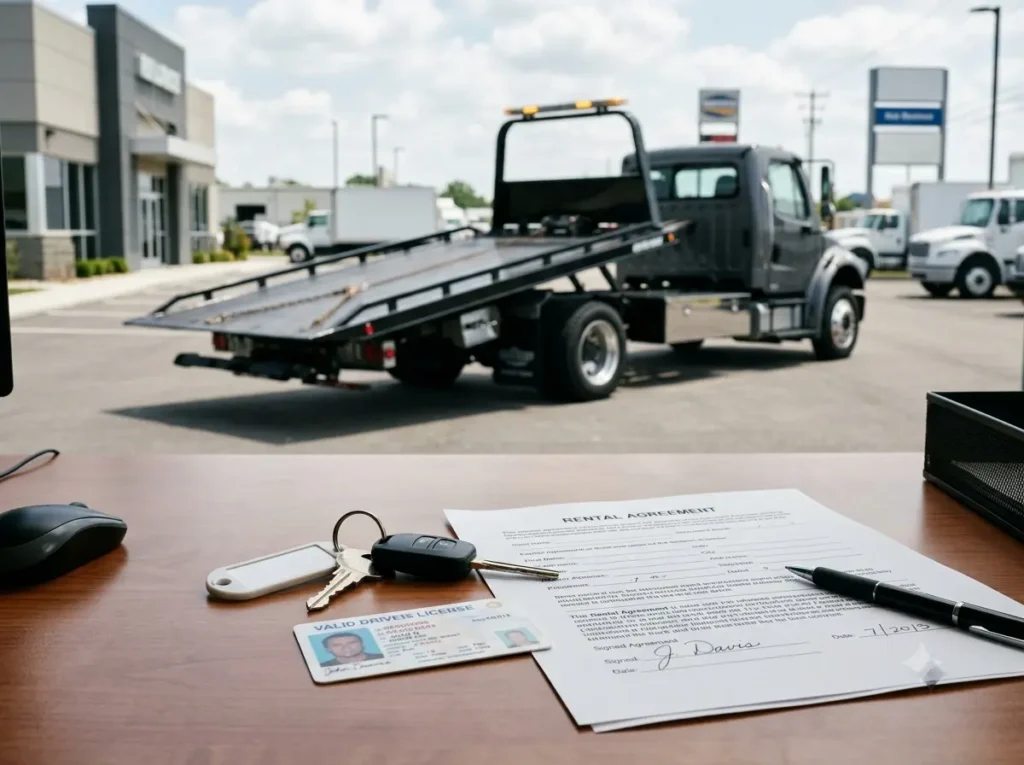
1. CDL Requirements
This is the question that trips up most people, and the answer hinges on GVWR, the manufacturer’s Gross Vehicle Weight Rating, not the truck’s empty weight.
Under federal FMCSA standards adopted by every state:
| Vehicle Weight (GVWR or Combined) | License Typically Needed |
|---|---|
| 26,000 lbs or less | Standard Class D driver’s license |
| Over 26,001 lbs | Commercial Driver’s License (CDL) |
| Towing a trailer over 10,000 lbs, with combo over 26,001 lbs | Class A CDL |
| Any vehicle used in interstate commerce | May also require DOT number, medical card |
Here is the key point most articles skip: a loaded rollback can cross 26,001 lbs even if the empty truck is under it. A light-duty carrier might sit at 19,500 lbs GVWR and stay non-CDL. A medium-duty carrier built to haul two vehicles will not.
So the accurate answer to “do you need a CDL to rent a tow truck” is: not always, but check the GVWR on the door jamb sticker, not the salesperson’s memory. Also note that hauling for compensation, even once, can pull you into commercial regulations regardless of weight. Verify with your state DMV or DOT office.
2. Age Requirements
| Truck Class | Common Minimum Age |
|---|---|
| Light-duty cargo van or box truck | 21 |
| Medium-duty flatbed | 21 to 25 |
| Rollback tow truck | 25, frequently higher |
| Interstate commercial operation | 21 federal minimum |
Drivers under 25 often face a young-driver surcharge or a flat decline on heavier equipment.
3. Insurance Requirements
Personal auto insurance almost never covers a commercial rental truck. Expect to provide or purchase:
- Liability coverage meeting the rental company’s minimum
- Physical damage waiver on the truck itself
- Cargo or on-hook coverage for the vehicle riding on the bed
That third one is the one people forget. Standard rental insurance covers the truck. It does not cover the car you loaded onto it. On-hook coverage is a separate product, and without it you are personally liable if someone’s vehicle slides off.
If you are renting from a specialty yard, ask for a certificate of insurance requirement list in writing before you drive over.
4. Security Deposits
| Truck Type | Typical Deposit Range (Estimate) |
|---|---|
| Standard flatbed cargo truck | $150 to $500 |
| Medium-duty flatbed | $500 to $1,500 |
| Rollback tow truck | $1,000 to $3,000+ |
Deposits are usually held on a credit card and released a few business days after return. Debit cards are frequently rejected outright for commercial equipment.
5. Rental Restrictions
Read these clauses carefully. Common ones include:
- No towing with a standard flatbed cargo truck, which voids the agreement instantly
- Geographic limits, sometimes in-state only
- No off-road or unpaved use
- No commercial hauling for hire without proper authority
- Mileage caps with per-mile overage
- No sub-renting or unauthorized drivers
How Much Does It Cost to Rent a Flatbed Tow Truck?
All figures below are realistic industry estimates for the USA. Pricing varies significantly by state, city, season, and company. Metro areas and post-storm demand periods run higher. Always get a written quote.
Base Rental Rates
| Rental Period | Flatbed Cargo Truck | Medium-Duty Flatbed | Rollback Tow Truck |
|---|---|---|---|
| Hourly | Rarely offered | $50 to $90 | $75 to $150 |
| Daily | $130 to $250 | $250 to $450 | $400 to $800 |
| Weekly | $700 to $1,200 | $1,200 to $2,200 | $2,000 to $3,500 |
| Monthly | $2,000 to $3,500 | $3,500 to $6,000 | $6,000 to $10,000 |
Add-On Costs
| Cost Item | Typical Estimate | Notes |
|---|---|---|
| Mileage (over allowance) | $0.35 to $0.99 per mile | Some contracts include 100 to 200 free miles/day |
| Liability insurance | $20 to $60 per day | Required if you cannot show your own |
| Physical damage waiver | $25 to $75 per day | Covers the rental truck only |
| On-hook / cargo coverage | $30 to $90 per day | Covers the vehicle being carried |
| Security deposit | $500 to $3,000 | Refundable, held on credit card |
| Fuel | $80 to $200 per full tank | Diesel; 6 to 10 MPG typical |
| Straps, chains, wheel nets | $25 to $75 per day | Not always included, confirm first |
| Dollies or skates | $30 to $60 per day | For seized-wheel vehicles |
| Environmental/admin fees | $10 to $40 per rental | Varies by location |
| Late return | 1.5x to 2x daily rate | Steep, plan your return window |
What a Real Two-Day Rental Looks Like
A realistic budget for a two-day medium-duty flatbed rental:
| Line Item | Estimated Cost |
|---|---|
| Base rate (2 days at $350) | $700 |
| Insurance and waiver (2 days) | $180 |
| Mileage (140 miles over allowance at $0.65) | $91 |
| Fuel | $160 |
| Tie-down equipment | $80 |
| Estimated total | $1,211 |
Compare that to a professional local tow, which commonly runs $75 to $125 hook fee plus $3 to $7 per mile. A 40-mile tow lands around $200 to $350. You would need to move roughly four vehicles before the rental math turns in your favor.
Best Flatbed and Tow Truck Rental Companies
Important context before the table: true rollback rentals are rare at national chains. These companies excel at flatbed cargo trucks. For an actual tow truck, you will usually need a regional specialty yard, a towing equipment dealer, or a manufacturer’s dealer network.
| Company | Rollback Availability | Best For | Pros | Cons |
|---|---|---|---|---|
| Penske Truck Rental | Rare | Medium-duty flatbeds, long hauls | Huge network, well-maintained fleet, 24/7 roadside support | Almost no tow-specific equipment, business account often preferred |
| Enterprise Truck Rental | Very rare | Light and medium flatbeds, short-term | Easy booking, good for individuals, transparent rates | Strict no-towing clauses, limited heavy-duty inventory |
| Sunbelt Rentals | Occasional | Equipment transport, contractors | Broad heavy equipment range, strong regional coverage | Business-oriented, deposits run high |
| United Rentals | Occasional | Fleet and industrial needs | Large branch footprint, flexible terms for accounts | Rarely rents to individuals, commercial insurance required |
| Rush Truck Centers | Sometimes | Medium and heavy commercial trucks | Dealer-level fleet, strong service network | Business customers prioritized, availability varies by region |
| Regional towing equipment dealers | Best odds | Actual rollback carriers | Real tow trucks, operators who know the gear | Limited locations, higher rates, often require experience proof |
| Commercial fleet rental brokers | Varies | Multi-week or multi-truck needs | Can source hard-to-find units | Slower, contract-heavy, minimum terms |
Practical tip: call your local towing association or a nearby towing equipment dealer before you spend an afternoon on rental websites. They know who in your area actually rents rollbacks, and that list is short.
Pre-Rental Inspection Checklist
Never accept a truck without walking through this. Take timestamped photos of everything, including existing damage. That photo set is your defense against a damage claim later.
| Check | What to Look For |
|---|---|
| Insurance confirmed | Written proof of liability, physical damage, and on-hook coverage |
| Rental agreement | Towing permitted? Read the clause out loud if you have to |
| GVWR sticker | Door jamb plate; confirm your license covers it loaded |
| Bed condition | Cracks, deep rust, bent rails, worn deck surface |
| Hydraulics | Cycle the bed fully. Watch for leaks, jerking, slow return |
| Winch | Cable fraying, kinks, drum wrap, clutch engagement, remote function |
| Tie-down equipment | Straps not frayed, chains not stretched, wheel nets intact, ratchets working |
| Brakes | Test before leaving the lot, not on the first hill |
| Lighting | Headlights, brake lights, turn signals, amber beacons, work lights |
| Tires | Tread depth, sidewall cracks, correct pressure for a loaded deck |
| Fluids | Oil, coolant, hydraulic reservoir level |
| Mileage limits | Written daily allowance and overage rate |
| Fuel policy | Full-to-full, or prepaid? Diesel or gas? |
| Emergency contacts | Roadside number, after-hours line, breakdown procedure |
| Return window | Exact time, exact location, late penalty |
Renting vs. Hiring a Professional Towing Company
| Factor | DIY Flatbed Rental | Professional Towing |
|---|---|---|
| Cost (single 40-mile tow) | $400 to $700 all-in | $200 to $350 |
| Cost (5+ vehicle moves) | Often cheaper | Adds up quickly |
| Safety | Depends entirely on your skill | Trained, certified operators |
| Insurance | You carry the risk and the deductible | Carrier’s coverage protects your vehicle |
| Convenience | Pickup, paperwork, inspection, fuel, return | One phone call |
| Speed | Hours to arrange | Often 30 to 60 minutes |
| Damage risk | Higher; loading errors are common | Low; it is their daily work |
| Recovery capability | None realistically | Winching, off-road, upside-down vehicles |
| Legal exposure | Yours | Theirs, and they are licensed for it |
| Best when | Multiple moves, you have experience | One-off, damaged vehicle, roadside, bad weather |
The pattern is clear. Rentals win on volume. Professionals win on everything else.
Common Mistakes to Avoid
Renting the wrong truck. Booking a “flatbed” and discovering a fixed cargo deck with no winch, then trying to improvise. This is the single most frequent error, and improvising costs people their deposit.
Not understanding GVWR. Reading the empty weight, ignoring the loaded weight, and unknowingly operating a CDL-class vehicle without a CDL. That is a citation and a potential insurance denial in one move.
Improper loading. Loading off-center or too far back shifts weight off the steer axle. The truck gets light in front and steering goes vague at highway speed. Center the vehicle, and position it so weight sits over the rear axle without unloading the front.
Poor tie-downs. Using two straps instead of four. Hooking to suspension components that move. Skipping the wheel nets on a low-clearance car. A vehicle that shifts at 55 mph is not a small problem.
Driving without experience. A loaded rollback stops longer, turns wider, and pitches differently than anything you have driven. The parking lot is where you learn that, not the on-ramp.
Ignoring insurance. Assuming the damage waiver covers the car on the deck. It does not. On-hook coverage is separate.
Overloading. Two cars on a truck rated for one. Exceeding the winch capacity. Exceeding axle ratings even when total weight looks fine.
Skipping the walkaround. No photos, no notes, then a damage claim on return with no way to prove the scratch was already there.
Frequently Asked Questions
Q. Can I tow my own car with a rented flatbed?
Only if the rental agreement explicitly permits vehicle towing and the truck is equipped for it. Many standard flatbed cargo rentals include a strict no-towing clause, and violating it voids your coverage entirely. Confirm in writing before booking, and verify that on-hook cargo insurance covers the vehicle you plan to load.
Q. Can I rent a flatbed tow truck for just one day?
Yes, single-day rentals are commonly available for flatbed cargo trucks. True rollbacks more often carry minimum rental terms of two to seven days, especially at specialty yards. Weekend and holiday availability is tighter. Book several days ahead, and confirm the exact return time to avoid late fees at 1.5 to 2 times the daily rate.
Q. Can I rent without commercial insurance?
Rarely for a rollback. Most rental companies require proof of commercial liability plus physical damage coverage, and some accept purchasing their in-house coverage instead. Personal auto policies almost never extend to commercial rental trucks. Call your insurance agent before you call the rental company, since coverage often determines eligibility.
Q. Are tow truck rentals available nationwide?
Flatbed cargo truck rentals are available nationwide through major chains. True rollback tow truck rentals are not. Availability clusters around metropolitan areas and regions with dense towing industry presence. Rural areas often have no rental option at all, which makes hiring a local towing company the only practical choice.
Q. What is the difference between a flatbed truck and a flatbed tow truck?
A flatbed truck has a fixed cargo deck for hauling materials. A flatbed tow truck, or rollback, has hydraulics that tilt and slide the bed to ground level plus a winch to pull vehicles aboard. Only the rollback can load a non-running car. The two are frequently confused in rental listings.
Q. Do I need a DOT number to rent a tow truck?
Possibly. If you operate a vehicle over 10,001 pounds in interstate commerce, or haul for compensation, a USDOT number is commonly required. Renting the truck does not shift that obligation to the rental company. Confirm your situation with the FMCSA and your state DOT before you rent.
Q. Can I rent a flatbed tow truck as an individual, not a business?
Sometimes for cargo flatbeds, rarely for rollbacks. Most tow truck rental providers prioritize business accounts with established commercial insurance and DOT compliance. Individuals face higher deposits, stricter age limits, and frequent denials. If you are moving one personal vehicle, hiring a towing company is usually faster and cheaper.
Q. What happens if I damage the vehicle I’m towing?
Without on-hook cargo coverage, you pay out of pocket. The rental company’s damage waiver protects their truck, not your load. Claims involving loading errors, strap failure, or shifted vehicles are common and expensive. Professional towing companies carry this coverage as standard, which is a significant part of what you pay for.
The Bottom Line
Here is the practical decision, stripped down:
Rent a flatbed tow truck if you are moving four or more vehicles, you already hold the right license, you carry or can buy proper commercial and on-hook insurance, you have loaded a car before, and the vehicles are rolling and undamaged.
Hire a professional towing company if you are moving one vehicle, the car is wrecked or stuck, you have never operated a winch, you are on a roadside or highway, the weather is bad, or you feel any uncertainty about the legal and insurance side.
Most people reading this fall into the second group, and that is not a failure. Rollback rentals exist for businesses that move vehicles constantly. For a single car, a professional tow is almost always faster, safer, and less expensive once you count everything.
One more thing worth saying plainly: the money you save renting evaporates the moment something goes wrong. A dropped vehicle, a shifted load, a citation for the wrong license class. Professionals carry the insurance and the training precisely because those things happen.
We are a professional towing and roadside assistance company serving customers across the USA. If you are weighing a rental against a tow, call us first. We will give you an honest answer, even when that answer is that renting makes more sense for your situation. When it does not, we will have a flatbed to you quickly, with the right equipment, the right coverage, and an operator who does this every day.