

When an 80,000-pound rig breaks down on the side of an interstate, a regular tow truck simply isn’t going to cut it. You need something built for the job, something with the muscle, the engineering, and the operator skill to recover a commercial vehicle without causing more damage in the process. That’s where the semi tow truck comes in.
After years around heavy recovery operations, I can tell you that most drivers and even some fleet managers don’t fully understand what these machines actually do. They see a big truck with a boom and assume it’s just a “bigger version” of the tow truck that hauled their car last winter. The reality is far more technical, and knowing the difference can save you thousands of dollars and hours of downtime when things go wrong.
This guide breaks down exactly how a semi tow truck works, the different types you’ll encounter, and the real-world situations where calling one is the only smart move.
What Is a Semi Tow Truck?
A semi tow truck is a heavy-duty recovery vehicle designed specifically to tow, lift, or recover commercial trucks, tractor-trailers, buses, and other large equipment. Unlike a standard tow truck that handles passenger vehicles, a semi tow truck is engineered to manage loads ranging from 25,000 pounds all the way up to 100,000+ pounds.
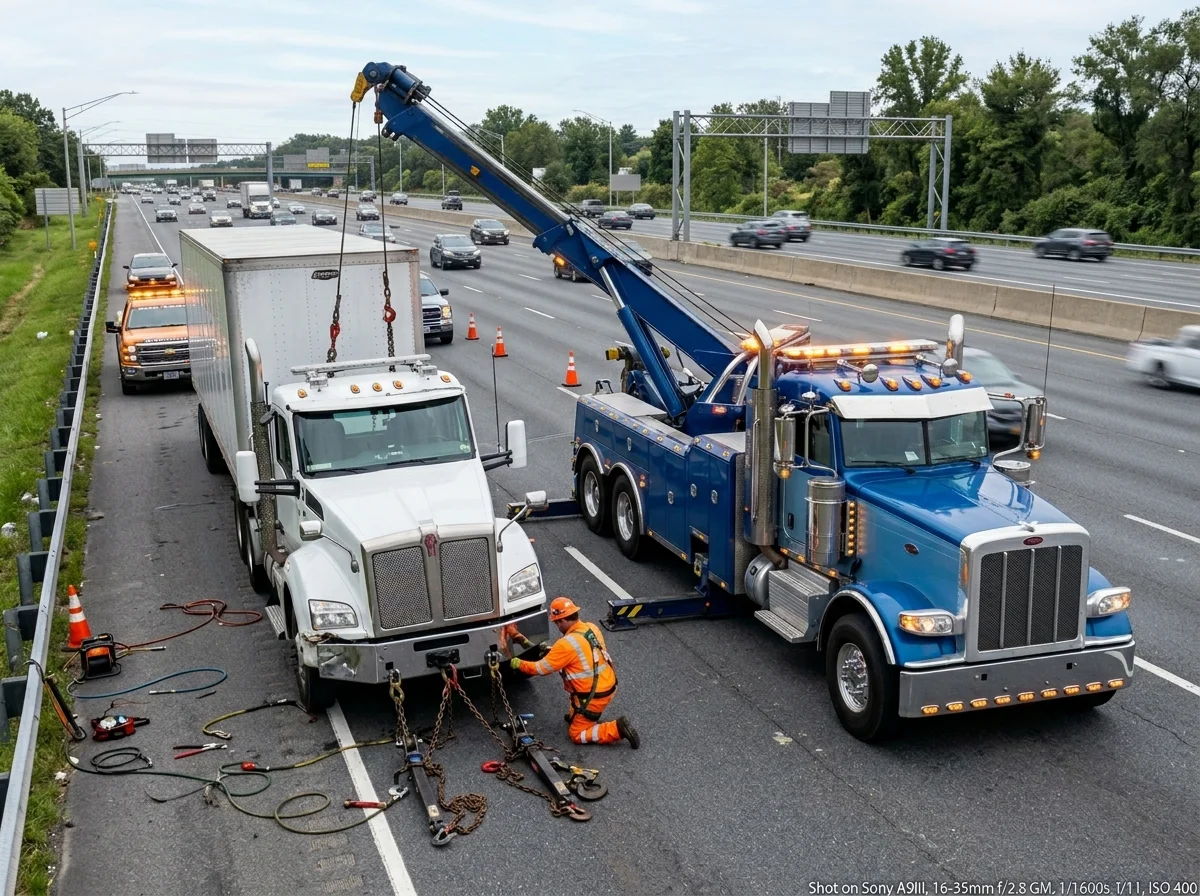
These trucks are built on heavy commercial chassis (often Peterbilt, Kenworth, Mack, or Freightliner) and outfitted with specialized equipment like extendable booms, underlifts, rotators, and high-capacity winches. The operators behind them are typically certified in heavy recovery, which is a serious skill set involving physics, rigging, and load management.
If you’ve ever seen a jackknifed 18-wheeler being pulled out of a ditch, you’ve seen a semi tow truck doing what it does best.
How a Semi Tow Truck Actually Works?
The core function of a semi tow truck is to safely lift and transport a disabled commercial vehicle. But the “how” depends on the situation. Here’s a breakdown of the main components and what they do:
The Boom: This is the hydraulic arm extending from the rear of the truck. On heavy wreckers, booms can lift anywhere from 25 to 75 tons depending on the model. The boom handles winching, lifting overturned vehicles, and pulling rigs back onto the road.
The Underlift: Think of this as a pair of mechanical arms that slide under the front or rear axle of the disabled truck. Once secured, the underlift raises the axle off the ground, allowing the wrecker to tow the rig without damaging its drivetrain.
Winches: Most semi tow trucks have multiple winches, each rated for tens of thousands of pounds. These are used for pulling, recovery, and stabilization during complex jobs.
Outriggers: Hydraulic legs that extend from the sides of the truck to stabilize it during heavy lifts. Without outriggers, the wrecker itself could tip during a recovery.
Rotator (on advanced units): A rotating boom that can swing 360 degrees, allowing precise lifting in tight spaces, off cliffs, or in awkward crash scenarios.
When a call comes in, the operator assesses the scene, positions the wrecker, deploys outriggers, rigs the disabled vehicle properly, and then either tows it or performs a recovery operation. Every step matters. A rushed setup can damage the disabled truck, the wrecker, or the operator.
Types of Semi Tow Trucks
Not all heavy wreckers are the same. Choosing the wrong one for the job wastes time and money. Here are the main types you’ll encounter:
1. Medium-Duty Wreckers
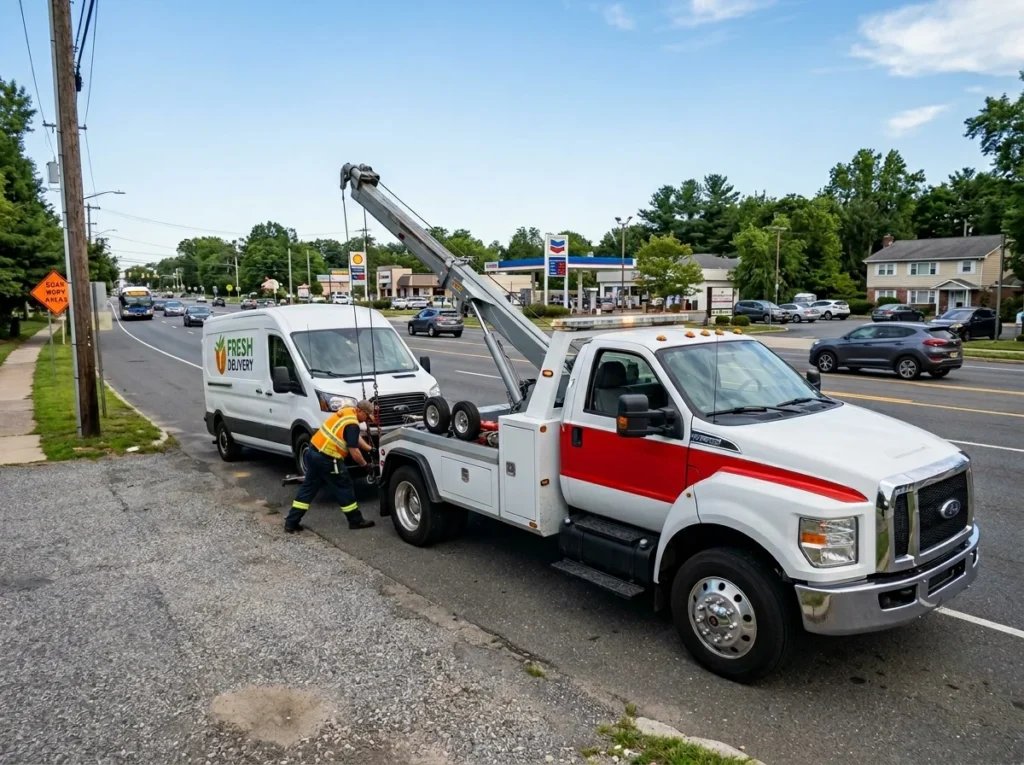
These handle vehicles in the 17,000 to 33,000-pound range. Box trucks, large delivery vehicles, RVs, and smaller commercial trucks fall into this category. They’re versatile but not built for full-size tractor-trailers.
2. Heavy-Duty Wreckers
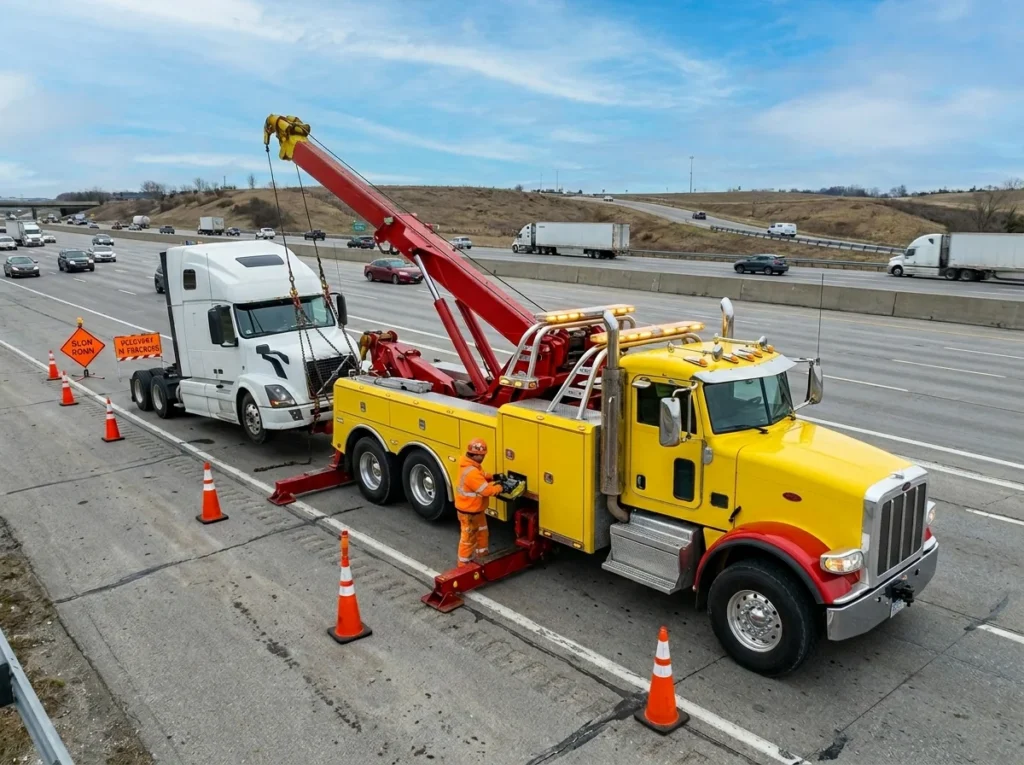
This is the workhorse of commercial towing. Heavy-duty wreckers handle Class 7 and Class 8 trucks, typically with boom capacities of 25 to 50 tons. Most semi tow truck calls involving a standard tractor-trailer will get one of these.
3. Rotator Wreckers
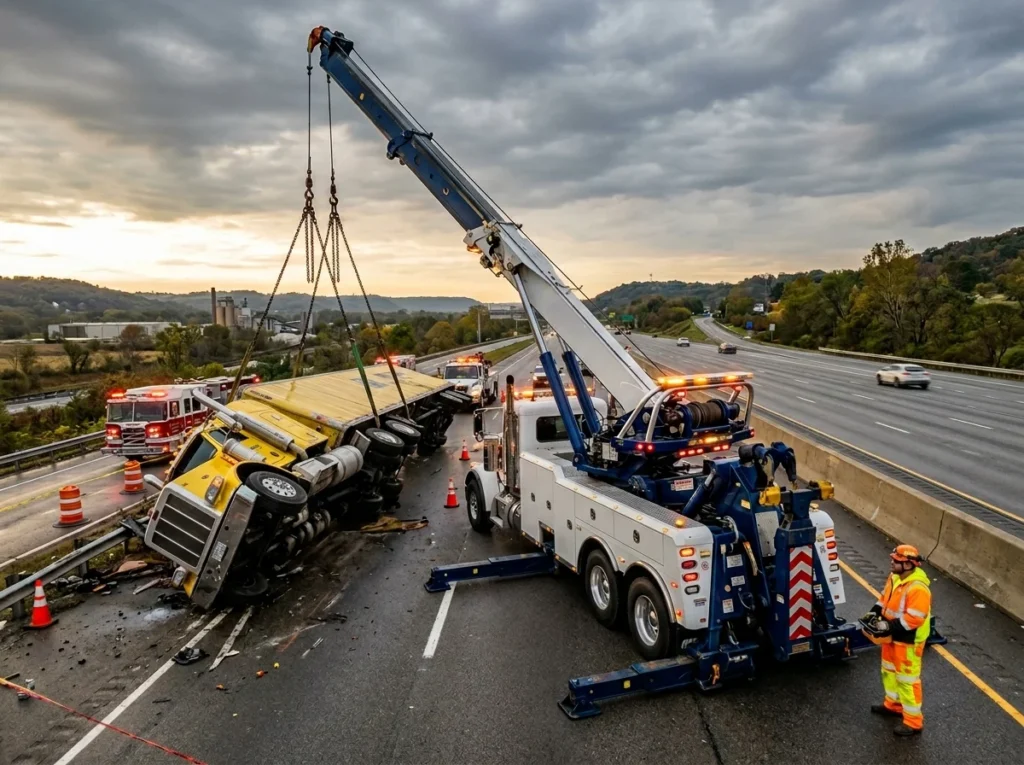
The specialists. Rotators are used for complex recoveries: rollovers, embankment recoveries, building extractions, and accidents in tight urban environments. With a rotating boom, they can lift loads at angles a fixed-boom wrecker simply cannot reach. They’re expensive to operate, but for certain jobs, nothing else works.
4. Integrated Wreckers vs. Detachable Units
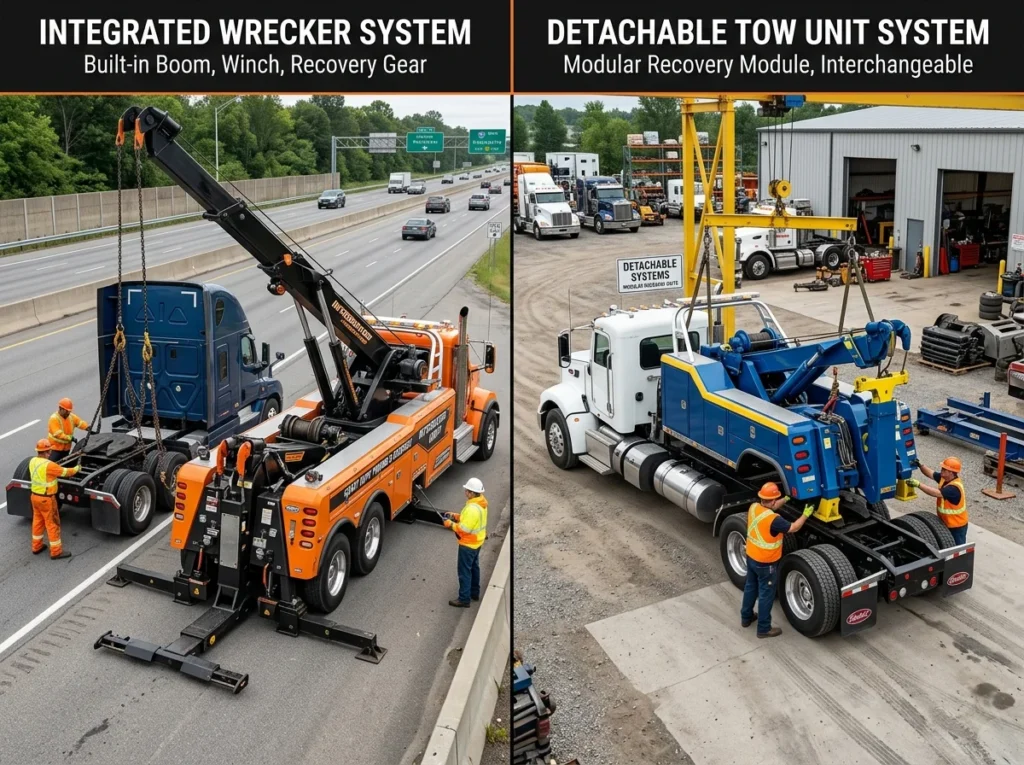
Integrated units have the boom and underlift built into a single unit, providing speed and efficiency. Detachable units allow the operator to swap components for different jobs, offering flexibility for shops handling varied workloads.
Also Read: Types of Tow Trucks Explained
Quick Comparison of Semi Tow Truck Types
| Type | Typical Capacity | Best Use Case |
|---|---|---|
| Medium-Duty | 17,000–33,000 lbs | Box trucks, RVs, large vans |
| Heavy-Duty | 25–50 tons | Tractor-trailers, buses |
| Rotator | 50–75+ tons | Rollovers, complex recoveries |
When You Actually Need a Semi Tow Truck?
This is where I see the most confusion. Drivers sometimes wait too long to call, or they call the wrong service and end up with a truck that can’t handle the job. Here are the scenarios where a semi tow truck is the right answer.
1. Mechanical Breakdowns on Commercial Vehicles
Engine failure, transmission issues, blown air systems, or seized brakes on a tractor-trailer all require a heavy wrecker. Trying to limp a rig with serious mechanical problems is dangerous and can turn a repairable issue into a complete loss.
2. Accidents and Rollovers
If a semi has tipped, jackknifed, or gone off the road, you need heavy recovery. These jobs almost always involve a rotator or heavy-duty wrecker with experienced operators. Cargo offload, rigging, and stabilization are part of the work.
3. Tire Blowouts on Heavy Axles
A blowout on a drive or trailer axle on a fully loaded rig isn’t always a roadside repair. If the wheel assembly is damaged or the truck can’t be safely moved, a semi tow truck transports it to a service facility.
4. Stuck Vehicles
Soft shoulders, mud, snow, construction sites – heavy trucks get stuck. A semi tow truck with proper winching capability can extract a rig without tearing up the drivetrain or undercarriage.
5. Out-of-Service Inspections
When DOT inspectors place a truck out of service due to violations, the rig can’t move under its own power until repairs are made. A heavy wrecker is often the only legal way to relocate it.
Broken Down? Don’t Wait. MG Towing and Recovery is available 24/7 across Milwaukee and southeastern Wisconsin. Request Assistance Now
What It Costs (And Why)
Heavy towing isn’t cheap, and there’s a reason. The equipment costs $300,000 to $1 million+, operators are highly trained, and the liability is enormous. Here’s a realistic look at typical pricing in the U.S. market:
| Service | Estimated Cost Range |
|---|---|
| Hookup Fee | $250 – $700 |
| Per-Mile Towing | $7 – $15 per mile |
| Recovery Work (hourly) | $400 – $1,200 per hour |
| Rotator Service (hourly) | $750 – $2,000 per hour |
These are ballpark figures. Pricing varies by region, time of day, weather, and complexity. A nighttime recovery in winter on a busy interstate will cost significantly more than a daytime tow on a clear road.
Choosing the Right Semi Tow Truck Service
If you’re a fleet manager, owner-operator, or even a dispatcher, knowing how to vet a heavy towing company matters. Here’s what I tell people to look for:
Certifications: Look for operators with Wreckmaster or TRAA (Towing and Recovery Association of America) certifications. These programs train operators in proper rigging, recovery techniques, and safety procedures.
Equipment Range: A good service has multiple types of wreckers available. If they only own one heavy-duty truck, they may not have the right tool for every job.
Insurance: Heavy recovery involves serious liability. Make sure the company carries on-hook coverage and garage keepers insurance at appropriate levels.
Response Time: In trucking, downtime equals money. A reliable service should give you a realistic ETA and stick to it.
Experience with Your Equipment: Some companies specialize in certain truck types. If you run tankers, lowboys, or specialized equipment, find a service that knows how to handle it.
Tips From the Field
A few things I’ve learned watching heavy recovery operations over the years:
Don’t try to “drive it in” if there’s any chance of further damage. I’ve seen drivers turn a $2,000 repair into a $25,000 one because they didn’t want to wait for a tow.
Always document the scene before recovery begins. Photos, video, and notes protect everyone involved if questions come up later about damage or cargo.
Communicate clearly with dispatch about the load, the location, and the nature of the problem. A wrecker showing up unprepared wastes time for everyone.
Know your insurance coverage. Many commercial policies include towing benefits, but the limits and approved providers vary widely.
FAQ
Q. How heavy can a semi tow truck tow?
Heavy-duty wreckers typically tow vehicles up to 80,000 pounds, which covers most legal-weight tractor-trailers. Rotators can lift even more in specific recovery scenarios, with some rated for 75 tons or higher.
Q. an a regular tow truck pull a semi?
No. Standard tow trucks lack the chassis strength, boom capacity, and underlift design needed for commercial trucks. Attempting it can damage both vehicles and create serious safety risks.
Q. How long does a semi tow truck recovery take?
A simple breakdown tow might take 1 to 2 hours. A complex recovery involving a rollover, cargo transfer, or environmental cleanup can take 6 to 12 hours or more. Time depends entirely on the situation.
Q. Do I need to be present when my truck is towed?
Usually yes, especially if cargo is involved. The driver or a company representative should be on scene to coordinate, sign paperwork, and make decisions about cargo and destination.
Q. What’s the difference between towing and recovery?
Towing is moving a disabled vehicle from point A to point B. Recovery involves getting a vehicle back to a drivable position first – winching it out of a ditch, righting a rollover, or extracting it from mud. Recovery is billed differently and usually costs more.
Q. Are semi tow truck operators licensed?
Operators need a CDL to drive the wrecker itself, and most reputable companies require additional certifications in heavy recovery. The skill level varies, so always ask about training when choosing a service.
Final Thoughts
A semi tow truck is one of those pieces of equipment most people don’t think about until they desperately need one. When that moment comes, understanding what these trucks do, which type fits the job, and how to choose a qualified service can make the difference between a manageable inconvenience and a costly disaster.
If you’re in the trucking industry, build a relationship with a quality heavy towing company before you need them. Get their number in your phone, know their service area, and understand their pricing structure. The drivers and fleets that handle breakdowns best are the ones who planned for them ahead of time.
And if you’re on the side of the road right now wondering whether to call? Call. Waiting almost always makes things worse.
Save Our Number Before You Need It. Fast, reliable, and always ready. MG Towing and Recovery, Milwaukee’s trusted recovery team. Call (414) 973-1902