

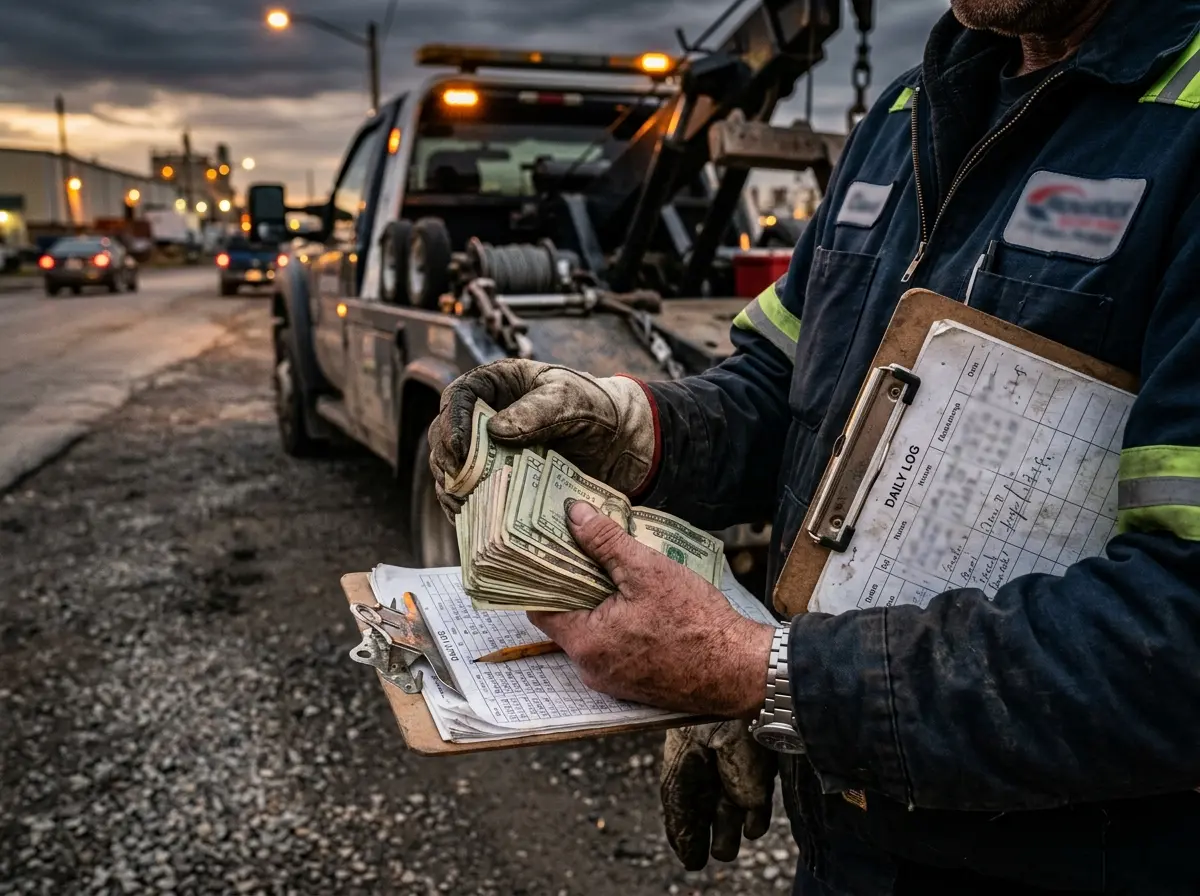
If you have ever been stranded on the side of the road late at night, you already know how valuable a good tow truck driver is. What you might not know is how much they actually take home for showing up at 2 a.m. in the rain to rescue your minivan.
The towing industry is one of those careers most people never think twice about, yet it pays steady money, offers real overtime opportunities, and gives skilled drivers a path to running their own business. Whether you are weighing this as a new career or you already drive a wrecker and want to know if your check matches the market, understanding tow truck driver salary numbers helps you make smarter decisions.
This guide breaks down current pay rates, overtime potential, state differences, and the real income behind every type of towing work in the United States.
Why Tow Truck Driver Pay Matters?
Towing is not a job you fall into casually. It involves long hours, physical work, weekend shifts, and dealing with stressed-out drivers on the worst day of their week. The pay should match the demand, and for the most part, it does, especially if you know which lanes pay best.
Salary clarity also helps you negotiate. New drivers often accept the first offer they get, only to find out months later that the shop down the street pays two or three dollars more per hour for the same work.
Average Tow Truck Driver Salary in the USA
According to the latest 2026 salary data from ZipRecruiter, the average annual pay for a tow truck driver in the United States is around $47,733 per year, which works out to roughly $22.95 an hour, $917 per week, or $3,977 per month.
Other sources land in a similar range. Salary.com reports an average of about $48,765 per year, equal to $23 per hour, while Indeed shows an average hourly wage of $21.29 based on 4,200+ job postings.
When you include tips, bonuses, and overtime, the picture changes. Glassdoor estimates total pay closer to $60,462 per year, with top earners reporting up to $92,093 at the 90th percentile.
The takeaway: most full-time tow truck drivers earn between $40,000 and $60,000 annually, but high performers in busy markets can push past $80,000 once overtime and call-out fees are added in.
Salary by Experience Level
Like any skilled trade, towing rewards time on the road. The difference between a rookie hooking up a sedan and a veteran handling a rolled semi-truck is huge, and so is the paycheck.
Entry-Level (0 to 2 years)
New drivers usually start as light-duty operators, towing cars, SUVs, and motorcycles. Expect on-the-job training and basic dispatch work. Pay tends to sit at the lower end of the scale.
Mid-Level (3 to 7 years)
By this stage, drivers have a clean record, often hold a CDL, and can run flatbeds or medium-duty wreckers. Many take on accident recovery and police rotation calls, both of which pay better.
Experienced (8+ years)
Senior drivers often specialize in heavy-duty recovery, run lead operator roles, or move into owner-operator territory. Their towing pay rates reflect the technical skill involved.
Salary by Experience Level
| Experience Level | Hourly Range | Annual Range |
|---|---|---|
| Entry-Level (0 to 2 yrs) | $14 to $18 | $29,000 to $37,000 |
| Mid-Level (3 to 7 yrs) | $19 to $25 | $40,000 to $52,000 |
| Experienced (8+ yrs) | $26 to $35+ | $54,000 to $75,000+ |
| Heavy-Duty Specialist | $28 to $40+ | $58,000 to $85,000+ |
Pay Per Hour vs Pay Per Job
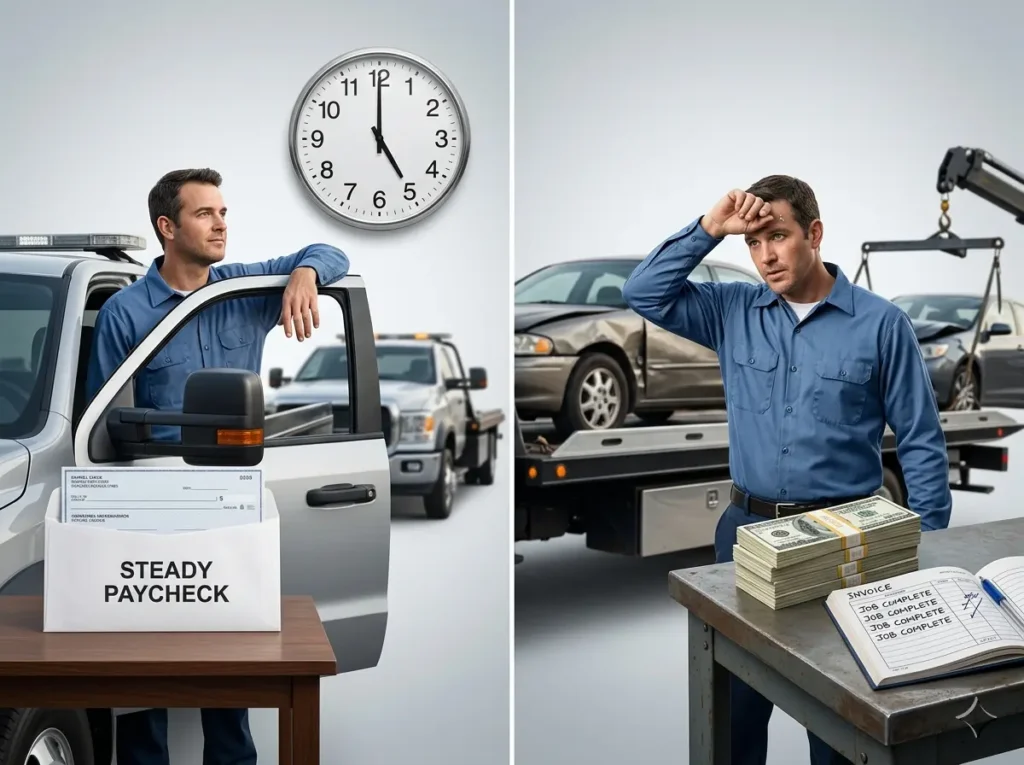
Towing companies use two main pay structures, and which one you fall under makes a big difference in your weekly paycheck.
Hourly pay is the most common setup, especially with larger companies and AAA contractors. You clock in, get dispatched, and earn the same rate whether you do two calls or ten. The upside is predictability. The downside is that slow days still pay slow.
Per-job (commission) pay is popular at smaller, independent shops. Drivers typically earn 25% to 40% of each tow ticket. A busy night with five calls can outearn a flat hourly shift, but a quiet Tuesday might leave you with nearly nothing.
Many shops use a hybrid model: a small base hourly rate plus commission on each completed tow. This protects drivers on slow days while still rewarding hustle. If you are evaluating an offer, always ask which model the company uses and run the math against typical call volume in your area.
Overtime and On-Call Pay
This is where tow truck earnings really start to climb. Towing is a 24/7 industry, and federal labor law generally requires overtime pay for hourly workers who exceed 40 hours per week.
Most companies pay 1.5x the regular hourly rate for overtime. A driver earning $22 per hour earns $33 per hour after 40 hours. Pull 10 hours of overtime in a week and that is an extra $330 before taxes.
On-call pay is the other big income booster. Drivers who carry the night phone or take weekend rotation typically receive:
- A flat stipend per shift, often $50 to $150 just for being available
- The regular hourly rate when actually dispatched
- Premium rates (sometimes double time) for holidays
- Per-call bonuses for accident or police rotation jobs
Drivers who consistently take overtime towing pay opportunities and weekend on-call shifts often add $10,000 to $20,000 a year on top of their base salary. Veterans in busy metro areas can do even better.
Salary by State
Where you live matters a lot. Cost of living, road density, weather, and state insurance laws all shape the local pay scale.
According to ZipRecruiter’s state-by-state data, Washington, the District of Columbia, and New York lead the country, with Washington paying about 13.3% above the national average. In New York specifically, the average annual pay is $52,222 per year, or about $25.11 per hour.
Tow Truck Driver Salary by State (Top and Notable Markets)
| State | Average Annual Salary | Hourly Equivalent |
|---|---|---|
| Washington | $54,000 to $58,000 | $26 to $28 |
| Massachusetts | $50,000 to $55,000 | $24 to $26 |
| New York | $52,000 to $55,000 | $25 to $27 |
| Alaska | $50,000 to $54,000 | $24 to $26 |
| New Jersey | $48,000 to $52,000 | $23 to $25 |
| Illinois | $46,000 to $50,000 | $22 to $24 |
| California | $44,000 to $50,000 | $21 to $24 |
| Texas | $38,000 to $46,000 | $18 to $22 |
| Florida | $36,000 to $44,000 | $17 to $21 |
| Georgia | $36,000 to $43,000 | $17 to $20 |
Interestingly, California does not top the list despite a high cost of living. ZipRecruiter actually ranks California 50th out of 50 states for tow truck driver salaries, with most pay falling between $36,500 and $49,800 annually. The labor pool is large, which keeps wages compressed.
If you are willing to relocate, the Pacific Northwest and Northeast generally offer the strongest combination of demand, weather-driven call volume, and pay rates.
Type of Tow Truck Work and Earnings
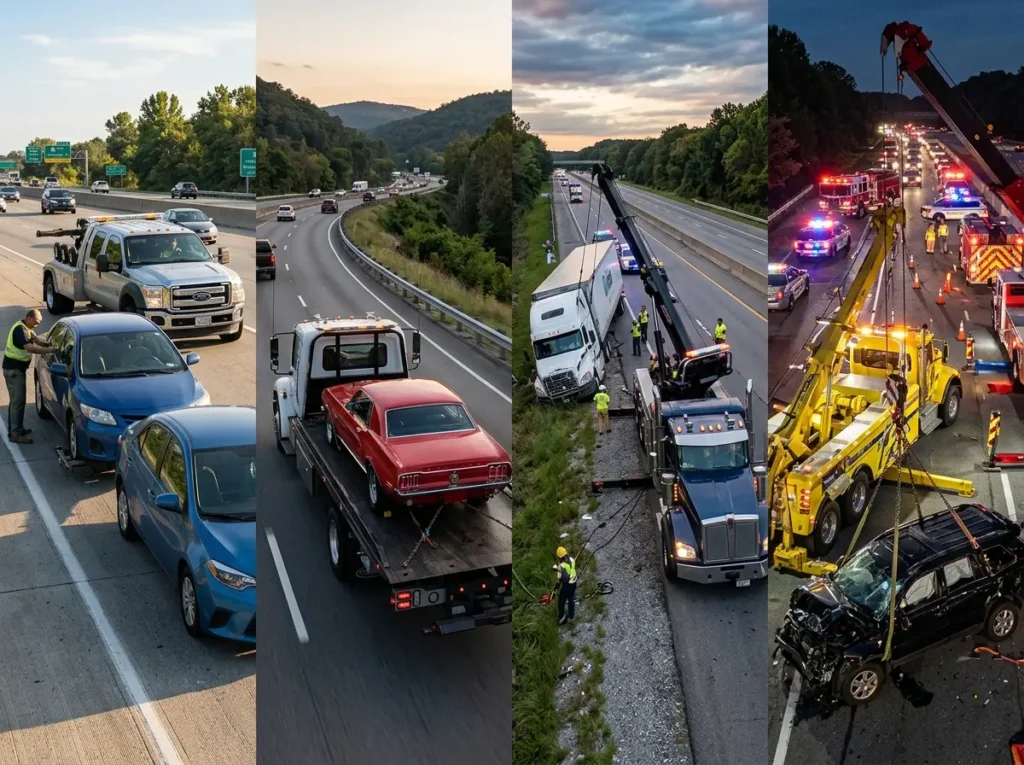
Not all towing is created equal. The truck you drive and the kind of work you take directly determine how much you make.
1. Light-Duty Towing
This is the entry point for most drivers. Light-duty rigs handle passenger cars, motorcycles, and small SUVs. Calls are usually quick and high volume. Pay is at the lower end, typically $15 to $20 per hour. The upside is steady work and an easy path into the industry.
2. Flatbed Towing
Flatbeds are the workhorses of modern towing. They are safer for low-clearance and luxury vehicles, and most insurance and dealer contracts require them. Flatbed driver pay tends to run a few dollars per hour higher than hook-and-chain operators, often $19 to $26 per hour, plus better tips from dealerships and insurance jobs.
3. Heavy-Duty Towing
This is where the real money sits. Heavy-duty drivers tow buses, semi-trucks, RVs, and construction equipment. The work requires a CDL, advanced training, and serious nerves. According to ZipRecruiter, the average heavy-duty towing income in 2026 is around $48,754 per year, with top earners hitting $63,500 annually. In reality, experienced heavy recovery operators in busy corridors often clear $70,000 to $90,000 once overtime and recovery fees are added.
4. Accident and Recovery Towing
Accident scenes pay premium rates because they involve police rotation contracts, complex recovery, and longer job times. Drivers on these calls often earn flat recovery fees of $300 to $1,500+ per job, depending on complexity. For commission-based drivers, a few good accident calls can transform a paycheck.
Job Type vs Earnings
| Towing Type | Typical Hourly Pay | Annual Earnings |
|---|---|---|
| Light-Duty | $15 to $20 | $32,000 to $42,000 |
| Flatbed | $19 to $26 | $40,000 to $54,000 |
| Medium-Duty | $22 to $28 | $46,000 to $58,000 |
| Heavy-Duty | $26 to $38 | $54,000 to $80,000+ |
| Accident/Recovery Specialist | $28 to $45+ | $60,000 to $95,000+ |
Also Explore: How to Start a Tow Truck Business?
Company Driver vs Owner-Operator Income
This is one of the biggest career decisions in towing.
A company driver gets a steady paycheck, benefits in many cases, and someone else covers the truck payment, fuel, and insurance. The trade-off is a hard ceiling on earnings.
An owner-operator runs the show. According to ZipRecruiter, the average independent contractor tow truck driver earns about $69,000 per year, equal to $33.17 an hour, with top earners hitting $97,500 annually. That sounds great, but those are gross numbers, not take-home.
Owner-operators have to cover:
- Truck payment or lease (often $1,500 to $4,000+ per month)
- Commercial insurance ($8,000 to $20,000+ per year)
- Fuel, tires, maintenance, and repairs
- Self-employment taxes and business filings
- Permits, licensing, and dispatch fees
Net income for a solo owner-operator typically lands between $50,000 and $90,000 once expenses are paid. The bigger money comes when you grow a small fleet and become an employer rather than just a driver. Many of the highest-earning people in towing started as drivers, learned the business, then bought their first truck around year five or six.
Additional Income Opportunities
Base pay is only part of the story. Drivers who pay attention to the extras often add several thousand dollars per year to their take-home.
- Tips from grateful customers, especially on roadside assistance calls. $10 to $40 tips are common, and they add up fast on a busy weekend.
- Insurance and motor club contracts with companies like AAA, Allstate Roadside, Agero, and Urgently. These pay flat rates per call but offer steady volume.
- Police rotation contracts, which pay premium rates for accident and impound work.
- Storage and impound fees at companies that own their own lots.
- Auction and repossession work, which often pays per-vehicle bonuses.
- Performance bonuses for clean inspections, low damage rates, and high customer review scores.
Factors That Affect Salary
A handful of variables explain most of the gap between the lowest and highest paid drivers in any market.
Location and demand. Urban markets with heavy traffic and harsh weather generate more calls, which means more billable hours.
Certifications. A CDL is the single biggest pay bump in the industry. Beyond that, WreckMaster certification, hazmat endorsements, and Towing and Recovery Association of America (TRAA) credentials all command higher rates.
Shift timing. Overnight, weekend, and holiday shifts pay premiums. Drivers who work the unpopular hours often outearn their daytime coworkers.
Type of equipment. Operating a rotator or heavy wrecker pays significantly more than a standard light-duty truck.
Company size and contracts. Shops with strong insurance and police contracts pay better than ones living off random street calls.
Driving record. A clean MVR is non-negotiable for top-paying contracts.
Pros and Cons of Tow Truck Driving as a Career
Like any job, towing has real upsides and real headaches. Going in with clear eyes saves you from regret later.
Pros
- Strong job security with steady year-round demand
- Low barrier to entry compared to most skilled trades
- Real overtime opportunities and on-call income
- Clear path from driver to owner-operator to fleet owner
- Variety of work, no two days look the same
- High demand for heavy-duty drivers in most markets
Cons
- Long, irregular hours including nights, weekends, and holidays
- Physically demanding and weather-exposed work
- Dealing with upset, sometimes hostile customers
- Real safety risks on highway shoulders
- Lower starting pay until you build experience or get specialized
- Some companies have outdated pay structures and limited benefits
Tips to Maximize Earnings in the Towing Industry
If you want to climb the pay ladder faster than average, focus on these moves.
Get your CDL early. It opens the door to medium and heavy-duty work, where pay rates jump significantly. Many companies will help cover the cost if you commit to staying.
Pursue WreckMaster certification. The industry standard credential pays for itself within months at most shops.
Specialize in heavy-duty or rotator work. This is where six-figure incomes live for skilled operators.
Take the night and weekend shifts. They pay more, and call volume is often higher.
Build a clean driving record and protect it. Insurance contracts and police rotation work require it.
Learn the business side. Track your call volume, average ticket, and equipment expenses. The drivers who eventually own trucks and shops are the ones who treated their job like a business from day one.
Network with insurance adjusters and motor clubs. Personal relationships drive a surprising amount of dispatch volume in this industry.
Document everything. Photos, time logs, and clean paperwork protect both your reputation and your bonuses.
Conclusion
Tow truck driving is one of those careers that rewards effort, skill, and patience in clear, measurable ways. The average tow truck driver salary in the United States sits around $47,000 to $48,000 a year, but that number tells only part of the story. Drivers who get certified, take on heavy-duty work, embrace overtime, or eventually buy their own truck regularly earn $70,000 to $90,000 or more.
The towing industry is not glamorous, and it asks a lot from the people who keep it running. In return, it offers real pay, real overtime, and a real career path you can build over decades. If you treat it like a trade rather than just a job, the income potential is genuinely strong.
Whether you are just starting out or thinking about your next move, knowing what the market actually pays is the first step toward making sure your paycheck reflects the work you put in.
Frequently Asked Questions (FAQs)
Q. How much does a tow truck driver make per hour in the US?
The average tow truck driver in the United States earns about $22 to $23 per hour in 2026. Entry-level drivers usually start between $15 and $18 per hour, while experienced heavy-duty operators can earn $28 to $40 or more per hour, especially with overtime and on-call premiums added in.
Q. What is the highest-paying type of towing?
Heavy-duty and accident recovery towing pay the most. Heavy-duty drivers handle semi-trucks, buses, and RVs, often earning $54,000 to $80,000+ per year. Specialists who run rotators or work police rotation contracts can earn six figures once recovery fees and overtime are included.
Q. Do tow truck drivers get overtime pay?
Yes, hourly tow truck drivers are generally entitled to overtime under federal labor law. Most companies pay 1.5x the regular hourly rate after 40 hours per week. Many also pay shift premiums, holiday rates (sometimes double time), and per-call bonuses for accident or police rotation work.
Q. How much do tow truck owner-operators make?
According to 2026 data, independent contractor tow truck drivers average about $69,000 per year in gross income, with top earners reaching $97,500. After expenses like truck payments, insurance, fuel, and maintenance, most single-truck owner-operators net between $50,000 and $90,000 annually.
Q. Which states pay tow truck drivers the most?
Washington, the District of Columbia, New York, Massachusetts, and Alaska are among the top-paying states. Washington pays roughly 13% above the national average. Surprisingly, California ranks near the bottom despite its high cost of living because the labor pool is large and pay rates are compressed.
Q. How much do tow truck drivers make on tips?
Tips vary widely. On roadside assistance calls, $10 to $40 tips are common, though many calls produce nothing. A driver in a busy market can add $1,500 to $4,000+ per year in tips alone, especially if they’re polite, fast, and handle stressed customers well.
Q. Is tow truck driving a stable career?
Yes. Towing is a 24/7 industry with steady year-round demand. Cars break down, accidents happen, and impound work continues regardless of the economy. Drivers with clean records and CDLs rarely struggle to find work, and many turn it into a long-term career or eventually start their own towing business.
Q. How can I increase my tow truck driver salary?
The fastest ways to boost your towing pay rates are: get a CDL, earn WreckMaster certification, move into flatbed or heavy-duty work, take on-call and night shifts, and build a clean driving record so you qualify for premium insurance and police rotation contracts. Long term, becoming an owner-operator offers the highest income potential.