



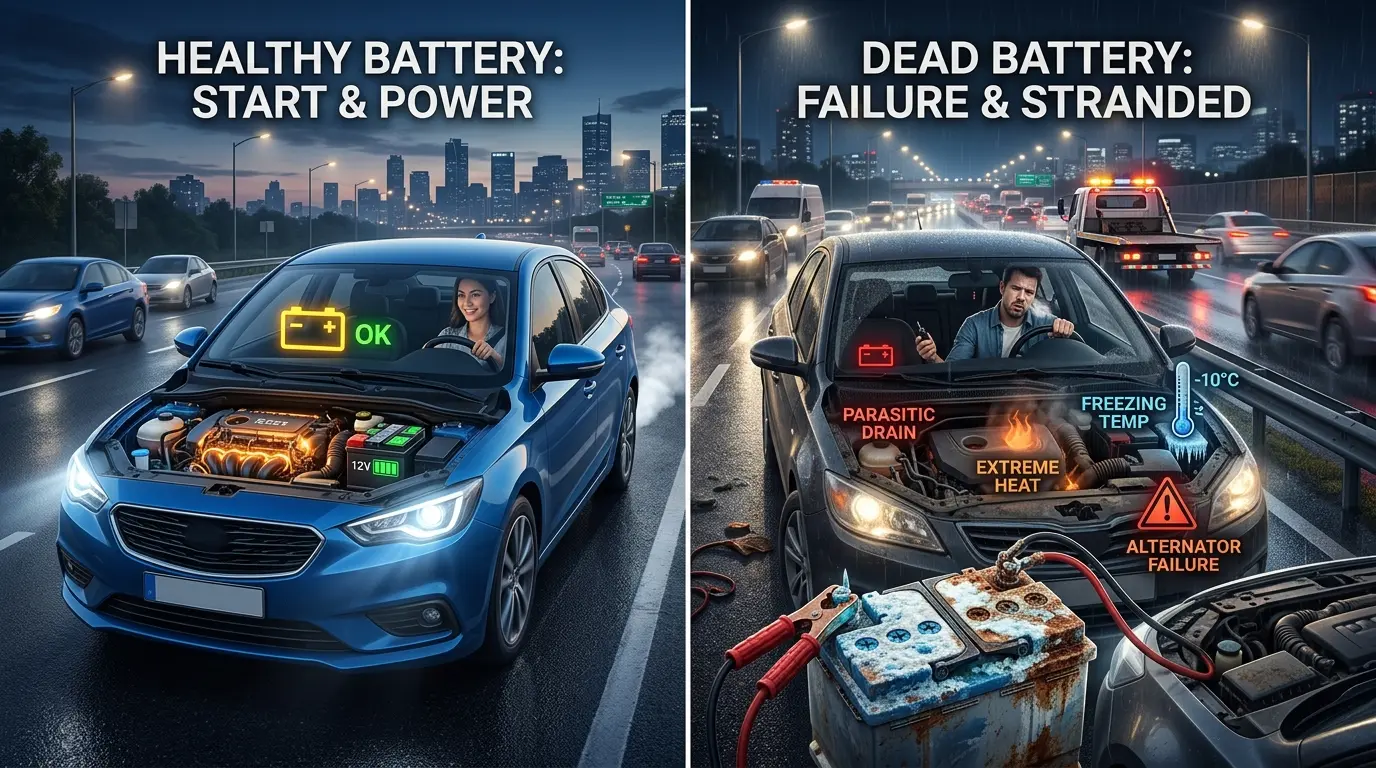
A dead car battery has a way of ruining your morning. One minute you’re running late, the next you’re staring at a dashboard full of warning lights and hearing that slow, sad click instead of an engine. The frustrating part is that most batteries don’t just give up out of nowhere. They die for a reason, and usually that reason has been building for weeks or months.
After years of jump-starting cars in parking lots and replacing batteries in shop bays, I can tell you the same handful of causes show up over and over. Below is what actually kills car batteries, how to spot the early warnings, and what you can do to squeeze more life out of yours.
The Main Causes of a Car Battery Dying
A battery doesn’t just lose power randomly. Something is either draining it, preventing it from charging, or breaking it down internally. Here are the real culprits.
1. Leaving Lights or Accessories On
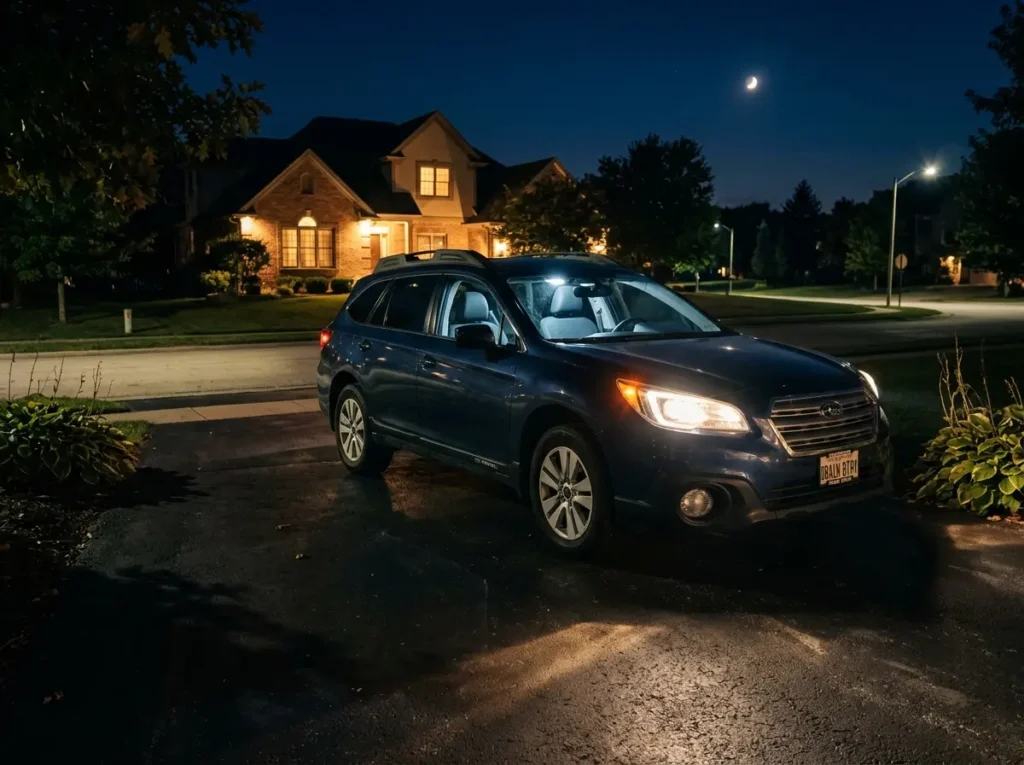
This is the classic one. Headlights left on overnight, an interior dome light that never clicked off, a phone charger pulling power from the cigarette socket. Modern cars beep to warn you, but older models will happily let the battery drain to zero. Even 8 hours of headlights on a healthy battery is enough to leave you stranded.
2. Short Trips and Infrequent Driving
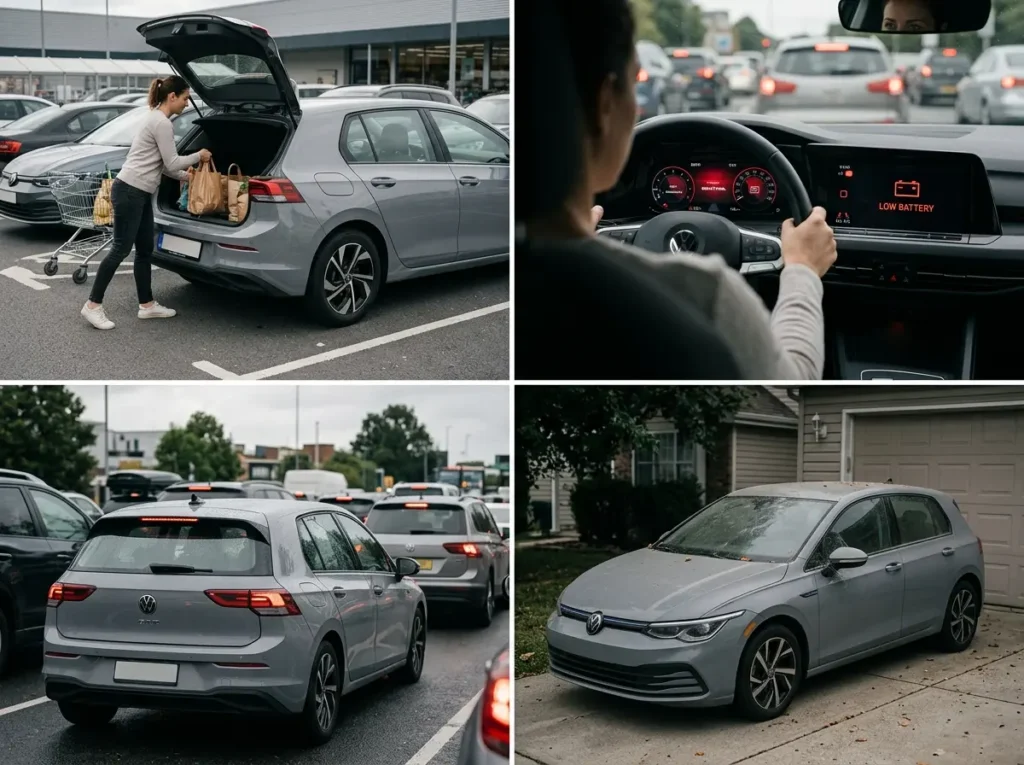
Your alternator needs time to recharge the battery after starting the engine. If your daily drive is just 5 minutes to the store and back, the alternator never fully replaces the energy used to crank the engine. Over weeks, the battery slowly loses charge. Cars that sit for two or more weeks without being driven often won’t start, especially in winter.
3. Extreme Temperatures
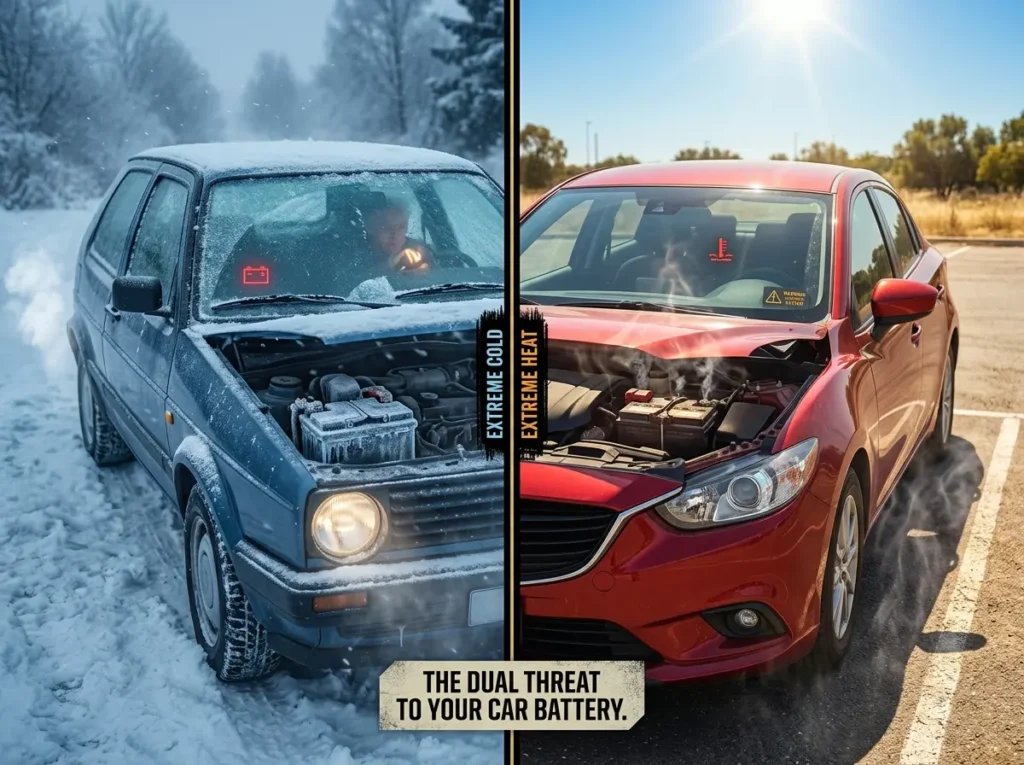
Heat is actually worse for batteries than cold, though cold gets all the blame. High temperatures evaporate the electrolyte fluid and accelerate internal corrosion. Cold weather thickens engine oil and reduces the battery’s chemical reaction, meaning it has to work harder to start the car.
| Temperature | Battery Power Available | What It Means for You |
|---|---|---|
| 80°F (27°C) | 100% | Peak performance |
| 32°F (0°C) | About 65% | Slower cranking, noticeable on older batteries |
| 0°F (-18°C) | About 40% | Weak batteries often fail to start the car |
| 100°F+ (38°C+) | Full power, but fluid loss | Long-term damage and shortened lifespan |
4. A Failing Alternator
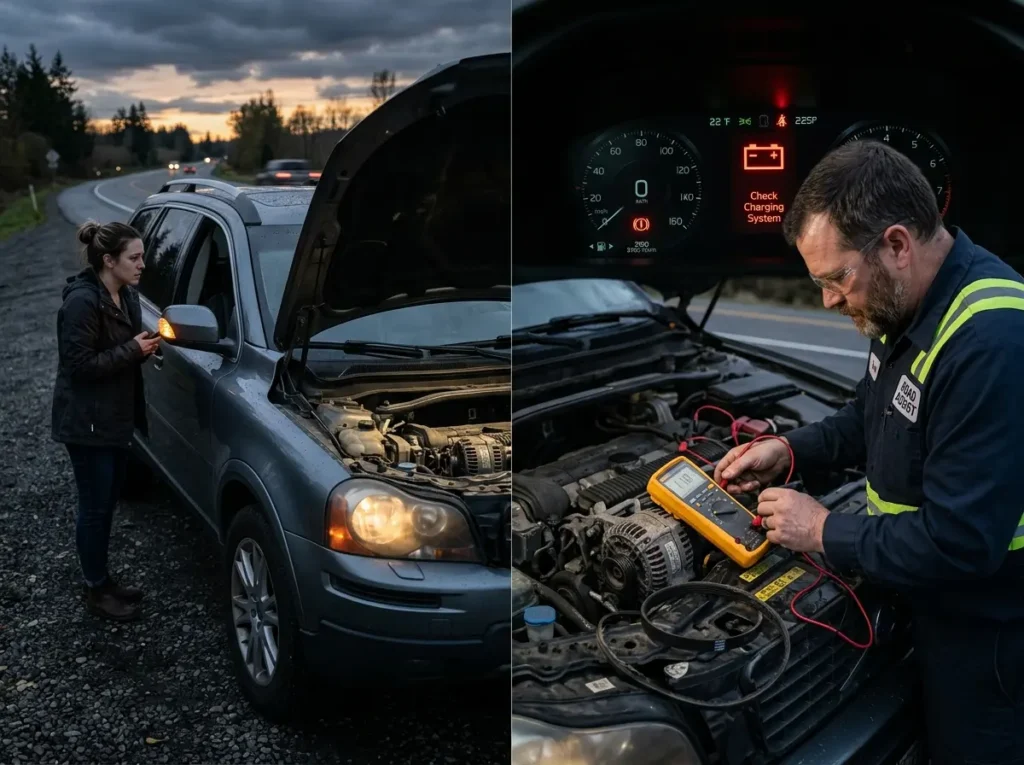
The alternator charges the battery while the engine runs. When it weakens, the battery never gets a full charge, and eventually it dies. Telltale signs include dim headlights at idle, flickering dashboard lights, or a battery that’s been replaced twice in a year. If a new battery dies fast, the alternator is almost always the real problem.
5. Corroded or Loose Battery Terminals
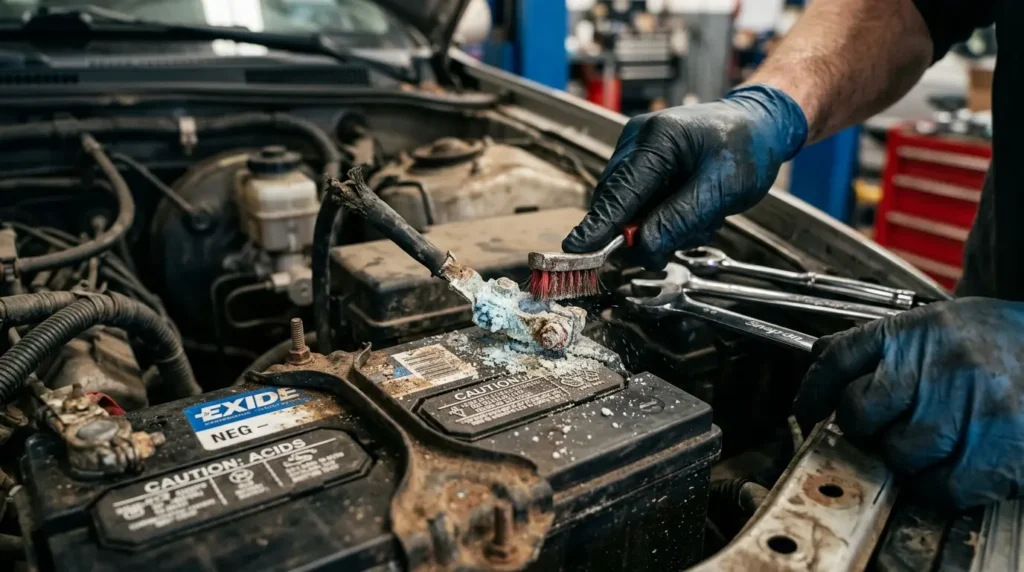
That white, blue, or greenish crust around the battery posts isn’t just ugly. It blocks the flow of electricity between the battery and the rest of the car. Loose terminals do the same thing. Both can prevent proper charging and cause hard starts even when the battery itself is fine.
6. Parasitic Drain
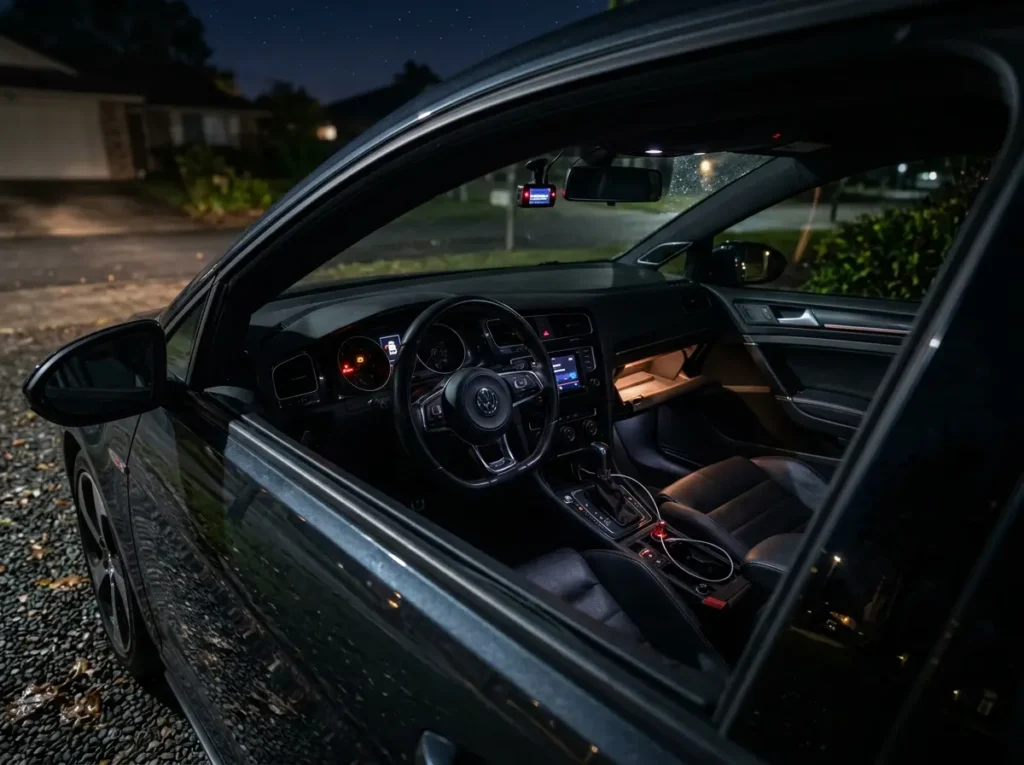
Even when your car is off, small amounts of power are drawn by the clock, alarm, and computer memory. Normal parasitic draw is around 50 milliamps. When something goes wrong such as a stuck relay, faulty trunk light switch, or an aftermarket stereo wired incorrectly, that draw can jump to 200 or 300 milliamps and drain a battery in days.
7. Old Age and Internal Wear
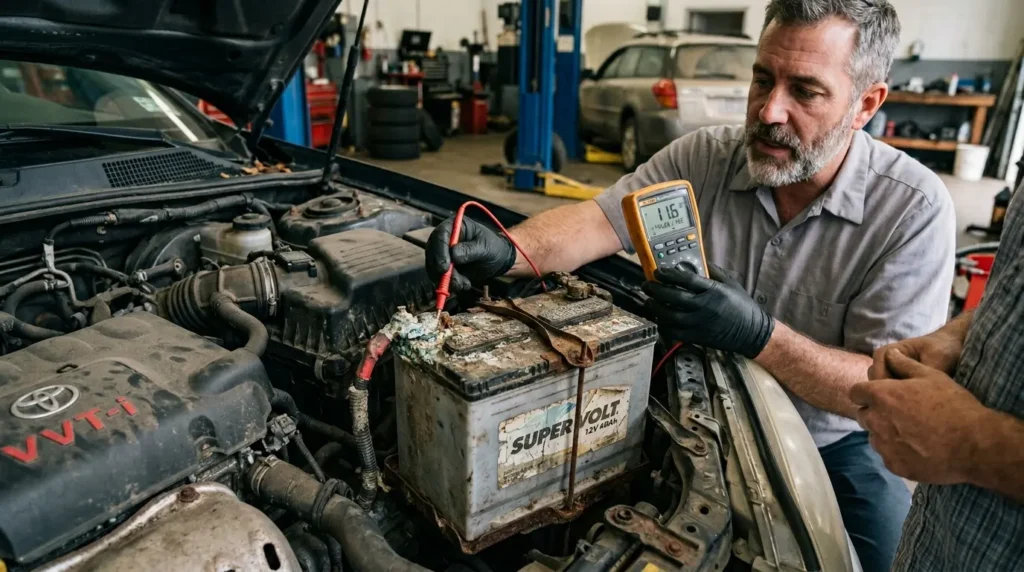
Every time a battery is charged and discharged, the lead plates inside degrade a little. After 3 to 5 years, the plates can’t hold a useful charge anymore. There’s no fixing this. The battery has simply done its job and needs to retire.
8. Overcharging
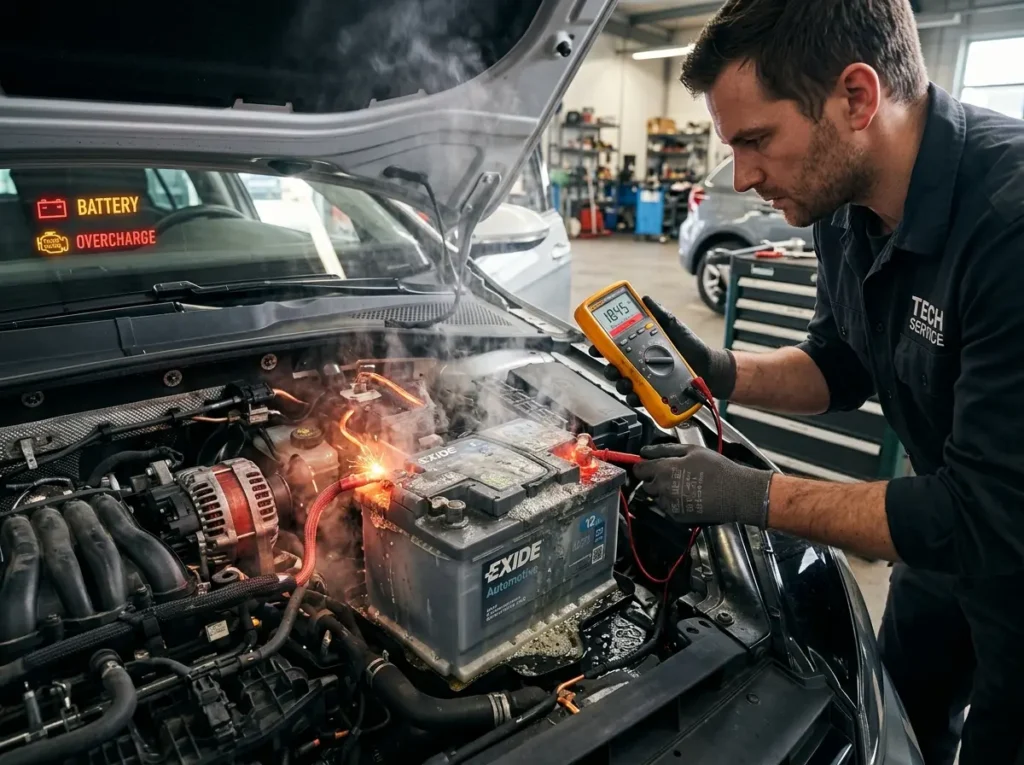
A bad voltage regulator inside the alternator can push too much current into the battery, boiling off the electrolyte and warping the internal plates. If you ever smell rotten eggs near the engine, that’s sulfur from an overcharged battery. Get it checked immediately.
9. Manufacturing Defects
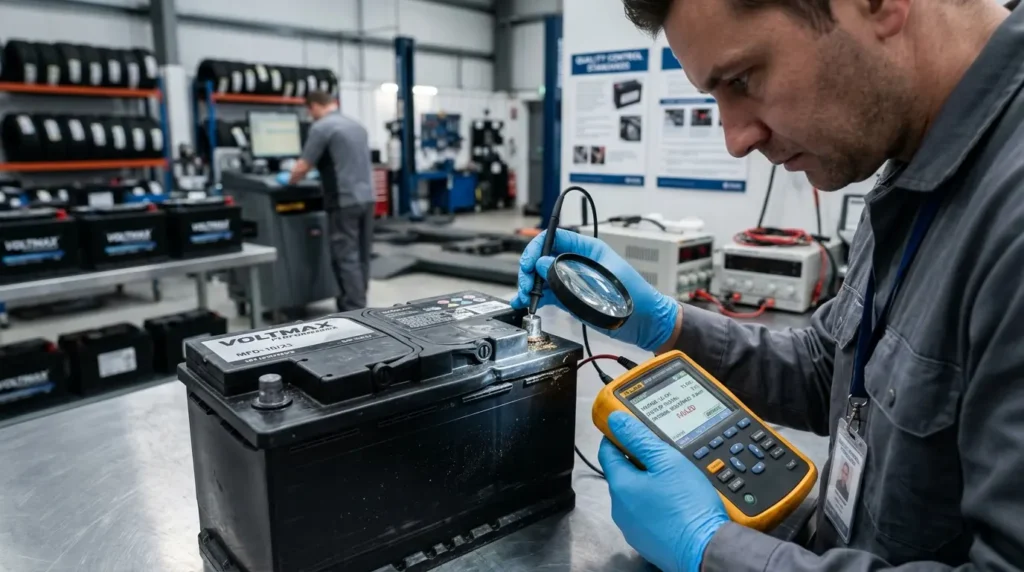
It happens. Roughly 1 in 50 new batteries has some kind of defect, whether it’s a weak cell or a slow internal short. This is why reputable brands offer free replacement warranties for the first 2 to 3 years.
Related Articles:
How to Test a Car Battery at Home?
How to Charge a Car Battery Without a Charger?
How Long Should a Car Battery Last?
Most car batteries in the United States last between 3 and 5 years. The exact number depends heavily on your climate, your driving habits, and the type of battery you bought. Drivers in Phoenix or Houston often replace batteries every 2 to 3 years, while folks in cooler states like Oregon or Michigan sometimes get a full 5.
| Battery Type | Cool Climate | Moderate Climate | Hot Climate | Typical Price (USD) |
|---|---|---|---|---|
| Standard Lead-Acid | 4 to 5 years | 3 to 4 years | 2 to 3 years | $120 to $180 |
| Enhanced Flooded (EFB) | 5 to 6 years | 4 to 5 years | 3 to 4 years | $160 to $220 |
| AGM (Absorbent Glass Mat) | 6 to 8 years | 5 to 7 years | 3 to 5 years | $200 to $350 |
| Lithium-Ion (LiFePO4) | 8 to 10+ years | 8 to 10 years | 6 to 8 years | $500 to $1,000+ |
Warning Signs Your Battery Is About to Die
Batteries usually give hints before they quit completely. Pay attention to these:
- Slow engine crank. The starter sounds tired and labored.
- Dim headlights. Especially noticeable at idle or when starting.
- Clicking sound when turning the key. Classic sign of low voltage.
- Battery warning light on the dashboard. Don’t ignore this one.
- Electronics acting strange. Radio resets, power windows slow down, dash flickers.
- Swollen or bloated battery case. A sign of heat damage or overcharging.
- Rotten egg smell under the hood. Leaking sulfuric acid, replace immediately.
How to Prevent a Car Battery from Dying Early?
You can’t make a battery last forever, but you can absolutely squeeze the most out of it. Here’s what actually works in practice.
- Drive at least 20 to 30 minutes a few times a week. This lets the alternator fully recharge the battery.
- Turn off all lights and accessories before exiting the car. Double-check the dome light.
- Clean the terminals every 6 months. A wire brush, baking soda, and water remove corrosion in minutes.
- Use a trickle charger or battery maintainer if your car sits for more than a week. These cost $30 to $60 and pay for themselves quickly.
- Park in a garage or shaded area during extreme heat to slow electrolyte loss.
- Test your battery once a year. Most auto parts stores like AutoZone, Advance Auto Parts, and O’Reilly do this for free.
- Avoid running electronics with the engine off. No long sessions of radio or AC at the drive-in.
When Should You Replace a Car Battery?
Replace your battery if any of these apply: it’s more than 4 years old and showing weakness, it’s failed a load test at a shop, you’ve jump-started it more than twice in a month, or you see physical damage like swelling or leaks. Don’t wait for it to fully die in a grocery store parking lot. A $150 battery replaced on your schedule is much better than a $200 tow plus a battery later.
Frequently Asked Questions
Q. Can a car battery die suddenly without warning?
Yes, especially in extreme heat or cold, or if there’s an internal short. But most batteries show subtle signs like slow cranks or dim lights for days or weeks before completely failing.
Q. How long can a car sit before the battery dies?
A healthy battery in a modern car typically lasts 2 to 4 weeks of inactivity before it can’t start the engine. Older batteries or cars with high parasitic draw may die in just 5 to 7 days.
Q. Does idling charge a car battery?
Idling charges the battery very slowly, much less efficiently than driving. To properly recharge after a jump-start, drive for at least 20 to 30 minutes at highway speeds.
Q. Why does my new car battery keep dying?
If a new battery keeps dying, the battery itself is usually not the problem. The most common causes are a failing alternator, parasitic drain from a stuck relay or aftermarket accessory, or loose and corroded terminals.
Q. Can cold weather kill a car battery overnight?
Cold weather alone usually won’t kill a healthy battery overnight, but it can finish off a weak one. At 0°F, a battery loses about 60% of its starting power, which is often enough to expose any existing weakness.
Q. How much does it cost to replace a car battery in the U.S.?
Expect to pay $120 to $250 for a standard battery including installation. AGM batteries used in newer vehicles run $200 to $400. Luxury and hybrid vehicles can cost $500 or more.
Final Thoughts
Car batteries don’t die randomly. They die because something drained them, something stopped charging them, or they simply wore out from years of service. The good news is that almost every cause has clear warning signs and simple preventive steps.
Get your battery tested once a year, keep the terminals clean, drive long enough to recharge fully, and replace it before it leaves you stranded. A little attention goes a long way toward avoiding that dreaded click in the driveway on a Monday morning.