



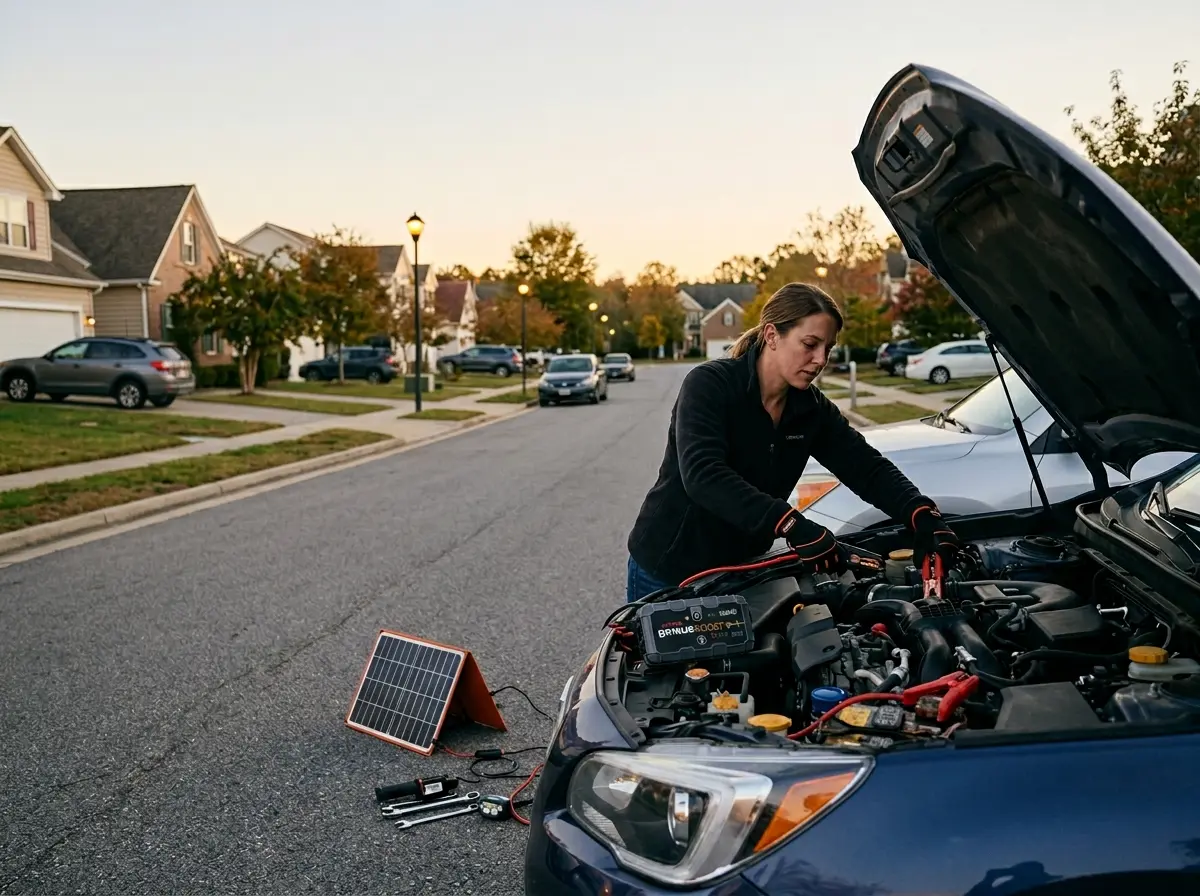
Few things are as frustrating as turning your key and hearing nothing but a faint click. A dead car battery can strand you in a driveway, parking lot, or worse, the side of a highway. While a dedicated charger is the safest option, you don’t always have one within reach. The good news is that there are several proven ways to revive a dead battery using tools and methods most drivers already have access to.
This guide walks through how to charge a car battery without a charger, based on real roadside experience, with safety warnings and timing expectations included.
Quick Answer
You can charge a car battery without a charger by jump-starting it with another vehicle, using a portable jump starter, driving the car after a jump, push-starting a manual transmission vehicle, or using a solar panel. Jump-starting from another car is the fastest method, taking about 5 to 10 minutes to deliver enough power to start the engine, with full charging completed by driving for 30 minutes or more. Every method will be explained in detail below.
Also Read: How to Clean Car Battery Terminals?
Why Car Batteries Die?
Understanding why your battery failed helps you choose the right recovery method and prevent it from happening again.
The most common causes include leaving headlights or interior lights on overnight, extreme cold or heat affecting electrolyte performance, an aging battery (most last 3 to 5 years), a faulty alternator failing to recharge during driving, parasitic drains from aftermarket electronics, and short trips that never give the battery enough time to fully recharge.
A healthy 12-volt car battery should read between 12.4 and 12.7 volts when the engine is off. Anything below 12.0 volts is considered discharged, and below 11.8 volts the battery may struggle to crank the starter.
Can You Charge a Car Battery Without a Charger?
Yes, you can. A car battery is essentially a lead-acid storage cell, and it can be replenished by any DC power source that delivers the right voltage. Your vehicle’s alternator is already a built-in charger, capable of producing between 13.8 and 14.7 volts while the engine runs. Jump starters, donor vehicles, and solar panels can all serve as substitutes for a wall-plug charger.
That said, none of these methods fully replace a proper smart charger for deeply discharged or sulfated batteries. They are emergency fixes designed to get you moving again.
Safe Methods to Charge a Car Battery Without a Charger
1. Jump Start From Another Vehicle
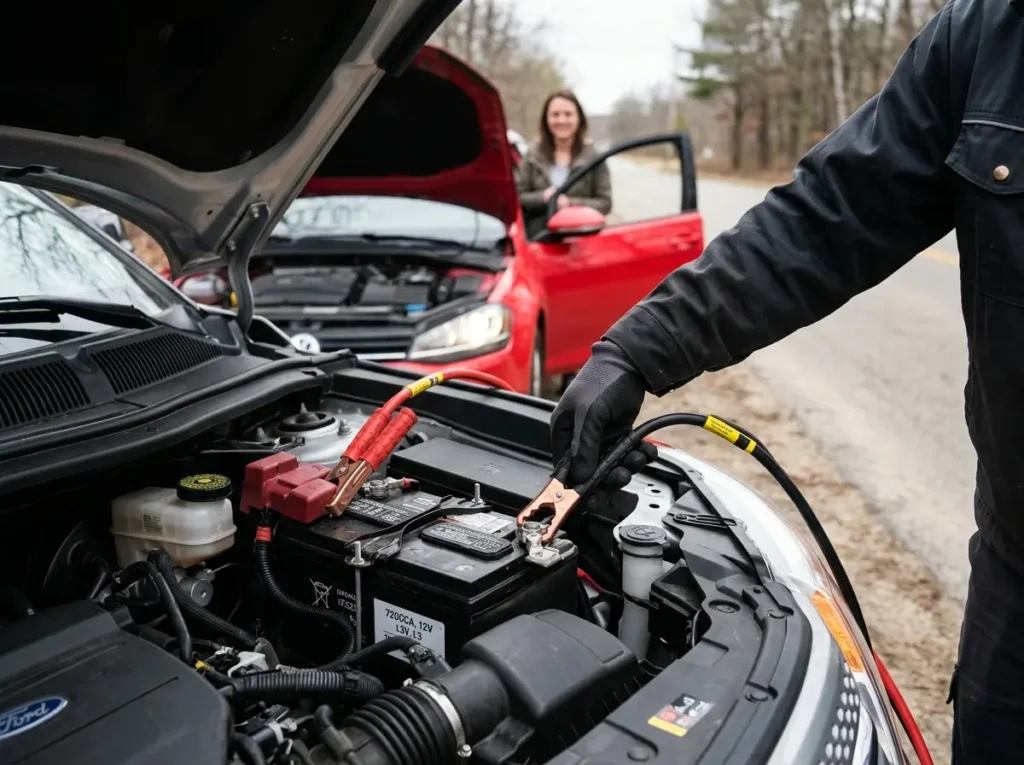
This is the fastest and most reliable method. You’ll need jumper cables and a working donor vehicle.
Steps:
- Park the donor car close enough that the cables reach, but the vehicles should not touch.
- Turn off both ignitions.
- Connect the red (positive) clamp to the dead battery’s positive terminal.
- Connect the other red clamp to the donor battery’s positive terminal.
- Connect the black (negative) clamp to the donor’s negative terminal.
- Connect the final black clamp to an unpainted metal surface on the dead car’s engine block, not the battery itself.
- Start the donor vehicle and let it idle for 2 to 3 minutes.
- Start the dead vehicle. If it cranks, leave both running for another 5 minutes before disconnecting in reverse order.
After a successful jump, drive for at least 30 minutes to let the alternator recharge the battery.
2. Portable Jump Starter (Lithium Power Pack)
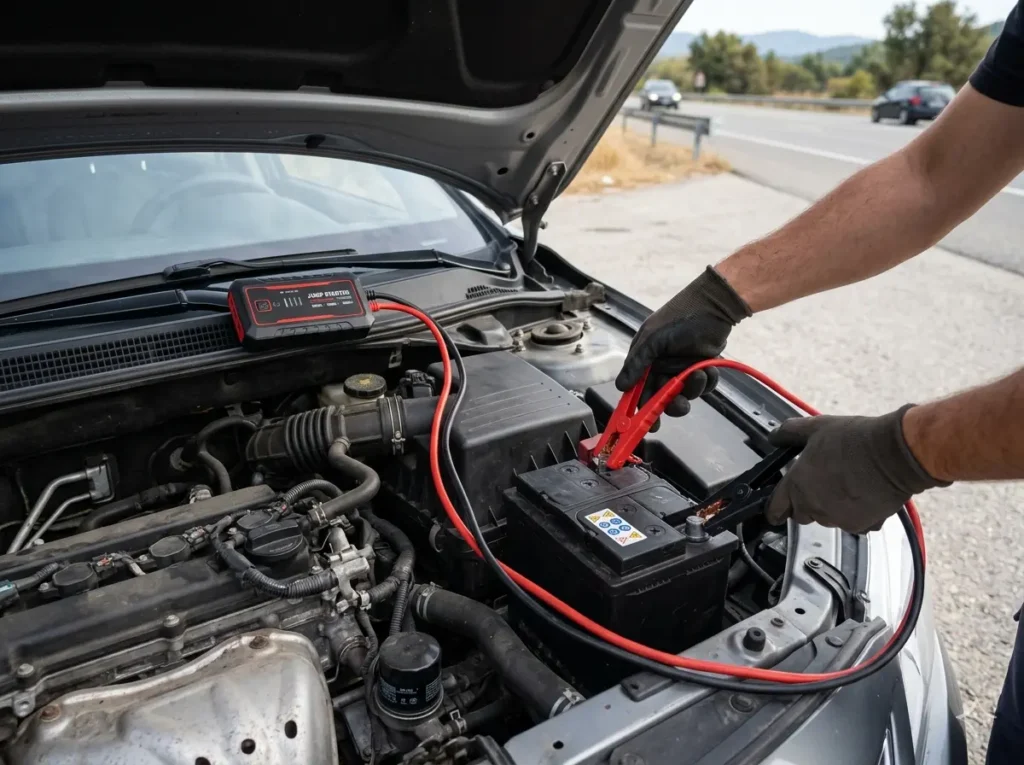
A lithium jump starter is essentially a battery in a box. It clamps directly to your terminals and provides the cranking amps needed to start the engine, with no donor car required.
These devices have become standard equipment for roadside assistance professionals because they are compact, safe, and effective even in freezing weather. Most quality units provide 1,000 to 2,000 peak amps, which is enough for everything from compact sedans to large diesel trucks.
3. Push Start (Manual Transmission Only)
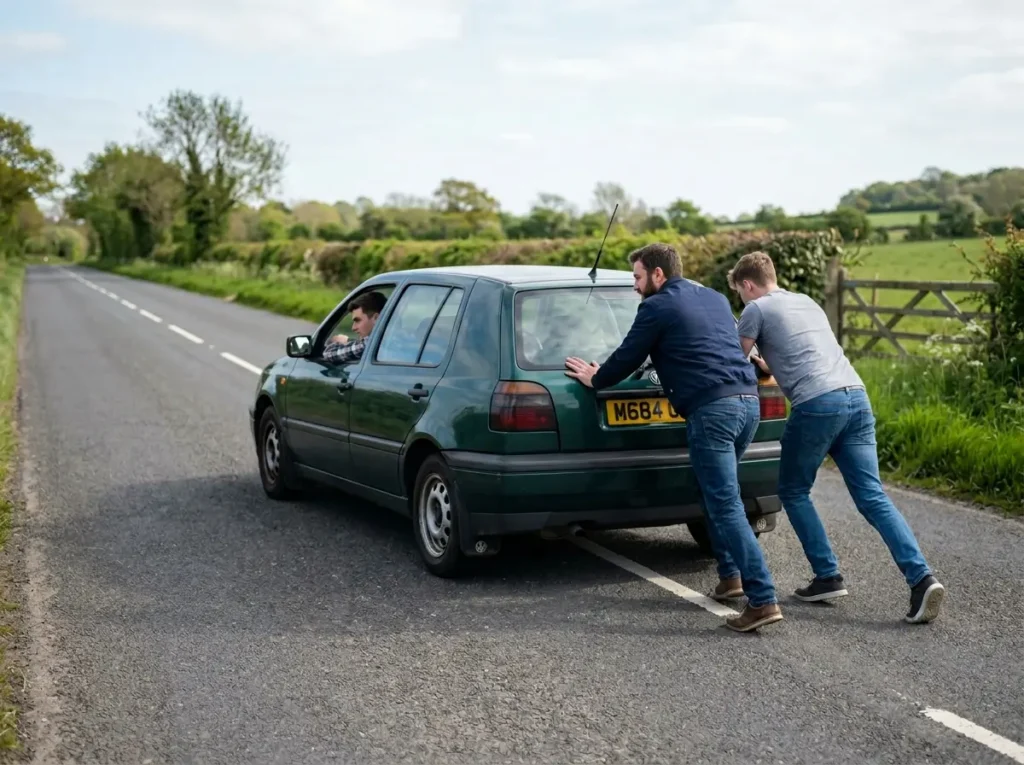
If you drive a stick shift, you can bump-start the engine using momentum.
Steps:
- Turn the ignition to the “on” position.
- Press the clutch and shift into second gear.
- Have helpers push the car to about 5 to 10 mph, or roll it down a gentle slope.
- Release the clutch quickly while pressing the accelerator.
- The engine should fire. Keep it running and drive for at least 30 minutes.
This method does not work on automatic transmissions and should never be attempted on busy roads.
4. Solar Panel Charging
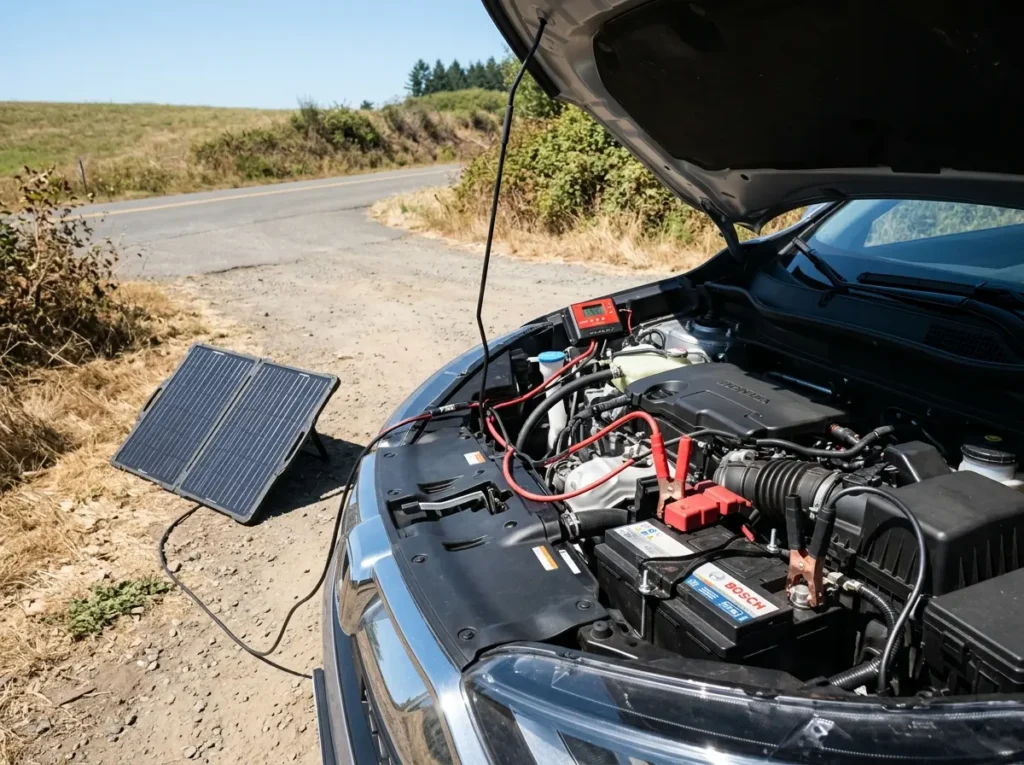
A 12V solar trickle charger placed on the dashboard or connected through the OBD-II port can slowly restore charge over hours or days. This is useful for vehicles in storage or stranded in remote locations with daylight access.
A 10 to 20 watt panel can add roughly 1 amp per hour in direct sunlight, which is slow but reliable.
5. Using the Alternator (Drive to Charge)
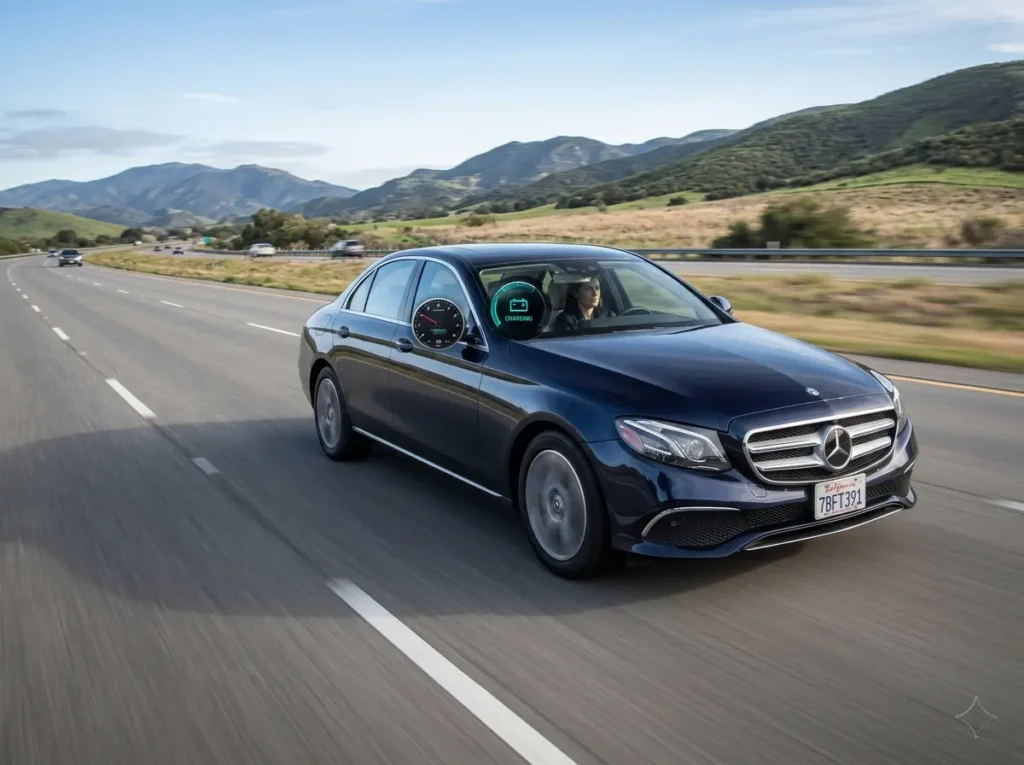
Once the engine is running by any means, the alternator takes over. Driving at highway speeds is more effective than idling because the alternator spins faster and produces more current.
Comparison of Charging Methods
| Method | Equipment Needed | Time to Start Engine | Time for Full Charge |
| Jump from another car | Jumper cables, donor vehicle | 5 to 10 minutes | 30 to 60 minutes of driving |
| Portable jump starter | Lithium jump pack | 2 to 5 minutes | 30 to 60 minutes of driving |
| Push start | Manual transmission, helpers | 1 to 3 minutes | 30+ minutes of driving |
| Solar panel | 10 to 20W solar charger | Not for cranking | 8 to 48 hours |
| Alternator (after jump) | Running engine | N/A | 30 to 90 minutes |
Time vs Efficiency vs Risk Level
| Method | Speed | Efficiency | Risk Level |
|---|---|---|---|
| Jumper cables | Fast | High | Medium (sparks, wrong polarity) |
| Portable jump starter | Fast | High | Low |
| Push start | Fast | Medium | Medium (traffic, injury) |
| Solar charger | Very slow | Low to medium | Very low |
| Driving after jump | Medium | High | Low |
Safety Precautions
Lead-acid batteries contain sulfuric acid and produce hydrogen gas, which is flammable. A single spark in the wrong place can cause a battery to rupture.
Always follow these rules:
- Wear safety glasses and gloves when handling battery terminals.
- Never connect the negative cable directly to the dead battery’s negative terminal. Use an unpainted metal ground point instead to keep sparks away from the battery.
- Check for cracks, leaks, or bulging cases. A damaged battery should never be jumped or charged.
- Remove metal jewelry before working near terminals.
- Do not smoke or use open flames near the battery.
- If the battery is frozen, do not attempt to jump it. Let it thaw first.
- Match voltage. Never connect a 12V battery to a 24V system.
When to Replace Instead of Charge?
Sometimes a battery is beyond saving. Replace it if you notice any of the following:
- The battery is older than 4 to 5 years.
- It fails to hold a charge after multiple jumps within a week.
- The case is swollen, cracked, or leaking.
- Resting voltage stays below 12.0 volts after a full charge.
- A load test shows significantly reduced cranking amps.
A new standard lead-acid battery typically costs between $100 and $250, while AGM batteries run $200 to $400. Compared to repeated roadside breakdowns, replacement is often the smarter long-term choice.
Read the complete guide: How Often Should You Replace a Car Battery?
Key Takeaways
You don’t need a wall-plug charger to revive a dead car battery. Jumper cables, a portable jump starter, push-starting, or even a solar panel can all get you back on the road. Jump-starting from another vehicle remains the fastest and most practical method for most drivers, while a lithium jump pack is the safest option to keep in your trunk.
Always prioritize safety, watch for warning signs of a failing battery, and remember that any emergency charging method is a temporary fix, not a substitute for a healthy battery and a functioning alternator.
Frequently Asked Questions
How long does it take to charge a car battery by driving?
After a successful jump start, driving for 30 minutes at highway speeds typically restores enough charge to start the car again. A full recharge of a deeply discharged battery may require several hours of driving or an overnight session with a smart charger.
Can I charge a car battery with a laptop charger?
No. Most laptop chargers output 19 to 20 volts at low amperage and cannot safely or effectively charge a 12V car battery. Attempting this risks damaging the battery, the charger, and your vehicle’s electrical system.
Can a dead car battery recharge itself?
No. A car battery cannot recharge itself. It needs an external power source such as an alternator, jumper cables, a jump starter, or a charger.
Is it safe to jump-start a modern car?
Yes, but follow the manufacturer’s procedure carefully. Many modern vehicles have designated jump points under the hood to protect sensitive electronics. Always check the owner’s manual.
How many times can you jump-start a car before damaging it?
Occasional jumps are fine, but repeatedly jump-starting the same battery (more than two or three times in a week) usually means the battery, alternator, or starter is failing and should be inspected.
Can cold weather kill a car battery?
Cold temperatures reduce a battery’s available cranking power by up to 50% at 0°F. A weak battery often fails during the first cold snap of winter, which is why mechanics see a surge in dead batteries every December and January.