



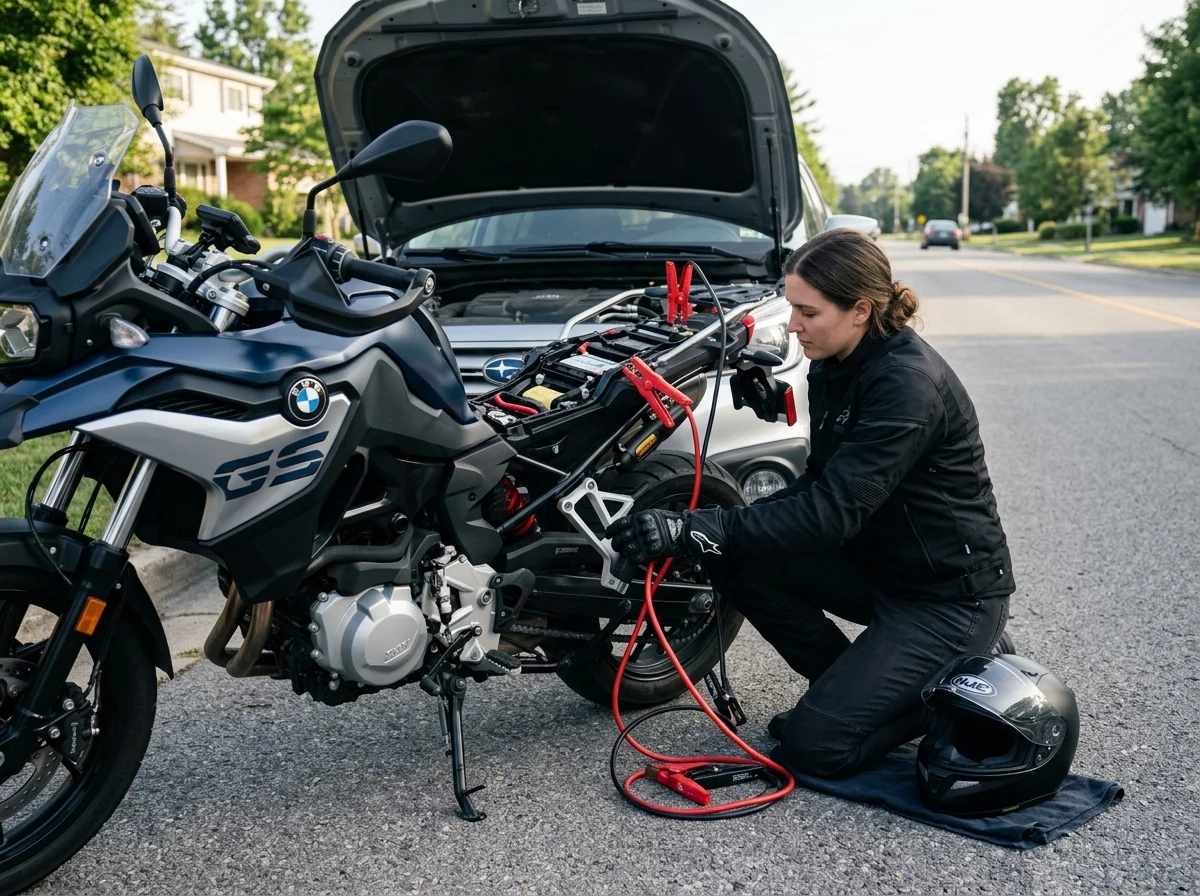
A dead motorcycle battery is one of the most frustrating problems any rider can face. You twist the key, press the starter, and hear nothing but a faint click or complete silence. Whether you’re parked in your garage or stranded on the roadside, knowing how to jump start a motorcycle can save your day and prevent an expensive tow.
This guide walks you through the exact process I use as a mechanic, covering the tools, safety steps, and techniques that actually work. By the end, you’ll be able to revive a dead motorcycle battery safely and confidently.
Tools Needed to Jump Start a Motorcycle
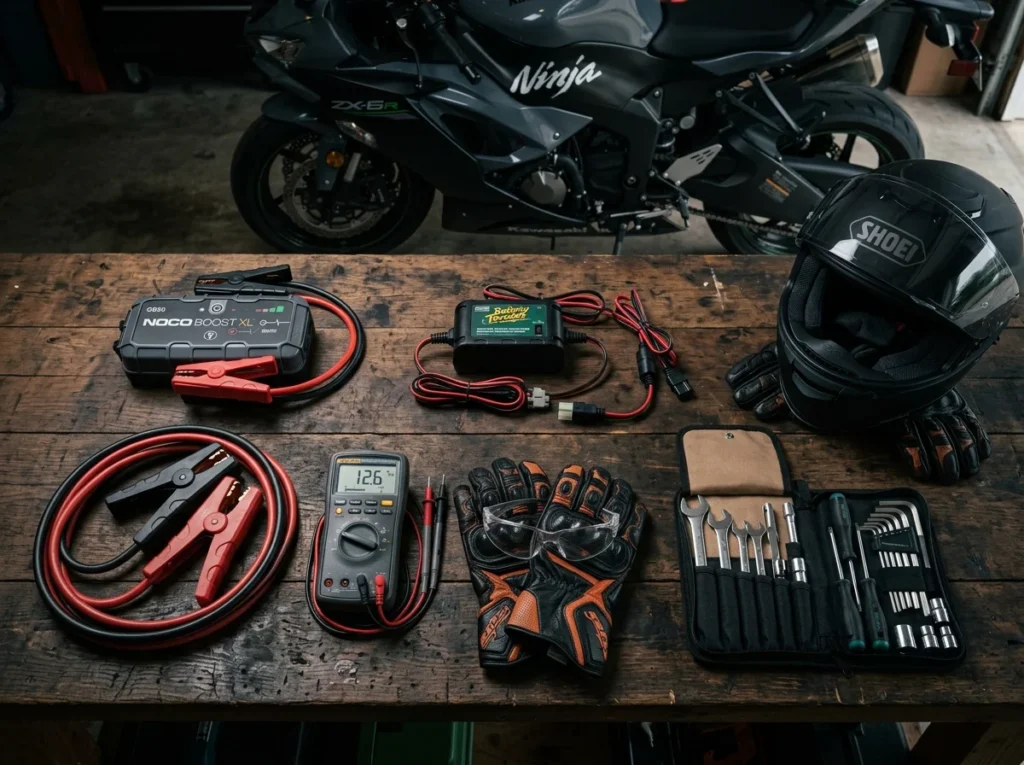
Before you start, gather the right equipment. Using the wrong tools can damage your motorcycle’s electrical system or cause injury.
Here’s what you’ll need:
- Jumper cables (preferably 8 to 10 gauge, motorcycle-rated)
- A donor power source, such as another motorcycle, a 12V car battery, or a portable jump starter
- Insulated gloves and safety glasses
- A clean cloth to wipe terminals
- Your motorcycle’s owner manual for terminal locations
- A multimeter (optional but useful for testing voltage)
A portable lithium jump starter is the safest and most reliable option for modern motorcycles, especially those with sensitive electronics or ABS systems.
Step-by-Step Guide to Jump Starting a Motorcycle
Follow these steps carefully. Skipping any of them can damage your battery, ECU, or the donor vehicle.
Step 1: Confirm the Battery Is Actually Dead
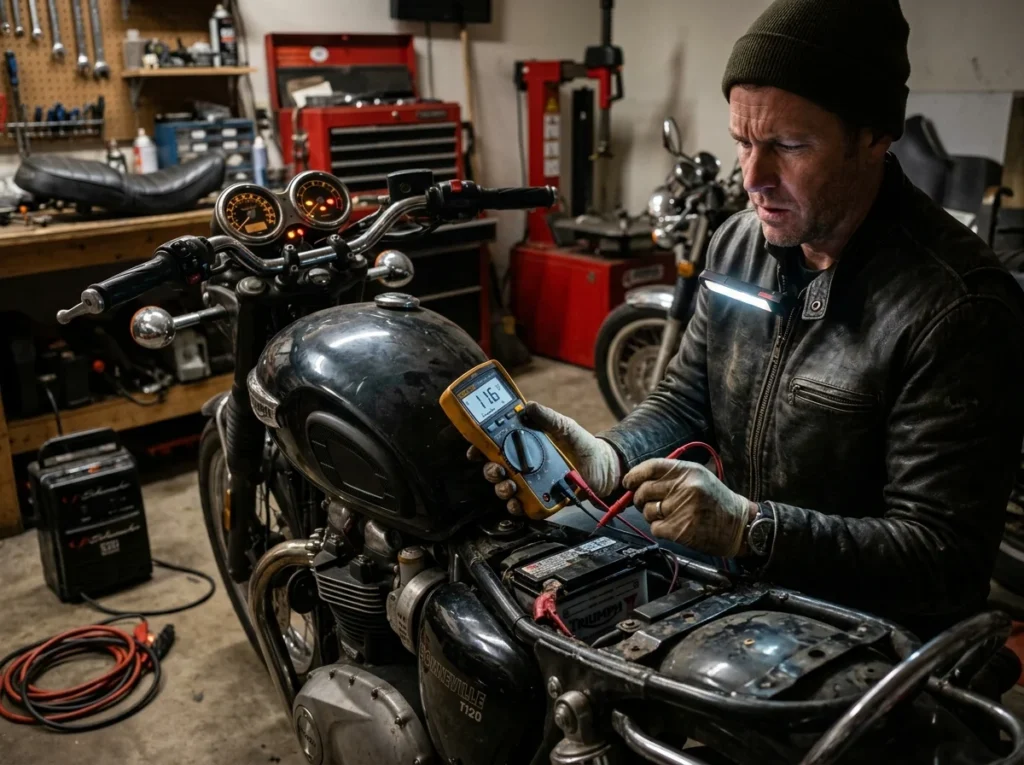
Turn the ignition on and check the headlight or dashboard. If lights are dim or the starter clicks weakly, the battery is likely dead. If everything is completely silent, you may have a blown fuse or a deeper electrical issue.
A healthy 12V motorcycle battery should read between 12.6V and 12.8V at rest. Anything below 11.8V usually means it cannot start the bike.
Step 2: Locate the Battery
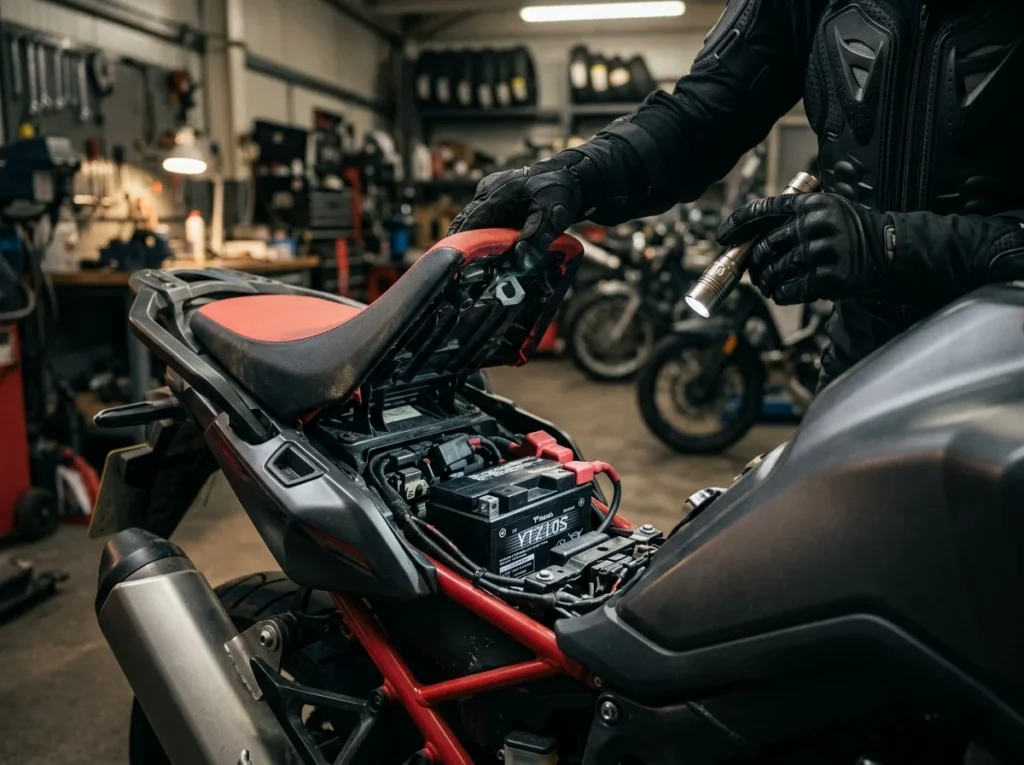
Most motorcycles store the battery under the seat, side panel, or fuel tank. Check your manual if you’re unsure. Remove any covers and identify the positive (+) and negative (-) terminals.
Step 3: Position the Donor Vehicle
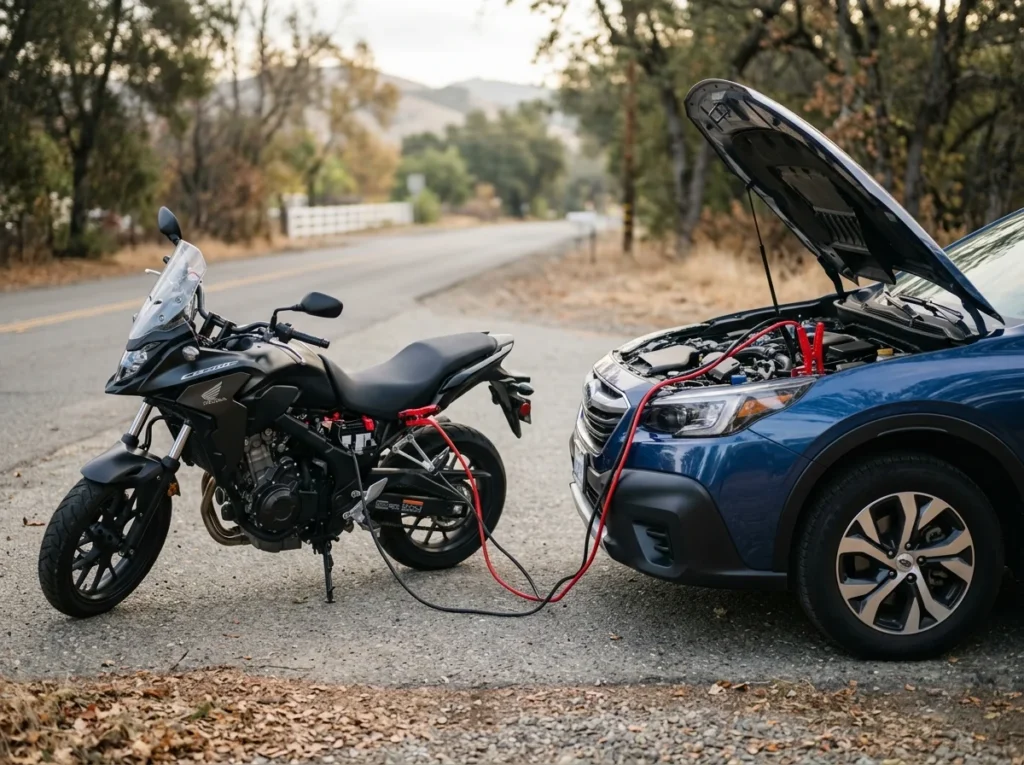
Park the donor motorcycle or car close enough that the cables reach both batteries, but do not let the two vehicles touch. Turn off the donor vehicle’s engine before connecting cables. Jump starting with the car running can send a voltage spike that fries your motorcycle’s electronics.
Step 4: Connect the Jumper Cables in the Correct Order
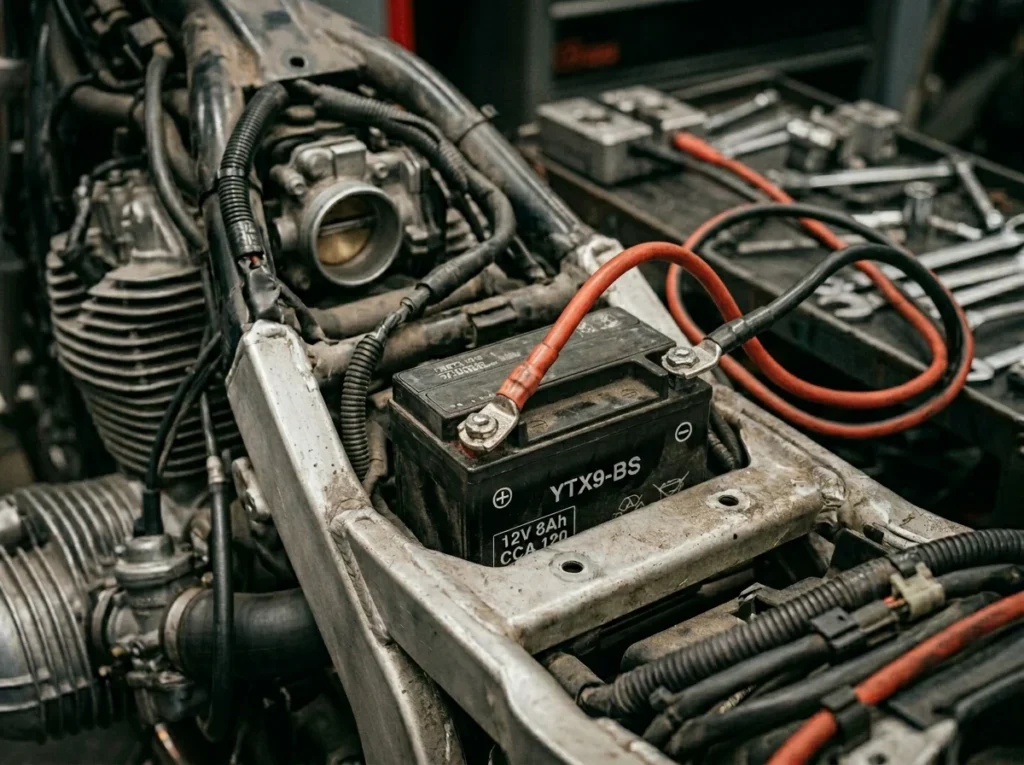
This order matters. Connect in this exact sequence:
- Red clamp to the positive (+) terminal of the dead motorcycle battery.
- Other red clamp to the positive (+) terminal of the donor battery.
- Black clamp to the negative (-) terminal of the donor battery.
- Other black clamp to an unpainted metal surface on the motorcycle frame (not the negative terminal of the dead battery).
Grounding the final connection on the frame prevents sparks near the battery, which can release hydrogen gas.
Step 5: Start the Motorcycle
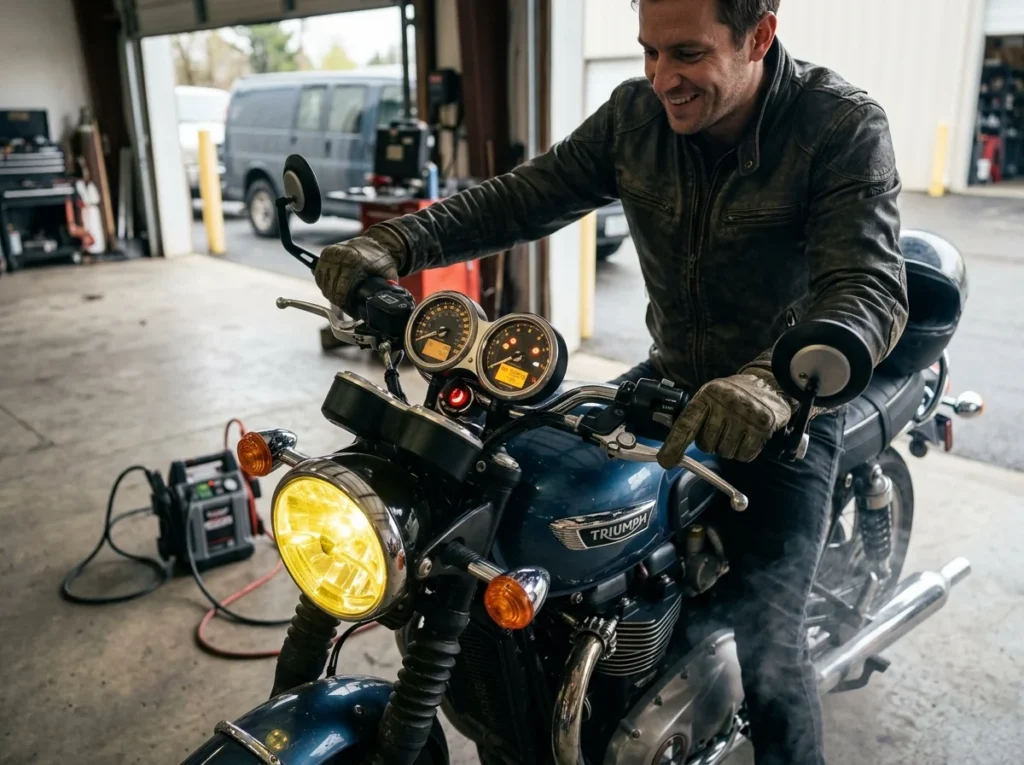
Wait about 30 seconds, then press the starter on your motorcycle. If it doesn’t start within 3 to 5 seconds, stop and wait a minute before trying again. Repeated cranking can overheat the starter motor.
Step 6: Disconnect the Cables in Reverse Order
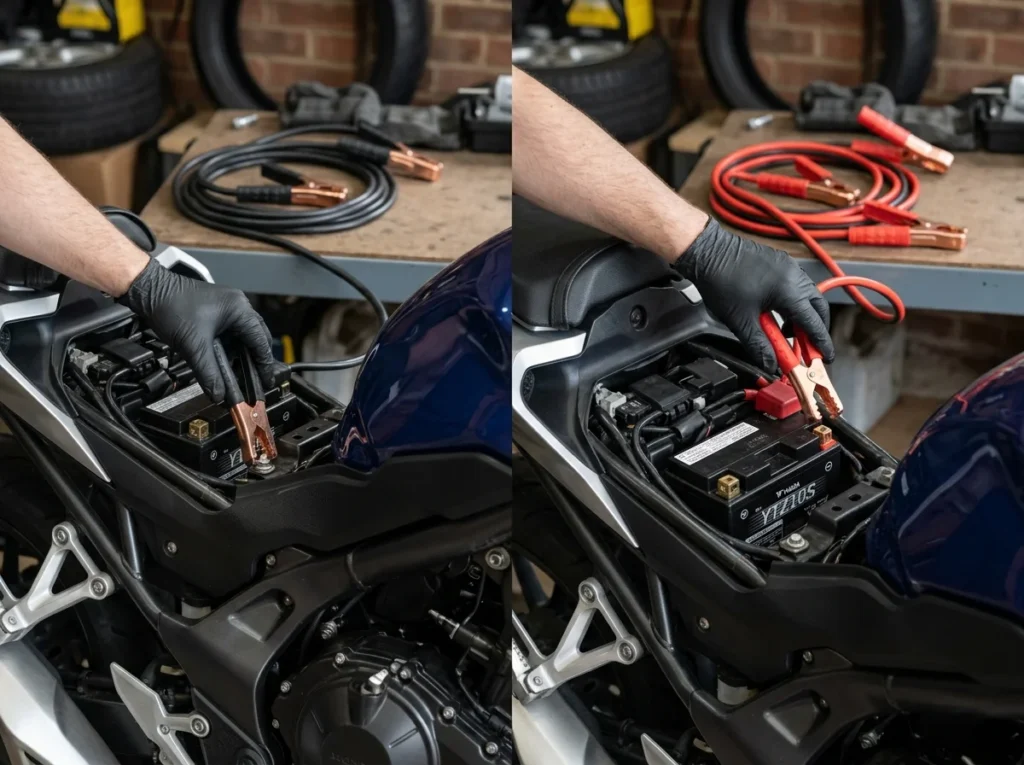
Once your bike is running, remove the cables in the reverse order:
- Black clamp from the motorcycle frame.
- Black clamp from the donor battery.
- Red clamp from the donor battery.
- Red clamp from the motorcycle battery.
Step 7: Let the Engine Run
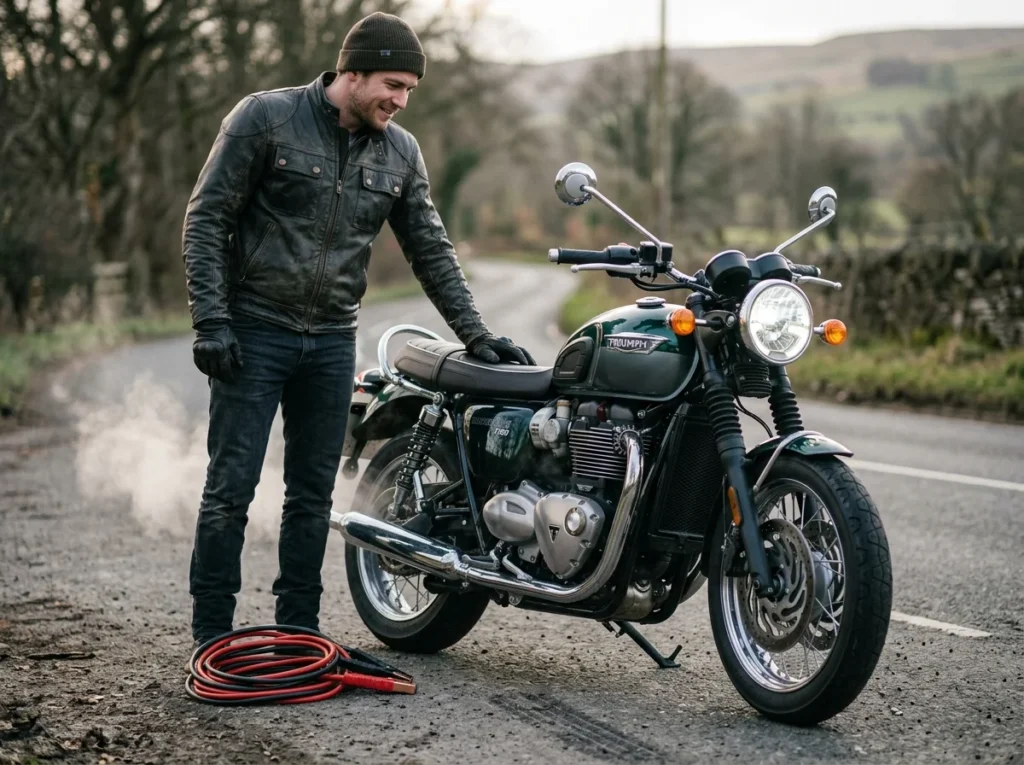
Keep your motorcycle running for at least 20 to 30 minutes, or ride it at moderate RPM. This allows the alternator to recharge the battery.
Also Explore: How to Charge a Car Battery Without a Charger?
Common Reasons a Motorcycle Battery Dies
Understanding why batteries fail helps prevent the problem from repeating.
- Leaving the ignition or lights on overnight
- Long periods of inactivity (batteries self-discharge over weeks)
- Old or worn-out battery (most last 2 to 5 years)
- Faulty charging system or stator
- Parasitic drain from alarms, GPS, or aftermarket accessories
- Extreme cold weather, which reduces battery capacity by up to 35%
Motorcycle Battery Voltage Comparison
Use this table to quickly check your battery’s health:
| Battery Voltage | Charge Level | Condition |
|---|---|---|
| 12.7V – 13.0V | 100% | Fully charged |
| 12.4V – 12.6V | 75% | Good |
| 12.2V – 12.3V | 50% | Needs charging |
| 12.0V – 12.1V | 25% | Weak, may not start bike |
| Below 11.8V | 0% | Dead, requires jump or replacement |
Safety Precautions
Jump starting a motorcycle involves real electrical and chemical risks. Take these seriously.
- Never connect red to black, or you’ll create a short circuit.
- Keep flames, cigarettes, and sparks away from the battery area.
- Do not lean directly over the battery when connecting cables.
- Wear safety glasses, since battery acid can leak under pressure.
- Inspect cables for damage before use. Frayed wires can cause shorts.
- Never jump start a frozen or cracked battery. It can explode.
- Avoid jump starting in the rain without proper insulation.
If you smell rotten eggs or see swelling on the battery casing, stop immediately. That’s hydrogen sulfide gas, and the battery is unsafe.
Common Mistakes to Avoid
Even experienced riders make these errors:
- Connecting the cables in the wrong order
- Using a running car to jump a motorcycle (risks voltage damage)
- Cranking the starter for more than 5 seconds at a time
- Ignoring corroded terminals
- Forgetting to recharge the battery fully after a jump
- Using thin or low-quality cables that overheat
When NOT to Jump Start Your Motorcycle?
Some situations call for replacement or professional help instead of a jump start.
- The battery casing is cracked, leaking, or bulging
- The battery is older than 5 years and won’t hold a charge
- Your bike has a completely dead electrical system (no lights, no clicks)
- The starter motor or solenoid is faulty
- You suspect a shorted cell (voltage drops immediately after charging)
Forcing a jump on a damaged battery can cause acid leaks, fires, or permanent ECU damage.
Alternative Solutions
If jumper cables aren’t available, try one of these methods.
1. Use a Portable Jump Starter
A lithium-ion jump starter is compact, safe, and designed for motorcycles. Most can deliver 400 to 1000 peak amps and fit under your seat.
2. Push Start (Bump Start)
This works only on manual transmission motorcycles. Put the bike in second gear, hold the clutch, push to a jogging pace, jump on, and release the clutch quickly. Do not attempt this on fuel-injected bikes with fully dead batteries, since the ECU needs power to operate.
3. Call Roadside Assistance
Services like AAA Premier, BikeAssist, or your insurance roadside coverage can dispatch help. This is the safest option if you’re unsure or stranded in traffic.
4. Trickle Charger or Battery Tender
If you’re at home, a smart charger restores the battery safely over a few hours without risking damage.
Maintenance Tips to Avoid Future Battery Failure
A little care goes a long way. Most battery deaths are preventable.
- Ride regularly, at least once a week for 20 minutes
- Use a battery tender during winter storage
- Clean terminals with a wire brush and apply dielectric grease
- Check voltage monthly with a multimeter
- Turn off all accessories before shutting down
- Replace the battery every 3 to 4 years, even if it still works
- Inspect the charging system annually for stator or regulator issues
FAQs
Can you jump start a motorcycle with a car?
Yes, but only with the car’s engine off. A running car produces high amperage that can damage your motorcycle’s electrical system. Connect the cables properly, start the bike, then disconnect.
Why won’t my motorcycle start even after a jump?
If your bike doesn’t start after jumping, the issue may be a bad starter motor, faulty stator, blown fuse, or completely dead battery cells. A multimeter test will confirm the problem.
Is it safe to push start a fuel-injected motorcycle?
Generally no. Fuel-injected motorcycles require battery power to run the fuel pump and ECU. Push starting usually fails unless the battery has some residual charge.
How often should I replace my motorcycle battery?
Most motorcycle batteries last 2 to 5 years, depending on use, climate, and maintenance. Lithium batteries can last up to 8 years with proper care.
Can cold weather kill a motorcycle battery?
Yes. Cold temperatures reduce a battery’s cranking power significantly. Below freezing, capacity can drop by 30 to 40%, which is why winter storage with a tender is essential.