



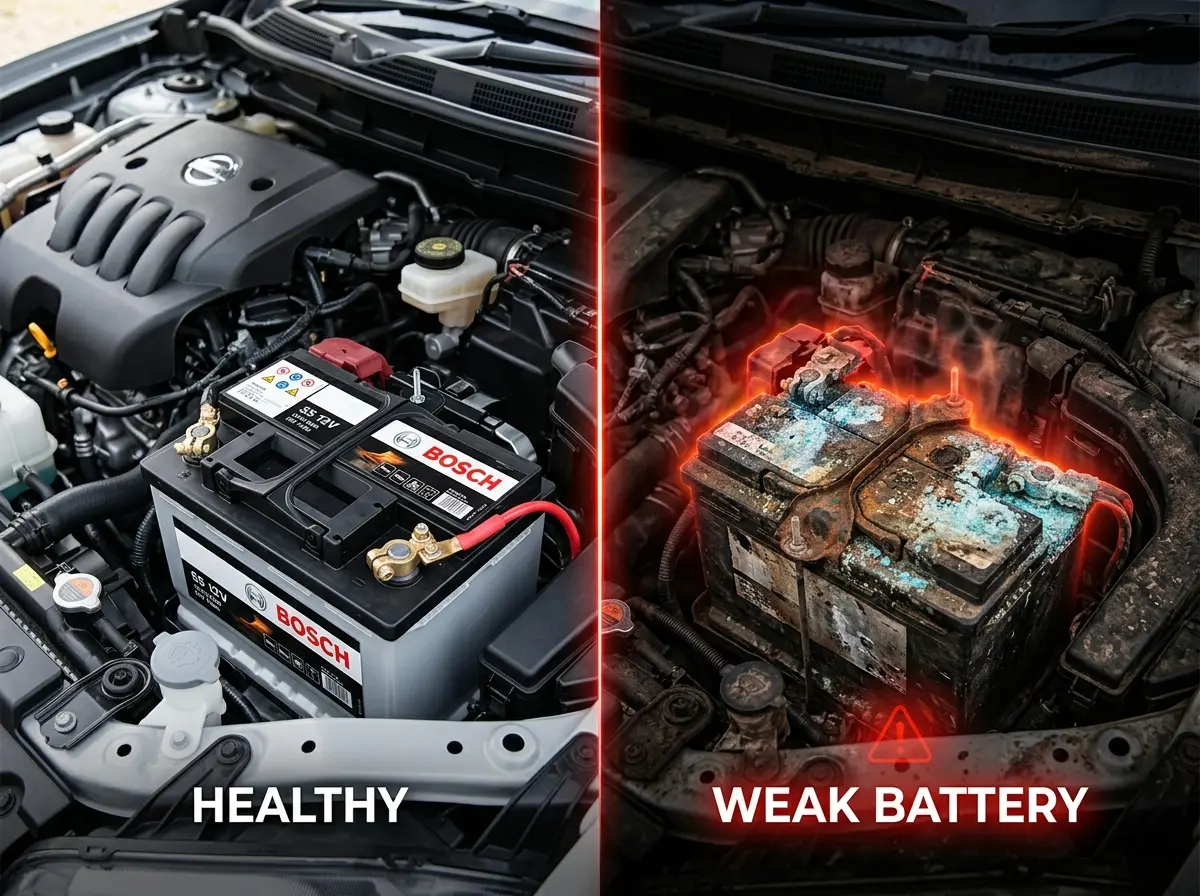
Most car batteries last between 3 and 5 years, though some push past 6 years under ideal conditions while others fail before their second birthday. The actual lifespan depends on climate, driving habits, vehicle electronics, and whether the battery gets regular maintenance. If you’ve ever turned the key and heard nothing but a slow click, you already know how poorly timed a dying battery can be.
After two decades of replacing batteries in everything from compact sedans to diesel trucks, I can tell you the 3 to 5 year range holds up pretty well in practice. But there’s a lot more nuance to it, and understanding the details can save you a tow bill and a ruined morning.
Don’t risk getting stranded. MG Towing & Recovery provides 24/7 emergency roadside assistance including jump starts and towing. Call for Emergency Help Now 414-973-1902
Average Car Battery Life: What’s Realistic
The average car battery life sits around 4 years for most drivers in moderate climates. That figure comes from years of warranty data and shop observations, not marketing claims.
A few realities shape that number:
- Lead-acid batteries (the most common type) typically last 3 to 5 years
- AGM batteries used in newer vehicles often last 4 to 7 years
- Lithium-ion auxiliary batteries in hybrids and EVs last 8 to 10 years or longer
- Heat shortens battery life far more than cold does
Many drivers expect a battery to last as long as the car. It rarely does. Treat 4 years as a benchmark and start testing annually after year 3.
How Long Do Car Batteries Last in Hot Weather?
Heat is the silent killer of car batteries. In hot climates like Arizona, Texas, or the Gulf Coast, battery life drops noticeably because high temperatures accelerate the chemical breakdown inside the battery and evaporate the electrolyte.
Average Battery Lifespan by Climate
| Climate Type | Typical Lifespan | Key Factor |
|---|---|---|
| Hot (desert, southern US) | 2 to 3 years | Heat damages internal plates |
| Moderate | 4 to 5 years | Balanced conditions |
| Cold (northern US, Canada) | 4 to 6 years | Cold strains starting power, not lifespan |
| Mixed seasonal | 3 to 5 years | Repeated thermal stress |
Cold weather gets blamed for killing batteries, but it usually just exposes a weak one. A battery already damaged by summer heat finally fails when winter demands more cranking power.
Battery Lifespan by Vehicle Type
Not every car puts the same demand on its battery. A daily-driven sedan that goes on highway trips treats a battery much better than a car that only runs short errands.
| Vehicle Type | Average Battery Life | Notes |
|---|---|---|
| Standard gas sedan | 3 to 5 years | Typical conditions |
| SUV / Pickup truck | 3 to 5 years | Larger electrical loads |
| Luxury vehicle | 3 to 4 years | Heavy electronics drain faster |
| Hybrid (12V battery) | 4 to 6 years | Less cranking stress |
| Start-stop equipped car | 3 to 5 years (AGM) | Requires AGM, not standard lead-acid |
| Electric vehicle (12V) | 3 to 5 years | Separate from main traction battery |
Cars with start-stop systems, heated seats, infotainment displays, and dashcams pull more current than older vehicles ever did. That constant load adds up.
Signs of a Bad Car Battery
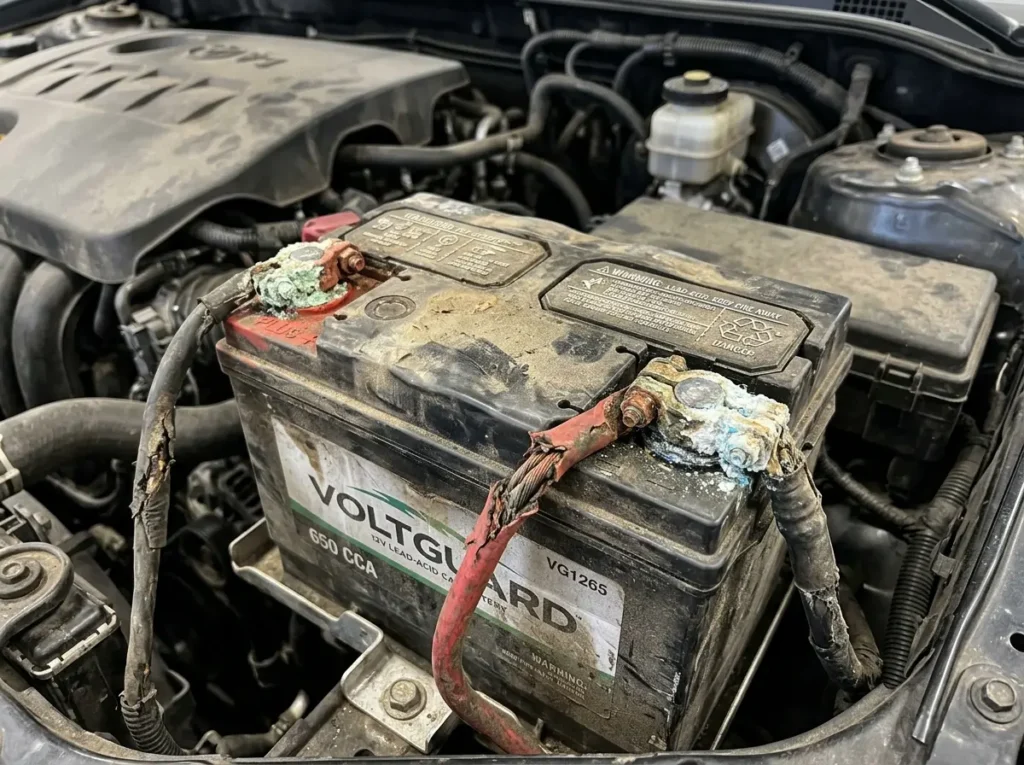
A dying battery rarely fails without warning. Catching the symptoms early lets you replace it on your schedule instead of from a parking lot.
Watch for these signs of a bad car battery:
- Slow engine crank when starting, especially on cold mornings
- Dim headlights at idle that brighten when you rev the engine
- Clicking sound when turning the key with no start
- Dashboard battery warning light illuminated
- Electronics behaving oddly like flickering interior lights or radio resets
- Swollen battery case, often caused by heat or overcharging
- Corrosion building up on the terminals
- Rotten egg smell from the battery, which signals leaking acid
If you notice two or more of these, get the battery tested. Most auto parts stores will do it free in about ten minutes.
Symptoms and Likely Causes
| Symptom | Likely Cause |
|---|---|
| Slow crank | Weak battery or aging cells |
| No crank, just clicking | Dead battery or bad starter |
| Battery dies overnight | Parasitic drain or failing battery |
| Frequent jump starts needed | Battery near end of life |
| Dim lights only at idle | Failing alternator |
| Lights stay bright but car won’t start | Battery problem, not alternator |
Battery Dead or Weak? We’ll Get You Back on the Road Fast. Fast jump-starts, towing, and roadside assistance anywhere in Milwaukee, available 24/7. Request Roadside Assistance 414-973-1902
Alternator vs Battery: How to Tell the Difference
Drivers often replace a battery only to break down again a week later because the real problem was the alternator. Here’s the quick mechanic’s check.
If your car starts fine but dies while driving, suspect the alternator. If your car struggles to start but runs fine once it’s going, suspect the battery. A multimeter test settles it: a healthy battery reads around 12.6 volts off, and 13.7 to 14.7 volts with the engine running. Anything outside that range points to a charging system issue.
Factors That Shorten Car Battery Life
Several habits and conditions quietly drain years off a battery’s life:
- Short trips under 20 minutes that never let the alternator fully recharge the battery
- Letting the car sit for weeks without driving
- Extreme heat parking with no shade
- Loose or corroded terminals that disrupt the charging circuit
- Leaving lights or accessories on overnight
- Aftermarket electronics drawing power when the car is off
- Repeated deep discharges from running the battery flat
A common mistake I see: drivers jump-start a deeply discharged battery and assume it’s fine. Each deep discharge permanently reduces capacity. Two or three of those events can kill an otherwise healthy battery.
How to Extend Battery Life?
You can’t make a battery last forever, but small habits make a real difference.
- Drive the car at least 20 to 30 minutes weekly to keep the battery fully charged
- Clean corrosion off terminals using baking soda and water, then apply terminal grease
- Tighten any loose battery clamps
- Park in shade or a garage during summer
- Use a trickle charger if the car sits unused for weeks
- Turn off all accessories before shutting the engine off
- Have the charging system tested during oil changes once you pass year 3
Battery testing is cheap insurance. A load test or conductance test takes minutes and catches weakness before it strands you.
When to Replace vs Recharge a Car Battery
Recharge a battery if it died from a clear one-time cause, like leaving the lights on, and it holds a charge afterward. Replace it if the battery is over 4 years old, has been jumped multiple times, fails a load test, or shows physical damage like swelling or leakage. A battery that drops below 12.4 volts repeatedly after charging is on borrowed time.
Car Battery Replacement Cost in the USA
Replacement cost varies based on battery type, vehicle, and where you buy.
| Battery Type | Parts Cost | Installed Total |
|---|---|---|
| Standard lead-acid | $100 to $180 | $130 to $230 |
| AGM (start-stop / luxury) | $200 to $350 | $250 to $450 |
| Premium AGM / European cars | $300 to $500 | $400 to $600 |
| Hybrid 12V auxiliary | $200 to $400 | $300 to $500 |
Many shops install the battery free with purchase. Some modern vehicles require a battery registration procedure with a scan tool, which adds labor cost but is necessary for the charging system to work correctly.
Battery Testing Recommendations
Get your battery tested:
- Once a year after the 3 year mark
- Before any long road trip
- After any jump start
- At the first sign of slow cranking
- Before winter in cold climates
You can buy a basic digital multimeter for around $20 and test voltage yourself. For a full load test, AAA, AutoZone, O’Reilly, Advance Auto Parts, and most independent shops offer it free. The Battery Council International publishes industry standards that most testing equipment follows.
FAQs About Car Battery Lifespan
I have answered some of the questions that people usually asked about car battery lifespan.
Q. How often should I replace my car battery?
Replace your car battery every 3 to 5 years on average, or sooner if testing shows weakness. After year 3, get it tested annually.
Q. Can a car battery last 10 years?
A standard lead-acid car battery rarely lasts 10 years. Some premium AGM batteries in mild climates with ideal care can reach 7 to 8 years, but 10 years is unusual.
Q. Does jump starting damage the battery?
Jump starting itself doesn’t damage a healthy battery, but the deep discharge that required the jump does. Repeated deep discharges shorten battery life significantly.
Q. What kills a car battery the fastest?
Extreme heat, frequent short trips, parasitic electrical drains, and leaving accessories on overnight are the fastest ways to kill a battery.
Q. How do I know if it’s the battery or alternator?
If the car won’t start but runs fine once jumped, it’s likely the battery. If the car dies while driving or has dimming lights at idle, it’s likely the alternator. A voltage test confirms which one.
Q. Should I replace both terminals when I replace the battery?
Only replace terminals if they’re badly corroded or damaged. Cleaning them with a wire brush is usually enough.
Final Thoughts
A car battery is one of the most predictable parts of car ownership, and one of the easiest to plan for. Most drivers get 3 to 5 solid years if they pay attention to the warning signs and do a yearly test after year 3. Heat is your battery’s worst enemy, short trips are a close second, and a $20 multimeter can save you a $150 tow bill.
Don’t wait for the click in an empty parking lot. Test early, replace on your terms, and you’ll never have to think about your battery at the worst possible moment.