

Picture this. You’re driving home late at night, and suddenly your car sputters and dies on the shoulder of a busy highway. Your phone battery is low, the nearest exit is miles away, and you have no idea what to do next.
This is exactly where roadside assistance saves the day.
If you’ve ever wondered what is included in roadside assistance, this guide breaks down every service in plain language. Whether you’re new to coverage or comparing providers, you’ll learn what you actually get when you call for help.
Quick Answer: What Does Roadside Assistance Cover?
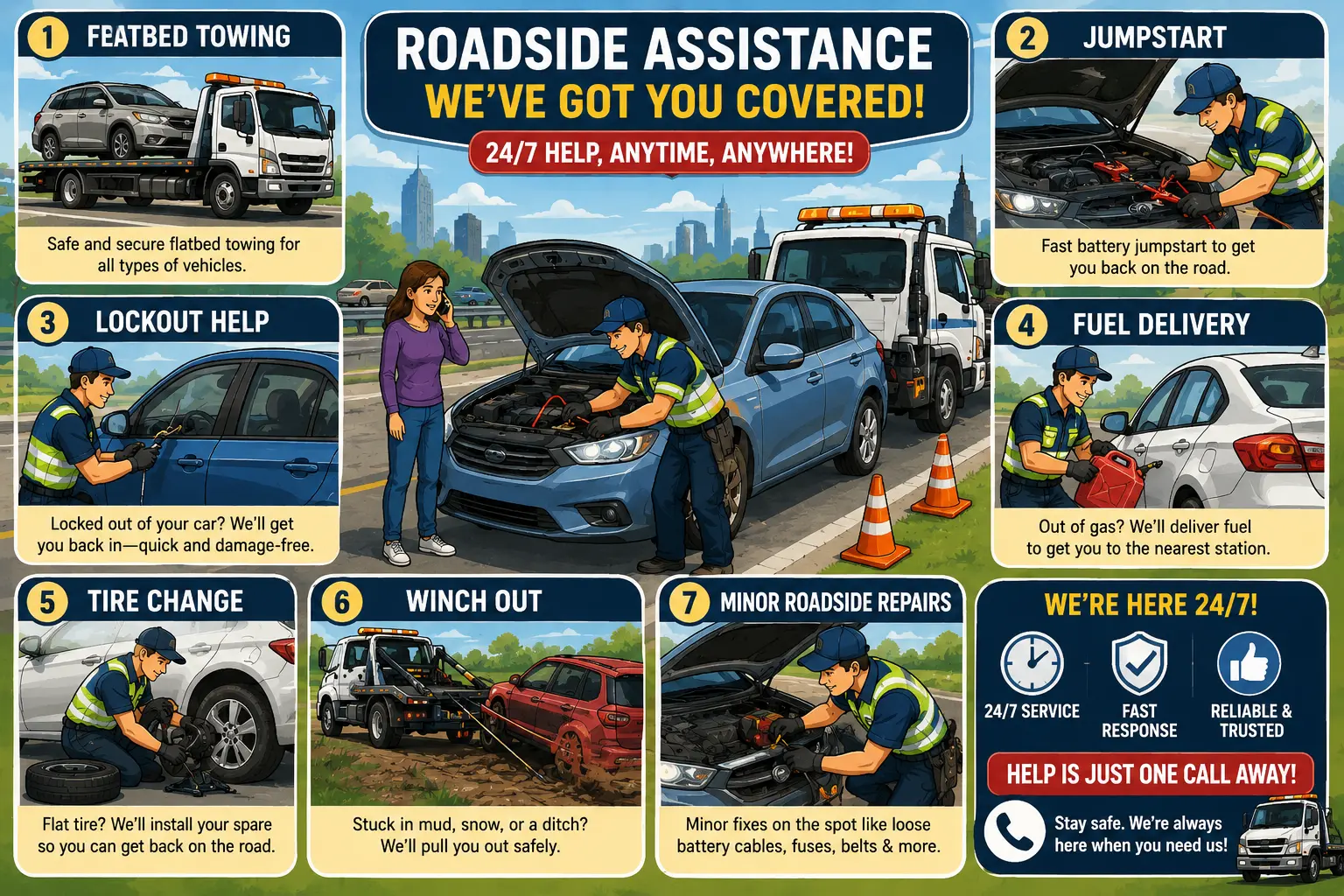
Roadside assistance is an emergency service that helps drivers when their vehicle becomes disabled. Standard coverage typically includes towing, battery jump starts, flat tire changes, fuel delivery, lockout service, winch recovery, and minor on-site repairs. Most plans operate 24/7 across the United States.
Why Roadside Assistance Matters?
The average American driver experiences a vehicle breakdown roughly once every three years, according to industry breakdown data. With more than 69 million service calls handled annually in the U.S. by major auto clubs and insurers, having a reliable safety net is no longer optional.
A single tow truck call without coverage can cost between $75 and $300, depending on distance and location. A basic plan often costs less than $100 per year, which is why so many drivers consider it a smart investment.
What Is Included in Roadside Assistance: The 7 Core Services
Below are the seven essential services included in nearly every reputable roadside assistance plan in the USA.
1. Towing Service
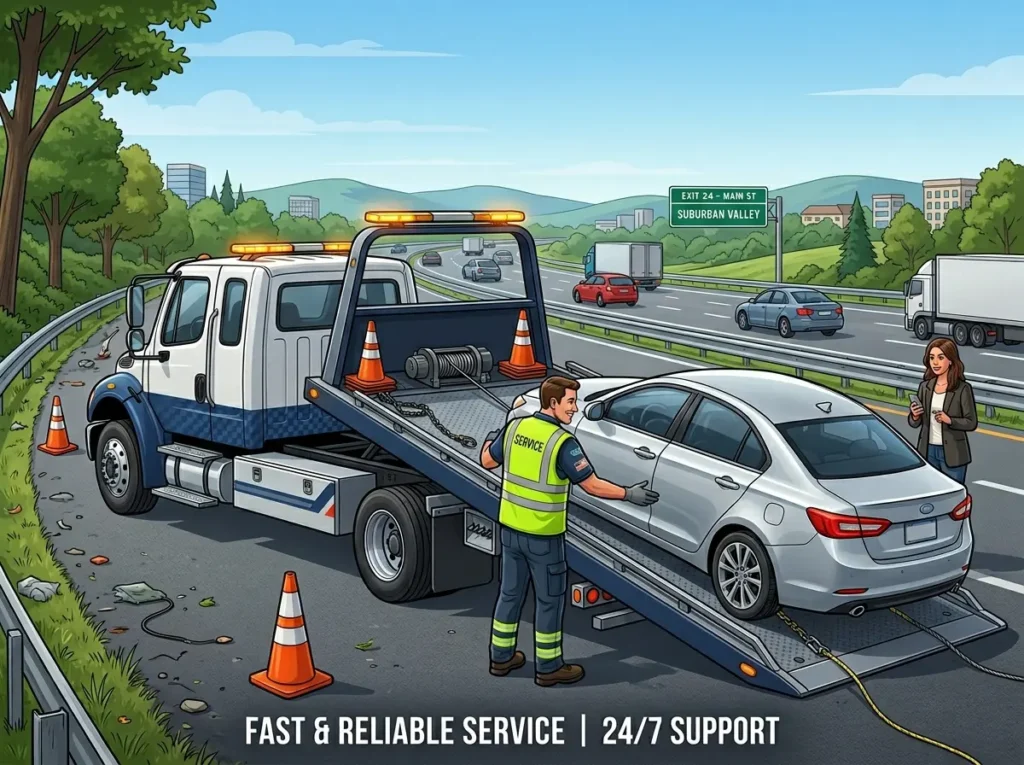
When your vehicle cannot be repaired on the spot, a tow truck transports it to the nearest qualified repair shop or a destination of your choice.
Most plans include free towing within a set mileage limit, usually 5 to 100 miles depending on your membership tier. Premium plans often offer 100 to 200 miles of free towing.
Common situations that require towing:
- Engine failure or overheating
- Transmission problems
- Accidents and collisions
- Severe mechanical breakdowns
- Vehicles stuck in unsafe locations
2. Battery Jump Start
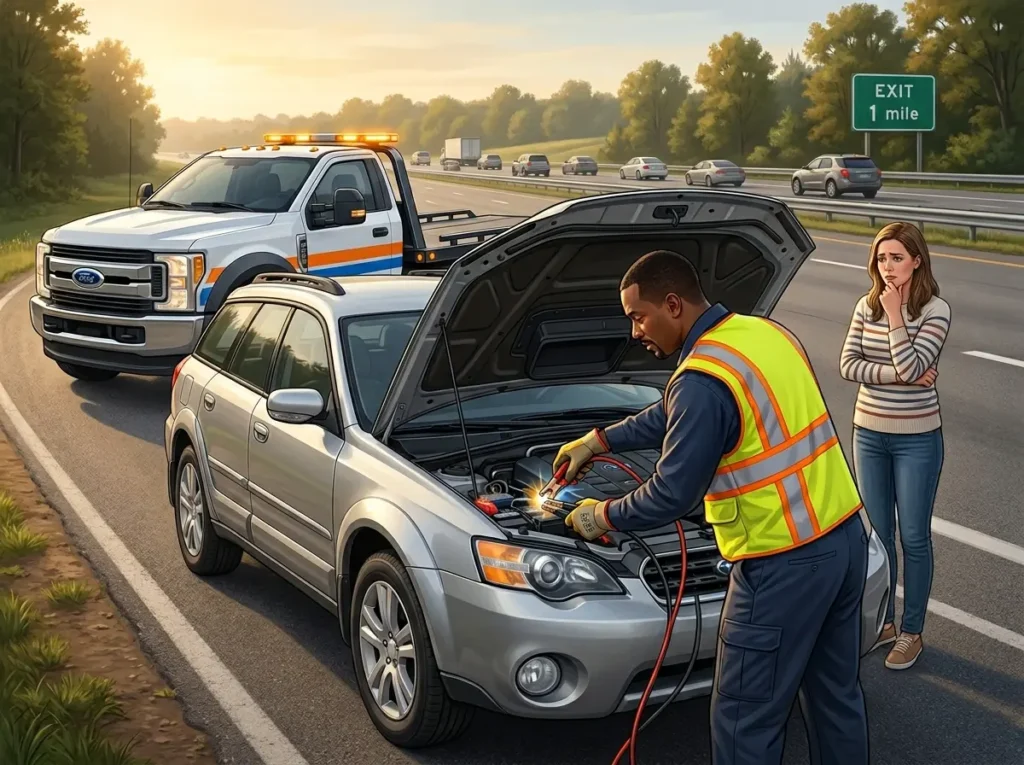
A dead battery is one of the most common reasons drivers call for help. A technician arrives with portable jump-starting equipment to get your engine running again.
If the battery cannot hold a charge, many providers also offer on-site battery testing and replacement for an additional fee. This service alone saves drivers hours of waiting and frustration.
Car won’t start? MG Towing & Recovery offers fast roadside jump start services for dead batteries anywhere in Wisconsin. We’ll get you back on the road quickly and safely, day or night.
3. Flat Tire Replacement
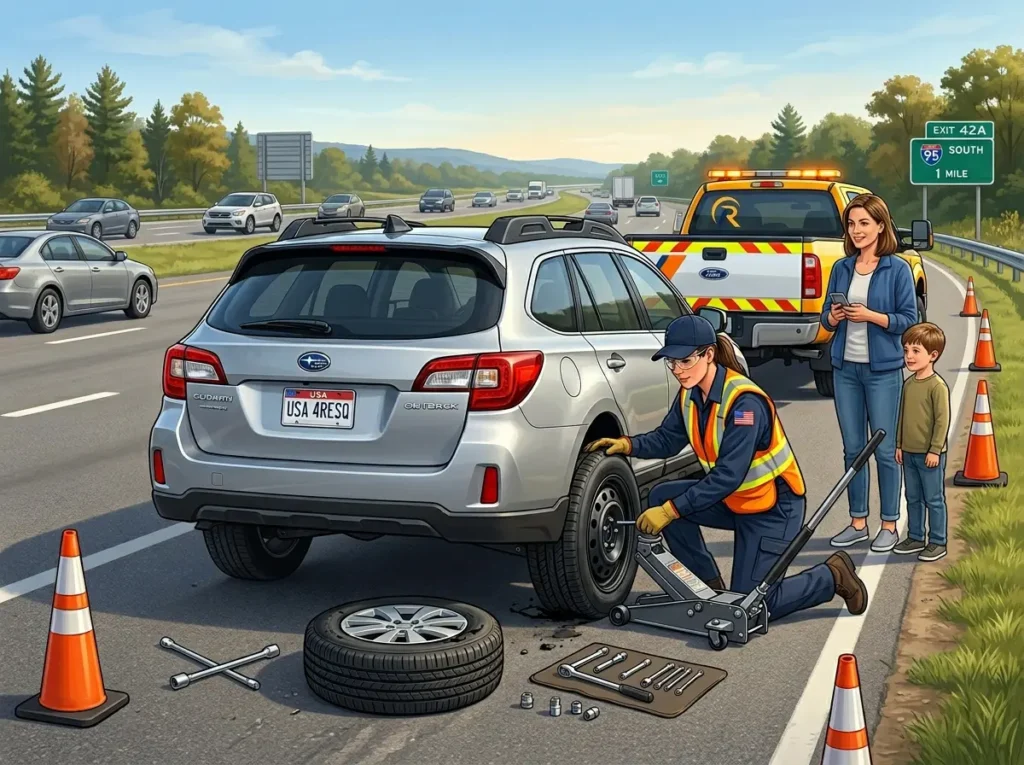
If you get a flat, a technician comes out and replaces it with your spare tire so you can safely reach a tire shop.
Keep in mind that roadside assistance does not provide a new tire. You must have a functional spare. If you don’t have a spare, the technician will tow your car instead. If you have any queries about flat tire replacement just give us a call. 414-973-1902
4. Fuel Delivery
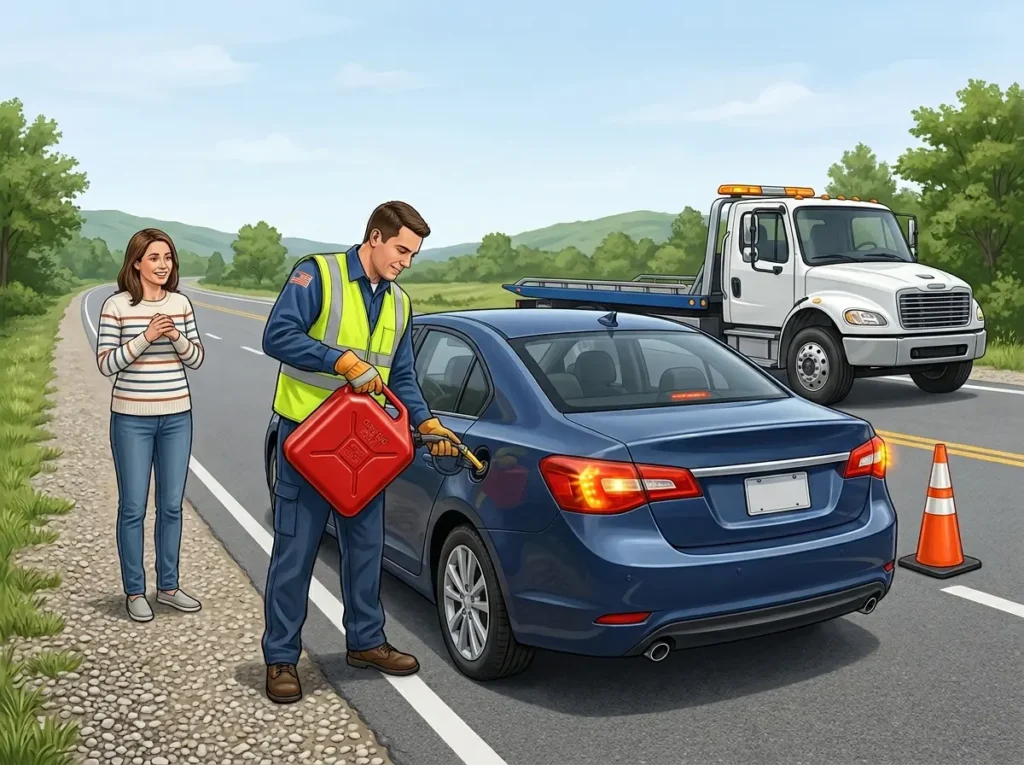
Running out of gas happens more often than people admit. Fuel delivery service brings enough gasoline or diesel to your location to get you to the nearest station.
Most plans deliver 2 to 3 gallons of fuel. Some providers include the cost of fuel in your membership, while others require you to pay for the gas itself.
5. Lockout Service
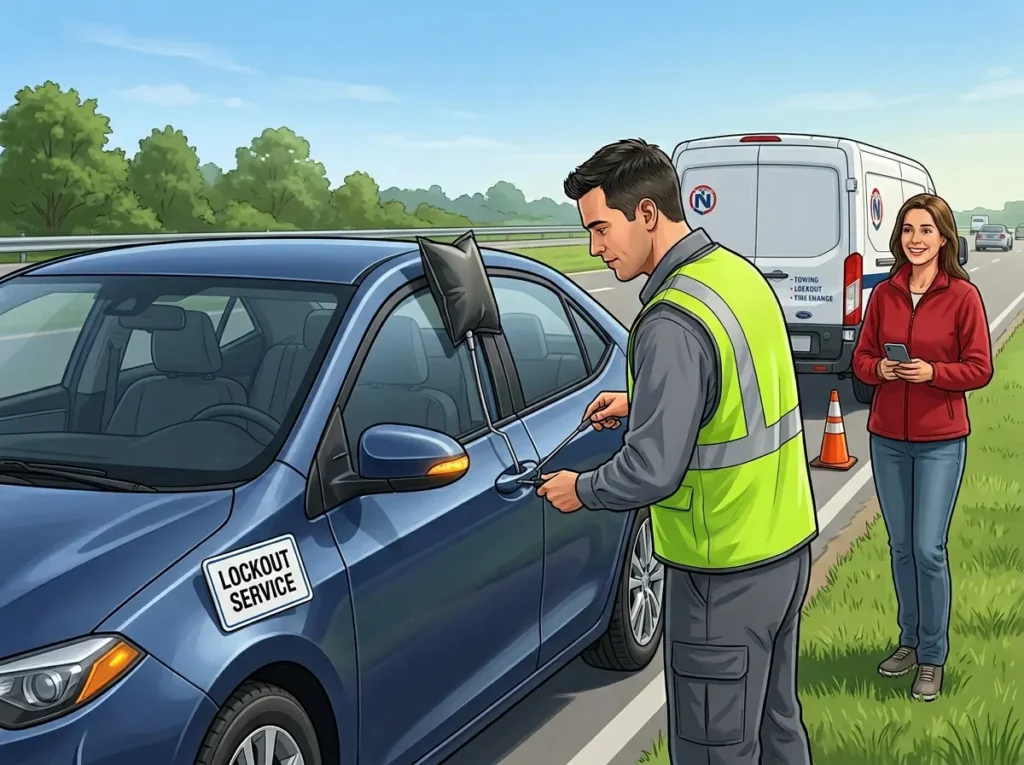
Locking your keys inside your car is stressful, especially at night or in a parking lot. A locksmith or technician unlocks your vehicle without damaging it.
If your key is lost or broken inside the ignition, additional locksmith fees may apply. Some premium plans cover up to $100 in locksmith services.
6. Winch Out and Vehicle Recovery
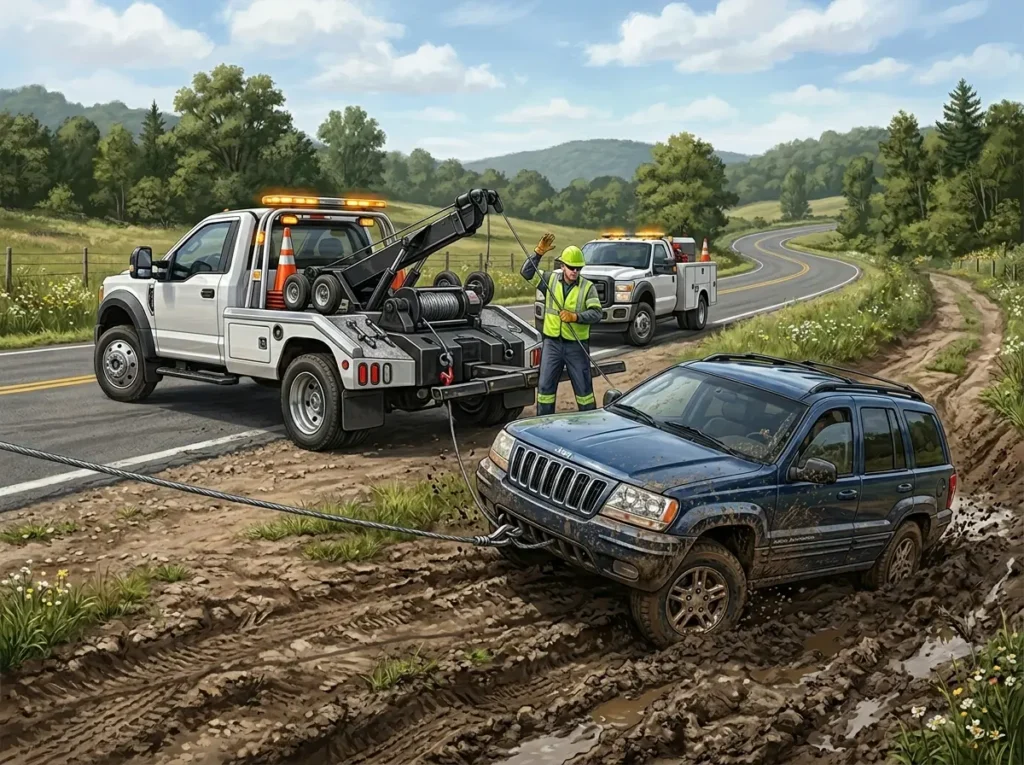
If your car slides off the road into mud, snow, sand, or a ditch, a technician uses a winch to safely pull it back onto solid ground.
Winch out service is especially valuable during winter months or in rural areas. Most plans cover recovery as long as the vehicle is within reach of the winch line without specialized equipment.
7. Minor Roadside Repairs
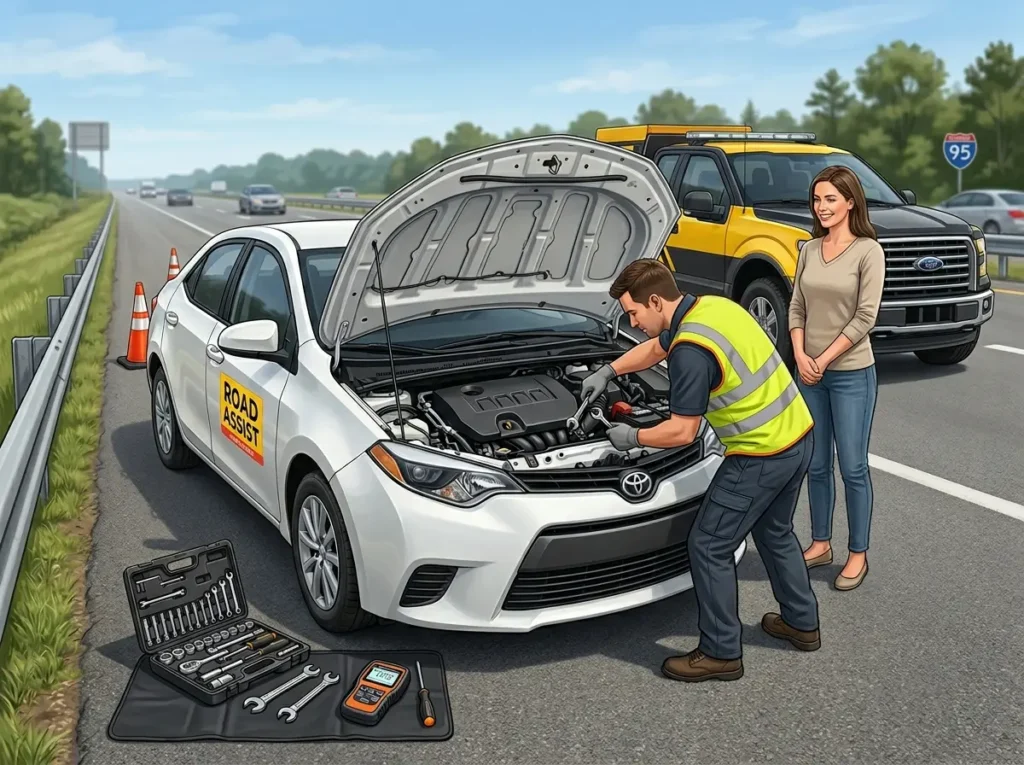
For small mechanical issues, technicians can perform quick fixes on the spot so you can drive away. Examples include reconnecting a loose battery cable, replacing a fuse, or adjusting belts.
This service is meant for temporary repairs only. Anything major still requires a tow to a mechanic.
Need emergency roadside assistance in Wisconsin? MG Towing & Recovery is available 24/7 for accident towing, flatbed towing, jump starts, lockout help, fuel delivery, tire changes, and winch out services. Call now 414-973-1902
Roadside Assistance Coverage at a Glance
The table below shows what each core service typically includes under standard 24/7 roadside assistance plans in the USA.
| Service | What’s Included | Typical Limit |
|---|---|---|
| Towing | Transport to nearest repair shop | 5 to 200 miles |
| Battery Jump Start | On-site jump and testing | Unlimited calls |
| Flat Tire Change | Swap with your spare tire | Spare required |
| Fuel Delivery | Gas or diesel delivery | 2 to 3 gallons |
| Lockout Service | Unlock vehicle door | Up to $100 locksmith |
| Winch Recovery | Pull vehicle from ditch or mud | Within winch reach |
| Minor Repairs | Quick fixes on-site | Non-mechanical issues |
Most Common Causes of Roadside Breakdowns in the USA
Based on data from major auto clubs and insurance providers, here are the most frequent reasons U.S. drivers call for emergency roadside help.
| Breakdown Cause | Percentage of Calls | Average Response Time |
|---|---|---|
| Dead or weak battery | 39% | 30 to 45 minutes |
| Flat tire | 22% | 30 to 40 minutes |
| Towing needed | 17% | 45 to 60 minutes |
| Lockout | 11% | 25 to 40 minutes |
| Out of fuel | 6% | 30 to 45 minutes |
| Other issues | 5% | Varies |
The national average response time across the U.S. ranges from 30 to 60 minutes, depending on traffic, weather, and location.
Standard vs Premium Roadside Assistance: What’s the Difference?
Not all plans are equal. Here is how basic and premium coverage typically compare.
Standard Coverage Usually Includes
- Up to 5 to 25 miles of free towing
- Basic jump starts and tire changes
- Fuel delivery (fuel cost not included)
- Lockout service with limited locksmith reimbursement
- 24/7 roadside assistance dispatch
Premium Coverage Often Adds
- 100 to 200 miles of free towing
- Trip interruption reimbursement
- Free fuel up to a set amount
- Higher locksmith allowances
- Rental car discounts and travel benefits
What Roadside Assistance Does NOT Cover?
It’s just as important to know the limits of your coverage.
Most plans will not cover:
- Cost of repair parts or new tires
- Damage caused by accidents (insurance handles this)
- Repeated calls beyond your annual limit (usually 4 to 6 per year)
- Off-road recovery in extreme terrain
- Towing across state lines (depends on plan)
Always read your provider’s terms before assuming a service is covered.
Also Read: Tow Truck Insurance: Everything You Need to Know
How to Choose the Right Roadside Assistance Plan?
When selecting a plan, focus on these key factors.
- Towing distance: Match it to how far you typically drive
- Service call limits: Aim for at least 4 per year
- Coverage area: Make sure it includes nationwide service
- Response time: Look for providers with under 45 minute averages
- Add-on benefits: Trip interruption, rental car coverage, and discounts add real value
Frequently Asked Questions
What is included in roadside assistance?
Roadside assistance includes towing, battery jump starts, flat tire changes, fuel delivery, lockout service, winch recovery, and minor on-site repairs. Most providers offer these services 24/7 across the United States.
Is roadside assistance worth it?
Yes. The average roadside service call costs $75 to $300 out of pocket, while annual coverage usually costs less than $100. One incident often pays for the entire plan.
Does roadside assistance cover all vehicles?
Most plans cover personal cars, SUVs, and small trucks. RVs, motorcycles, and commercial vehicles may require specialized coverage.
How fast do roadside assistance providers respond?
The national average response time is between 30 and 60 minutes, depending on your location and weather conditions.
Can I use roadside assistance if I’m not the driver?
Yes. Most plans cover the member regardless of which vehicle they are driving or riding in, even if it isn’t their own car.
Does roadside assistance include accident towing?
Usually no. Tows after an accident are typically handled by your auto insurance, not your roadside assistance plan.
Final Thoughts
Knowing what is included in roadside assistance can save you stress, money, and hours of waiting on the side of the road. From dead batteries to flat tires, the right plan acts as your 24/7 safety net for everyday driving emergencies.
Before signing up, compare providers carefully, review the service limits, and pick a plan that matches your driving habits. A small annual fee can deliver peace of mind every time you turn the key.