

Complete Guide to Milwaukee Towing Prices, Fees, Insurance Coverage & How to Get Safe, Affordable Towing
Nobody plans to need a tow truck. You find yourself stranded on the side of I-94, or stuck in a Milwaukee parking lot at 11 p.m. in January, or sitting in the aftermath of a fender-bender on Capitol Drive and the first practical question that forms is: how much is this going to cost me?
Towing prices in Milwaukee vary widely depending on service type, vehicle type, time of day, distance, and the specific situation.
A basic local tow during business hours costs something very different from a heavy-duty flatbed tow of an AWD SUV from the Zoo Interchange at 2 a.m. on a Sunday. Most drivers have no reference point for what is fair which is exactly the information gap that makes it easy for unscrupulous operators to overcharge vulnerable drivers.
This guide gives Milwaukee drivers a complete, honest reference for tow truck costs. It covers every service type with realistic price ranges, every factor that affects the final bill, what your insurance may cover and how much, how to spot overcharging, and what makes an affordable towing service genuinely worth calling.
Whether you are budgeting ahead, comparing quotes in the moment, or reviewing a bill you have already received, this is the guide you need.
Related Articles:
What Is Flatbed Towing and When Is It Needed?
How Tow Trucks Safely Transport AWD and Luxury Vehicles?
Milwaukee Towing Prices: Complete Quick-Reference Table
Here is a comprehensive pricing reference for every common towing and roadside assistance service in Milwaukee. All ranges reflect market rates for legitimate, licensed Milwaukee towing providers as of 2024–2025. Individual quotes may vary based on the specific factors discussed throughout this guide.
| Service | Typical Milwaukee Price | Key Variables |
| Local tow – under 5 miles | $75 – $150 | Base hook-up + short mileage rate |
| Local tow – 5 to 10 miles | $100 – $200 | Most common Milwaukee breakdown scenario |
| Mid-range tow – 10 to 20 miles | $150 – $300 | Extends into suburbs and county routes |
| Long-distance tow – 20 to 50 miles | $250 – $500 | Per-mile rate is the primary driver |
| Long-distance tow – 50+ miles | $400 – $900+ | Long haul; flatbed standard for this distance |
| Flatbed towing – standard vehicle | $100 – $300 | Safest method; required for AWD/luxury/damaged |
| Flatbed towing – AWD / 4WD vehicle | $120 – $350 | Must be flatbed – no wheel-lift for AWD |
| Wheel-lift towing – standard FWD/RWD | $75 – $175 | Shorter local tows of undamaged standard vehicles |
| Heavy-duty towing – trucks/large SUVs | $250 – $600+ | Specialized equipment required |
| Commercial vehicle towing | $350 – $800+ | Box trucks, vans, larger commercial vehicles |
| Motorcycle towing | $75 – $150 | Specialized cradle/strap securing required |
| Accident / emergency towing | $100 – $350+ | Scene complexity, vehicle damage, access |
| Winch out – parking lot / shallow stuck | $75 – $150 | Simple extraction on flat ground |
| Winch out – roadside ditch | $100 – $250 | Requires winch setup and positioning |
| Winch out – deep ditch or embankment | $200 – $450+ | Complex angle, extended cable run |
| Snow recovery / winter extraction | $75 – $200 | Parking lots, driveways, side streets |
| Rotator / crane-assisted recovery | $400 – $900+ | Rollover, extreme off-road, multi-vehicle ops |
| Jump start service | $50 – $100 | Higher after hours |
| Flat tire change (with spare) | $50 – $100 | Assumes usable spare available |
| Emergency fuel delivery | $40 – $80 + fuel | 1–3 gallons delivered to location |
| Car lockout service | $50 – $120 | Varies by vehicle type and lock complexity |
| Mobile battery replacement (on-site) | $120 – $250+ | Includes battery and installation |
| After-hours surcharge (nights/weekends) | $25 – $75 extra | Applied to base service cost |
| Holiday surcharge | $50 – $100 extra | Major holidays |
| Daily vehicle storage fee | $35 – $75 per day | Begins accruing on arrival at storage facility |
| Gate / release fee | $25 – $75 one-time | Charged at vehicle pickup from storage |
What Determines Your Towing Cost? Every Factor Explained
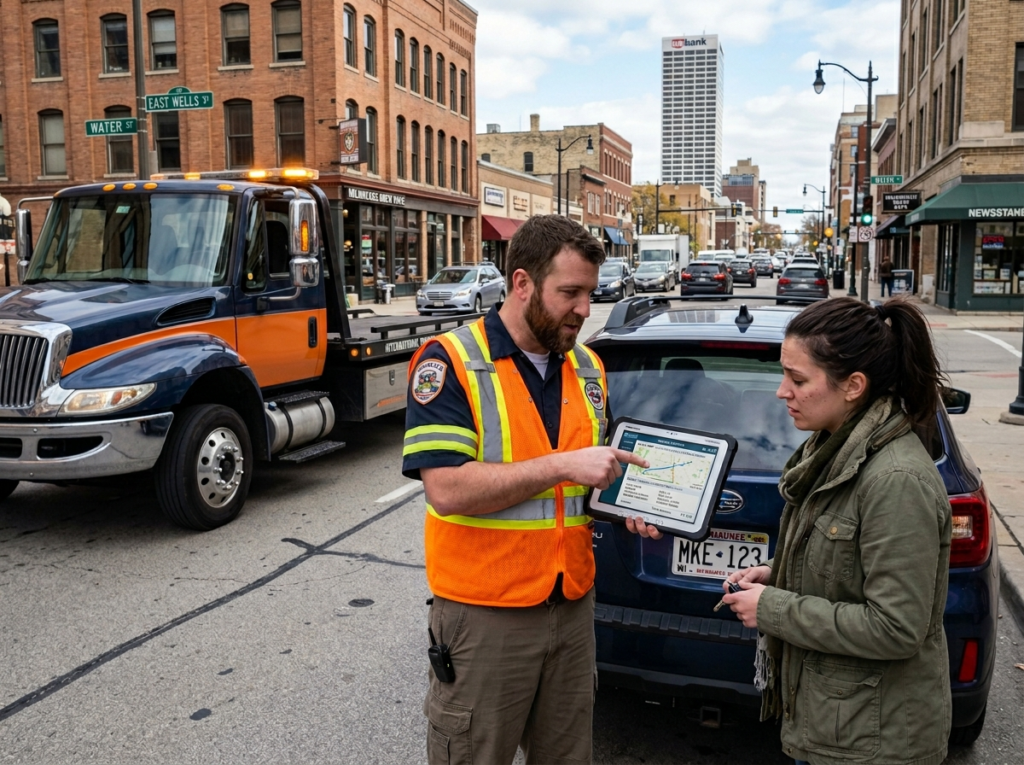
The wide price ranges in the table above reflect real variation not vague estimates. Understanding which factors push a tow toward the lower or upper end of any range lets you anticipate costs, evaluate quotes, and recognize when a price is unreasonable.
1. Base Hook-Up Fee
Every tow begins with a hook-up fee, the flat charge for dispatching and connecting to your vehicle, regardless of distance.
In Milwaukee, this base fee typically ranges from $50 to $100 for standard vehicles. It covers the truck dispatch, driver time, and the process of connecting to and securing your vehicle. Some providers fold the hook-up fee into a base mileage package; others list it as a separate line item. Either way, it is the minimum charge you will see for any towing service.
2. Distance – The Biggest Variable
After the hook-up fee, distance is the primary driver of towing cost. Milwaukee towing companies typically charge a per-mile rate on top of the hook-up fee, ranging from $3 to $7 per mile for standard light-duty towing.
A 5-mile tow at $5 per mile adds $25 to the base fee. A 20-mile tow at $5 per mile adds $100. For long-distance tows of 50 miles or more, the per-mile economics dominate the invoice entirely.
For local Milwaukee towing breakdown on I-94 to the nearest shop, for example the distance is usually 5 to 15 miles. For towing from a highway breakdown to a specific dealership or preferred shop, the distance may be 20 to 30 miles. Knowing the distance before the tow lets you calculate a reasonable expected cost and compare it against the quote.
3. Towing Method – Flatbed vs. Wheel-Lift
Flatbed towing costs more than wheel-lift towing because it requires more sophisticated equipment and a longer setup time. The price premium for a flatbed over a wheel-lift tow is typically $25 to $75 for the same distance.
For AWD vehicles, luxury cars, damaged vehicles, and any vehicle where road contact during transport would cause damage, flatbed is not optional it is the only acceptable method. The price premium for flatbed is significantly less than the cost of drivetrain damage from being towed incorrectly.
4. Vehicle Type and Size
Heavier and larger vehicles cost more to tow because they require trucks with greater rated capacity, consume more fuel during transport, and take longer to secure properly. A compact sedan, a full-size pickup truck, a large commercial van, and a heavy-duty commercial vehicle each fall into progressively more expensive towing categories.
When calling for a tow, always identify your vehicle type accurately, a quote given for a sedan that turns out to be a 3/4-ton pickup may be revised upward at the scene.
5. Time of Day and Day of Week
Towing companies apply after-hours surcharges for service outside standard business hours typically evenings after 6 or 8 p.m., weekends, and holidays.
In Milwaukee, these surcharges generally range from $25 to $75 added to the base service cost. On major holidays Christmas, Thanksgiving, New Year’s the surcharge may be higher. After-hours towing is not a scam: operating a 24/7 service requires paying drivers at premium rates for overnight and holiday hours, and legitimate surcharges reflect this real cost. The red flag is a surcharge that is disproportionate to the base service cost or that is not disclosed before the tow begins.
6. Situation Complexity
A straightforward breakdown on an accessible shoulder costs less to handle than a vehicle stuck at an unusual angle in a construction zone, or a vehicle in a ditch requiring winching before it can be loaded, or an accident scene requiring coordination with law enforcement and documentation before the vehicle can be touched.
Complexity adds time and additional equipment and legitimate towing companies pass those costs on in their billing. The key is that these additional charges should be disclosed and explained before the work begins, not presented as a surprise on the final invoice.
7. Storage Fees – The Most Overlooked Cost
Vehicle storage fees are the most frequently overlooked component of the total towing cost, particularly after accidents. Once your vehicle reaches a storage facility, whether you chose to store it there or it was towed there under police authority, fees begin accruing daily.
At $35 to $75 per day, a vehicle stored for two weeks while an insurance claim is processed can accumulate $500 to $1,050 in storage fees alone, on top of the initial tow charge. The strategy for minimizing storage fees is simple: contact your insurance company immediately, push for prompt adjuster inspection, and arrange for the vehicle to be moved to a repair facility or released as quickly as possible.
| Storage Fee Warning: Storage fees are the single most controllable component of your post-towing cost and they are the most commonly overlooked. Every day your vehicle sits at a tow yard costs you money. If your vehicle was towed after an accident, call your insurer the same day and specifically ask them to prioritize a prompt inspection so the vehicle can be released to a repair facility or declared a total loss without unnecessary delay. |
Service-by-Service Towing Cost Breakdown for Milwaukee
1. Local Towing Cost in Milwaukee
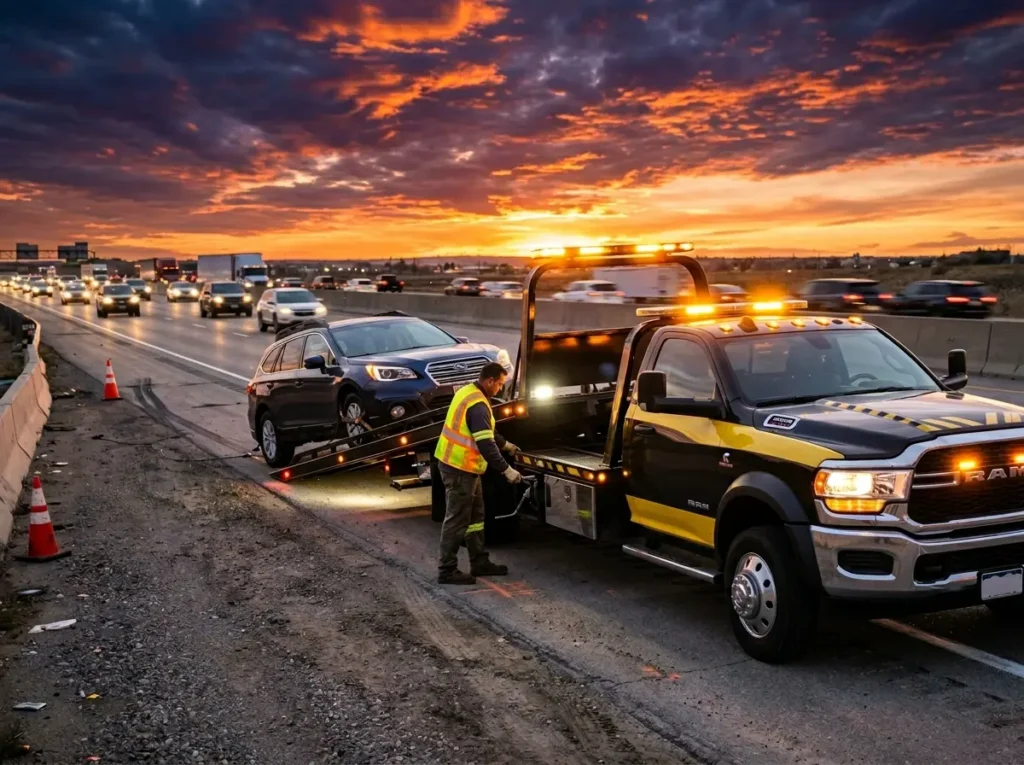
The majority of towing calls in Milwaukee are local a vehicle that breaks down on I-94, stalls on Capitol Drive, or stops running in a parking lot somewhere in the city, and needs to get to a nearby repair shop.
For these calls, the total cost is typically $75 to $200 for a standard vehicle, depending on the exact distance and whether a flatbed is required.
This range covers the hook-up fee plus a mileage rate for a 5 to 15 mile tow. Same-day, business-hour calls at the lower end of this range; after-hours or flatbed calls push toward the upper end.
2. Emergency Towing Cost in Milwaukee
Emergency towing cost in Milwaukee reflects the full complexity of the situation: accident scene access, coordination with first responders, vehicle damage requiring special handling, after-hours timing, and the urgency premium of dispatching immediately rather than scheduling.
Emergency tows in Milwaukee typically run $100 to $350 for standard vehicles, with flatbed and heavy-duty emergency tows reaching $300 to $600 or more depending on vehicle size and scene complexity.
Emergency towing is one area where the gap between local providers and nationally dispatched services is most significant. A national roadside program routing your call to a contracted provider in the area may queue your request behind other calls and dispatch a truck that takes 60 to 90 minutes to arrive.
A local Milwaukee provider like MG Transportation LLC dispatches from within the city and typically reaches most Milwaukee locations within 30 to 45 minutes.
3. Flatbed Towing Cost in Milwaukee
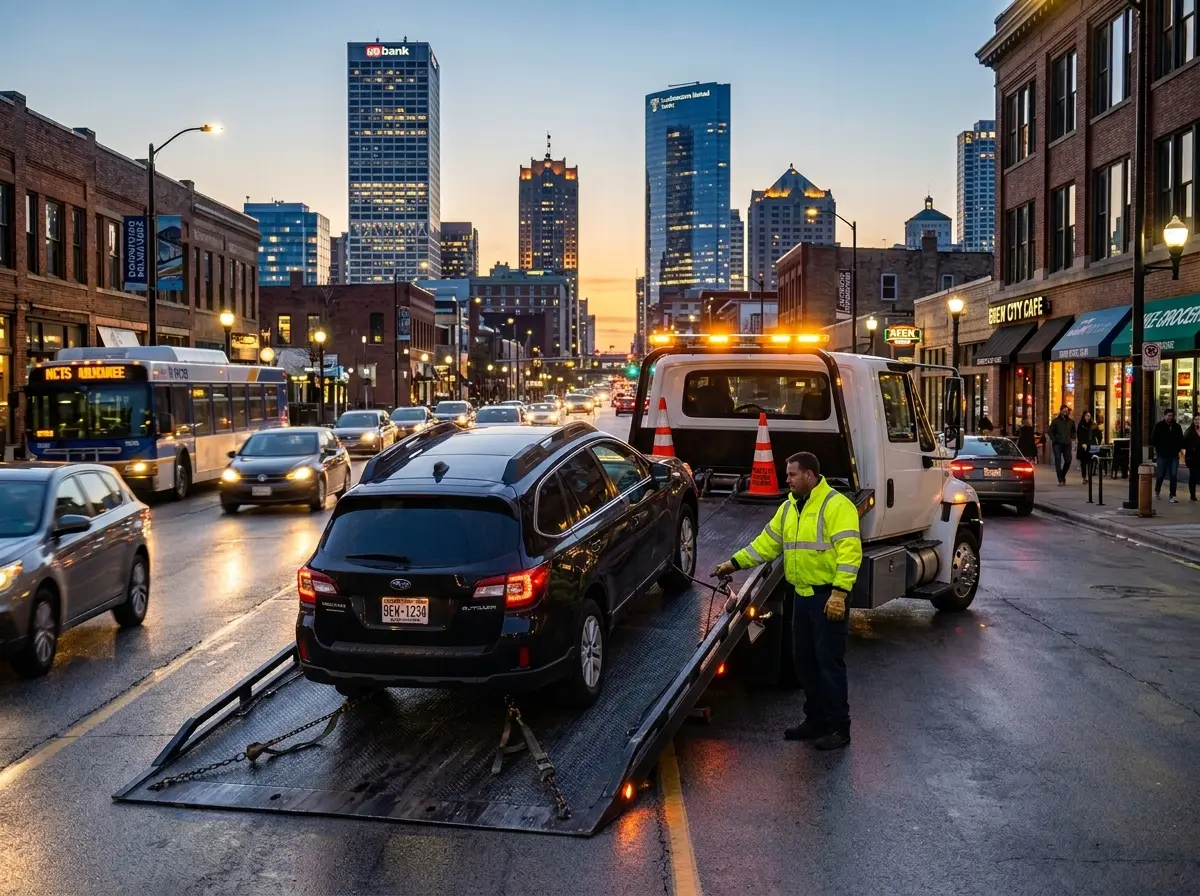
Flatbed towing is the preferred and in many cases required method for a significant share of vehicles on Milwaukee roads. AWD and 4WD vehicles, luxury vehicles, accident-damaged vehicles, low-clearance sports cars, electric vehicles, and classic cars all should be transported on a flatbed.
The cost premium over wheel-lift towing is real but moderate typically $25 to $75 more for the same distance. Given that incorrect towing of an AWD vehicle can cause $3,000 to $8,000 in drivetrain damage, the flatbed premium is always worth it.
Milwaukee flatbed towing prices: $100 to $200 for local tows under 10 miles; $150 to $300 for mid-range tows of 10 to 20 miles; $250 to $500+ for longer distance transport. Heavy-duty flatbed for large trucks and SUVs carries an additional premium.
4. Long-Distance Towing Cost
Long-distance towing from Milwaukee to Madison, Chicago, Green Bay, or other destinations beyond the metro area is priced primarily on a per-mile basis after the hook-up fee. Typical per-mile rates for long-distance flatbed towing run $3 to $5 per mile for standard vehicles. A 90-mile tow from Milwaukee to Madison at $4 per mile produces a mileage charge of $360, plus the hook-up fee, for a total of roughly $400 to $500.
Long-distance towing of luxury, AWD, or specialty vehicles typically carries a slightly higher per-mile rate reflecting the additional care required.
5. Heavy-Duty Towing Price in Milwaukee
Heavy-duty towing covers commercial vehicles, large pickup trucks (3/4-ton and above), box trucks, buses, and similarly large vehicles that exceed standard light-duty tow truck capacity.
Heavy-duty towing in Milwaukee starts at approximately $250 and extends to $600 or more depending on vehicle weight, equipment required, and distance.
Commercial vehicle owners should verify that any towing provider they use is equipped with heavy-duty trucks rated for their vehicle’s weight, using an under-rated truck for a heavy vehicle creates both safety and vehicle damage risks.
6. Roadside Assistance Services vs. Towing
For situations where the vehicle can be fixed at the roadside and driven away a dead battery, a flat tire with a usable spare, an empty fuel tank, a locked vehicle, roadside assistance costs significantly less than a full tow.
Jump start service in Milwaukee runs $50 to $100; flat tire changes $50 to $100; emergency fuel delivery $40 to $80 plus the cost of the fuel; car lockout service $50 to $120.
These services are the right call when the vehicle can be made driveable at the location and they save the cost of a tow plus the additional inconvenience of vehicle storage and retrieval.
Need a Tow Truck in Milwaukee? Get an Honest Quote. MG Towing & Recovery – Affordable, Safe, Transparent Towing | Milwaukee 24/7. Call Now: 414-973-1902
Does Insurance Cover Towing? What Milwaukee Drivers Need to Know
Towing insurance coverage in Milwaukee depends entirely on what coverage types your policy includes. The answer ranges from ‘fully covered with no out-of-pocket cost’ to ‘not covered at all’ depending on your specific policy. Here is the breakdown every Milwaukee driver should understand.
| Coverage Type | Covers Towing? | Details |
| Liability only (minimum WI) | No – your vehicle | Covers towing costs you cause for others |
| Collision coverage | Yes – accident tows | Towing included in collision claim; deductible applies |
| Comprehensive coverage | Yes – non-collision | Covers towing after theft, storm, fire damage |
| Roadside assistance add-on | Yes – up to plan limit | $50–$300+ per incident depending on plan tier |
| AAA membership (Classic) | Yes – up to 7 miles | Tow limit varies by membership level |
| AAA membership (Plus/Premier) | Yes – up to 100/200 miles | Higher tiers cover much longer tow distances |
| New vehicle warranty (roadside) | Yes – manufacturer varies | Usually covers first 3–5 years; check your coverage |
| Uninsured motorist property | Yes – if hit by uninsured | Covers towing when at-fault driver has no insurance |
| At-fault driver’s liability | Yes – if they’re at fault | Reimburse through claim process; not immediate |
How to Use Your Towing Coverage Correctly?
- Know your coverage before you need it, review your policy’s roadside assistance section now, not during a breakdown, and note the per-incident dollar limit and any mileage caps.
- Call your insurer or roadside plan first when possible, using your coverage correctly avoids paying out of pocket and then filing for reimbursement.
- Save all receipts and invoices when you pay out of pocket, you will need these for reimbursement claims regardless of which coverage applies.
- For accident tows, notify your insurer the same day, prompt notification is required by most policies and starts the claims process immediately.
- If the at-fault driver’s insurance will ultimately pay, you may still need to pay upfront and seek reimbursement, document everything from the first moment
| How to Reduce Your Out-of-Pocket Towing Costs: The most effective ways to minimize towing costs in Milwaukee: (1) Add a roadside assistance endorsement to your auto policy typically $10 to $25 per year, it covers most standard towing needs. (2) Join AAA, the Classic membership pays for itself with a single tow. (3) Check your credit cards, several premium cards include complimentary roadside assistance with towing coverage. (4) Check your vehicle’s warranty, most new vehicles include manufacturer roadside assistance. (5) Call a local Milwaukee provider like MG Towing & Recovery directly, local companies consistently offer more competitive, transparent pricing than national dispatch networks. |
Red Flags: How to Spot Towing Overcharging in Milwaukee
Unfortunately, towing is an industry where predatory pricing practices are a documented problem particularly at accident scenes and late-night breakdowns where drivers are stressed, vulnerable, and lack reference points for fair pricing. Knowing the red flags of overcharging protects you from paying significantly more than legitimate service costs.
Red Flags Before the Tow
- Refusing to give you a price estimate before hooking up your vehicle is a major red flag. Any reputable towing company should be able to provide at least a base estimate before starting the job.
- Pressuring you to sign documents before you have properly read them is another warning sign. Never sign a blank or incomplete authorization form.
- If a driver claims that the police have ordered a specific towing company but you have not confirmed it, be cautious. Always verify this directly with the officer on the scene, not just the tow truck driver.
- If a tow truck shows up without being called, it could be a case of bandit towing. This type of soliciting at accident scenes is illegal in many Wisconsin areas and often points to a predatory operator.
- Finally, if someone refuses to let you call a different provider or tells you that you do not have the right to choose your towing company, that is not true. In Wisconsin, you always have the right to choose who tows your vehicle.
Red Flags on the Invoice
- Charges for services not performed or not discussed, ask for an explanation of every line item you do not recognize.
- Mileage charges that significantly exceed the actual distance between pickup and delivery locations, you can verify this with a mapping application.
- Storage fees that began before the vehicle actually arrived at the storage facility.
- Per-day storage fees significantly above the Milwaukee standard range of $35 to $75.
- Gate fees, administrative fees, or ‘processing fees’ not disclosed before the tow.
- A total bill that is dramatically higher than the ranges in this guide for comparable services.
What to Do If You Have Been Overcharged?
- Request an itemized invoice in writing before paying. This is your right and it creates the documentation you may need if a dispute comes up.
- If you have to pay to get your vehicle back, you can pay under protest. Just make sure to clearly note on the payment that it is being made under protest while the issue is still under review.
- You can file a complaint with the Wisconsin Department of Agriculture, Trade and Consumer Protection (DATCP) through their official website. Predatory towing practices fall under their enforcement authority.
- If the tow happened within city limits and involved a city-authorized company, reach out to the City of Milwaukee’s Department of Neighborhood Services for assistance.
- If the charges are high or feel unfair, consider speaking with a Wisconsin consumer protection attorney. State laws may allow you to recover damages if deceptive practices are involved.
| Do Not Pay a Disputed Bill Without Documentation: If you believe you have been overcharged for towing in Milwaukee, do not simply pay the full amount without creating a paper trail. Write ‘paid under protest, amount in dispute’ on any payment documentation. Get an itemized invoice in writing. Filing a DATCP complaint and retaining documentation gives you options for recovery that disappear once an undocumented payment is made. |
How to Choose a Towing Company in Milwaukee: Affordable and Safe
The cheapest tow truck is not always the best value, a low-priced operator who damages your AWD drivetrain or your luxury vehicle’s paint costs far more than the money saved on the tow. At the same time, being overcharged for standard service is genuinely avoidable. Here is the framework for finding towing that is both affordable and genuinely safe.
What to Look For?
- Licensed and insured in Wisconsin is something you should always confirm. Make sure the company has a valid towing license and proper liability insurance. This protects you in case any damage happens during the towing process.
- The company should have the right equipment for your specific vehicle. Flatbed trucks are best for AWD vehicles, luxury cars, electric vehicles, and damaged cars, while heavier vehicles require proper heavy duty towing equipment.
- Transparent pricing is very important. A reliable towing company will give you a clear quote or estimate before they start the job, instead of surprising you with extra charges after delivery.
- Availability around the clock matters because breakdowns and accidents can happen anytime. A company that does not truly operate 24/7 is not a good fit for Milwaukee’s driving conditions.
- Local knowledge makes a big difference. A tow truck dispatched locally can reach you faster and understands Milwaukee roads, construction zones, mile markers, and nearby repair shops.
- A strong and verifiable reputation is also key. Always check Google reviews, BBB ratings, and consider recommendations from your insurance provider or mechanic before choosing a towing service.
Questions to Ask Before You Commit
- What is the base hook-up fee and per-mile rate for my distance?
- Will this be a flatbed tow? (For AWD, luxury, damaged, or EV vehicles, confirm this is yes)
- Are there any surcharges that apply to my situation, after-hours, holiday, vehicle type?
- What is the storage rate per day if the vehicle needs to be stored?
- Do you work directly with insurance companies for claim coordination?
Why MG Towing & Recovery for Milwaukee Towing?
MG Towing & Recovery is a local Milwaukee towing company offering full-service towing and roadside assistance across Milwaukee and the surrounding area. We operate 24 hours a day, 365 days a year, with local dispatch that puts the nearest available truck on the way to you, not a nationally queued response routing through a contracted network.
Need a Tow Truck in Milwaukee? Get an Honest Quote. MG Towing & Recovery – Affordable, Safe, Transparent Towing | Milwaukee 24/7. Call Now: 414-973-1902
Real-World Towing Cost Examples for Milwaukee Drivers
Putting the pricing framework into concrete scenarios helps Milwaukee drivers understand what to expect for their most likely towing situations.
Scenario 1: Flat Tire on I-94, No Spare – Tow to Nearest Tire Shop (7 miles)
Standard wheel-lift tow, daytime, 7-mile distance. Hook-up fee: $75. Mileage at $5/mile x 7 miles: $35. Total: approximately $110. If it is after 8 p.m.: add $35 after-hours surcharge for a total of approximately $145. If the vehicle is AWD (flatbed required): add $40 for flatbed premium, bringing the total to approximately $150 daytime or $185 after hours.
Scenario 2: Engine Failure on the Marquette Interchange – Tow to Shop on the East Side (12 miles)
Emergency towing from a high-traffic location with police coordination, flatbed for safety, 12-mile distance, evening hours. Hook-up: $85. Flatbed premium: $40. Mileage at $5/mile x 12 miles: $60. After-hours surcharge: $40. Total: approximately $225. If the vehicle needs to be stored overnight pending insurance review: add $50 per day. One overnight = $275 total before storage day 2.
Scenario 3: Long-Distance Tow – Milwaukee to Madison (80 miles)
Long-distance flatbed tow, daytime, standard vehicle. Hook-up: $100. Mileage at $4/mile x 80 miles: $320. Total: approximately $420. If AWD vehicle or luxury vehicle with additional care requirements: $450 to $550. If after hours: add $50 to $75 surcharge.
Scenario 4: Winter Snow Recovery – SUV Stuck in Ditch on Side Street
Winch-out extraction, accessible ditch, daytime, no towing required afterward (vehicle driven away). Winch-out fee: $125. If the vehicle needs a short tow after extraction because of damage: add base tow fee of $75 to $100. Total for extraction only: approximately $125. Total if extraction plus short tow: approximately $200 to $225.
Frequently Asked Questions: Tow Truck Costs in Milwaukee
What is the average towing cost in Milwaukee?
For a standard local tow of 5 to 10 miles during daytime hours, the average Milwaukee towing cost runs $100 to $200 for a standard vehicle. Flatbed towing for the same distance typically runs $130 to $250.
After-hours calls add $25 to $75 to any service. These are the most common scenarios Milwaukee drivers encounter. Long-distance tows, heavy-duty vehicles, and complex recovery situations push costs significantly higher.
Why does my towing bill seem higher than the estimates in this guide?
Several legitimate factors can push a bill above the standard ranges: after-hours surcharge if the tow occurred outside business hours, flatbed requirement for your specific vehicle type, greater actual distance than initially estimated, complexity surcharges for difficult access or an accident scene, or storage fees that accumulated while the vehicle was held.
Review the invoice line by line, every charge should have a clear explanation. If you cannot get a clear explanation for a specific charge, that is the basis for a dispute.
Can I negotiate towing costs in Milwaukee?
In some circumstances, yes. A politely negotiated discount for cash payment, for being a repeat customer, or for a straightforward job in favorable conditions is not unusual with local providers.
What you cannot negotiate is an after-the-fact reduction on a bill you have already agreed to negotiate before the hook-up, not after delivery. The most effective negotiating position is knowing the market rate (this guide provides that) and being willing to call a second provider if the first quote is unreasonable.
How do I get towing reimbursement from my insurance?
Save the towing invoice and any receipts. File a claim with your insurer, specifically identifying the towing costs as part of the claim. For accident tows covered under collision, the towing cost is typically folded into the overall claim.
For non-accident tows covered under roadside assistance, file directly through your roadside plan with the invoice. For tows where the other driver was at fault, file with their liability carrier and include the towing invoice as documented property damage. Response and reimbursement timelines vary from same-week to several weeks depending on the complexity of the underlying claim.
Is it worth joining AAA for towing coverage in Milwaukee?
For Milwaukee drivers who regularly use I-94 or I-43 and deal with harsh winters, AAA membership can quickly pay off. The Classic plan costs around $60 to $75 per year and covers up to 7 miles of towing.
The Plus plan, about $100 to $115 annually, covers up to 100 miles, which is enough for most trips across the Milwaukee area. Since a single tow can cost $150 to $200, the membership often pays for itself after just one use, especially for frequent drivers or families with multiple vehicles.