



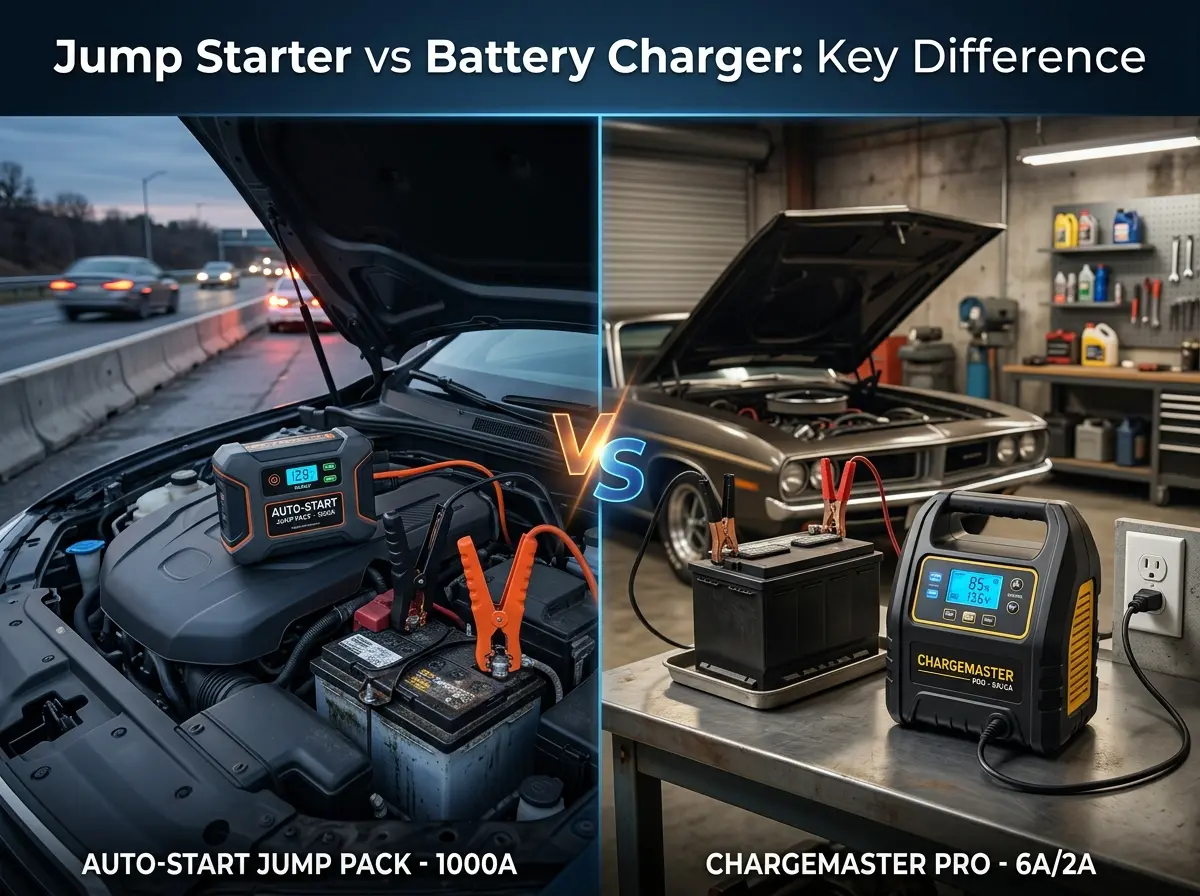
Picture this: it’s a freezing January morning in Chicago, you turn the key, and your engine gives you nothing but a sad clicking sound. Now you’re standing in your driveway wondering whether you need a jump starter, a battery charger, or both. The two tools sound similar, and most auto parts store employees will happily sell you either one without explaining the difference. But here’s the truth most drivers learn the hard way: a jump starter and a battery charger do completely different jobs, and using the wrong one at the wrong time can either leave you stranded or shorten the life of an already weak battery.
I can tell you that understanding this difference is one of the most useful pieces of automotive knowledge a driver can have. Let’s break it down properly.
What Is a Jump Starter?
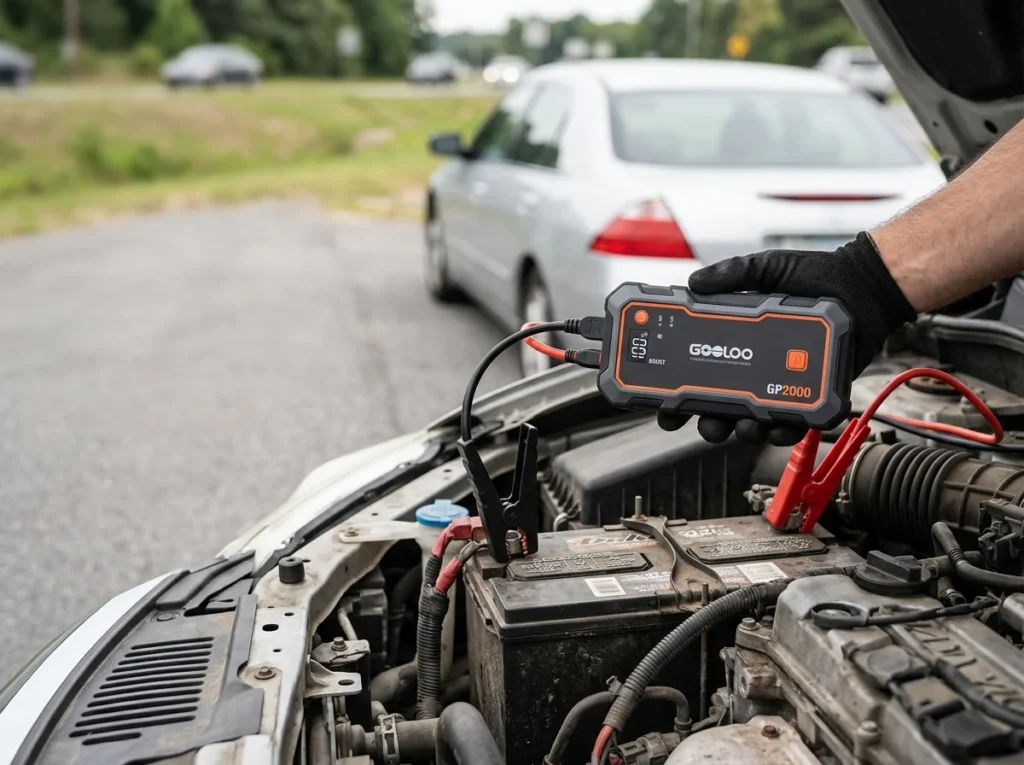
A jump starter is a portable, high-output power device designed to deliver a sudden burst of electrical current to crank a dead engine. Think of it as an emergency tool, not a maintenance tool.
Modern lithium-ion jump starters are about the size of a paperback book and typically deliver between 400 and 2,000 peak amps, with most consumer units sitting in the 800 to 1,500 peak amp range. That brief surge of power, usually lasting only a few seconds, is enough to turn over a stalled engine and get the alternator working again.
How a Jump Starter Works?
Once connected to your battery terminals using clamps, a jump starter releases a high burst of current directly to the starter motor circuit. It does not recharge your battery in any meaningful way. Its only purpose is to get your engine running so the alternator can take over and begin charging the battery while you drive.
Most quality units today include built-in safety features such as reverse polarity protection, spark-proof technology, short circuit protection, and over-current cutoffs. Many also double as USB power banks for phones and small electronics.
When You Should Use a Jump Starter
- Your car battery is dead and you need to start the engine immediately
- You’re stranded on the road with no other vehicle nearby
- You have limited time and cannot wait for a full recharge
- Cold weather has temporarily weakened the battery’s cranking power
Also Read: How to Jump Start a Car: The Complete Step-by-Step Guide
What Is a Battery Charger?
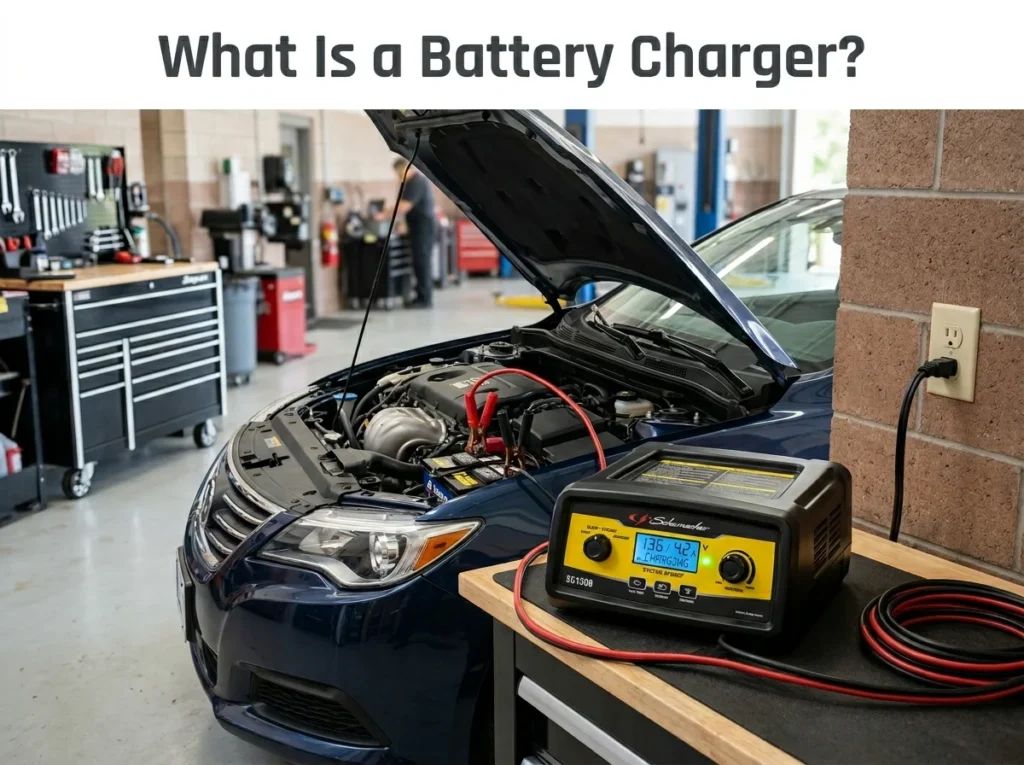
A battery charger is a stationary or semi-portable device that slowly restores a battery’s stored energy by sending a controlled, low-amperage current into it over a period of time. Unlike a jump starter, its job is to actually replenish the battery, not just start the car.
A typical home battery charger operates between 2 and 15 amps. Trickle chargers and smart maintainers usually run between 1 and 3 amps, while heavier shop chargers can reach 40 amps or more for faster results.
How a Battery Charger Works?
A battery charger plugs into a standard wall outlet (120V AC in the United States) and converts that household current into a steady DC charge suitable for a 12V automotive battery. Modern smart chargers use microprocessor-controlled charging stages, typically including bulk charge, absorption, and float maintenance modes. This staged approach prevents overcharging, sulfation buildup, and battery damage.
Depending on amperage and battery size, a full charge from a low state can take anywhere from 4 to 24 hours. A typical 50Ah car battery charged at 10 amps will reach full charge in roughly 5 to 7 hours.
When You Should Use a Battery Charger?
- Your battery is deeply discharged but still in good health
- The vehicle has been sitting unused for weeks or months
- You want to maintain a seasonal vehicle, motorcycle, RV, or boat battery
- You’re trying to extend the lifespan of an aging battery
- You need to recover a battery after leaving headlights or interior lights on overnight
Also Read:
How to Test a Car Battery at Home?
How to Charge a Car Battery Without a Charger
Key Differences Between a Jump Starter and a Battery Charger
The simplest way to remember the difference: a jump starter gets you moving, while a battery charger keeps your battery healthy. One is reactive, the other is preventive.
A jump starter delivers a short, powerful burst measured in cold cranking amps. A battery charger delivers a slow, sustained current measured in standard amps over hours. Jump starters are designed for roadside emergencies. Battery chargers are designed for garage use, long-term storage, or rehabilitating a weakened battery.
Using a jump starter when your battery actually needs a full recharge is a common mistake. It might start your car once or twice, but if the underlying charge level is too low, you’ll end up stranded again within a day or two.
Not sure what your battery needs? Our experts can diagnose it and get you back on the road fast. Call Us Now 414-973-1902
Comparison Table: Jump Starter vs Battery Charger
| Feature | Jump Starter | Battery Charger |
|---|---|---|
| Power Source | Internal rechargeable battery (lithium-ion or lead-acid) | 120V household AC outlet |
| Function | Provides instant burst of power to start engine | Slowly recharges and maintains battery |
| Charging Time | Not designed to charge a battery; works in seconds | 4 to 24 hours for a full charge |
| Portability | Highly portable, fits in glove box or trunk | Mostly stationary, used in garage or driveway |
| Use Cases | Roadside emergencies, dead battery, no-start situations | Long-term maintenance, deep discharge recovery, stored vehicles |
| Safety Features | Reverse polarity, spark-proof clamps, short circuit protection | Auto shut-off, overcharge protection, multi-stage charging |
| Price Range (USA) | $60 to $300 (consumer grade) | $30 to $250 (depending on amperage and features) |
Can a Jump Starter Replace a Battery Charger?
No, and this is where many drivers get into trouble. A jump starter cannot replenish a battery’s stored energy. It only provides enough current to crank the engine. Once your car starts, the alternator becomes responsible for charging the battery, but if the battery is severely depleted or aging, the alternator alone won’t bring it back to full health.
Repeatedly jump-starting a vehicle without ever properly recharging the battery can also strain your alternator, which is not designed to recover a deeply discharged battery from scratch. Alternator replacement in the US averages between $500 and $1,000, so this matters.
Can a Battery Charger Replace a Jump Starter?
In some cases, yes, but only if you have time. Many modern battery chargers include a “jump start” or “engine start” mode that pushes higher amperage for a short period. However, this still requires a wall outlet, which makes it useless on the side of a highway. For at-home dead battery situations, a charger with a boost function can absolutely do both jobs.
Which One Should You Buy First?
If you only have budget for one, your choice depends on your lifestyle.
Buy a jump starter first if you commute long distances, drive in extreme cold, own an older vehicle, or frequently park in remote areas. The peace of mind alone is worth the $80 to $150 investment.
Buy a battery charger first if you own a seasonal vehicle, classic car, motorcycle, RV, or boat. Batteries naturally self-discharge at a rate of about 1% per day, and a maintained battery can easily last 5 to 7 years instead of the typical 3 to 5.
Honestly, the smartest setup is owning both. A portable jump starter lives in your trunk for emergencies, and a smart trickle charger stays in the garage for maintenance. Together, they cost less than one tow plus one battery replacement.
Pro Tips From the Field
A few things experienced technicians know that most drivers don’t:
Battery health declines noticeably below 32°F. A battery at 0°F loses roughly 60% of its cranking power, which is why dead-battery calls spike every winter.
A “dead” battery isn’t always dead. If it reads above 12.0 volts on a multimeter, a slow charger can usually revive it. Below 10.5 volts, the battery has likely suffered cell damage and may need replacement.
Cheap jump starters often advertise inflated peak amp ratings. Look for the cranking amps (CA) or starting amps rating, which reflects sustained real-world output, not marketing numbers.
If you jump-start a vehicle, drive it for at least 20 to 30 minutes afterward to let the alternator partially recover the battery. Short trips after a jump start are the number one cause of recurring no-start issues.
Frequently Asked Questions
Q. How long does a jump starter last on a single charge?
Most modern lithium jump starters hold their charge for 6 to 12 months when stored properly. It’s a good habit to top them off every 3 months, especially if stored in a hot or cold vehicle.
Q. Will jump-starting a car damage the battery?
A single jump start using a quality device will not harm a healthy battery. However, repeated jump-starting without proper recharging stresses the battery and the alternator and can shorten the lifespan of both.
Q. How many amps do I need to charge a car battery?
For routine maintenance, 2 to 10 amps is ideal. Higher amperage charges faster but generates more heat, which can shorten battery life if used too often. Most home users do best with a 10-amp smart charger.
Q. Is it safe to leave a battery charger connected overnight?
Yes, as long as it’s a smart charger with automatic shut-off or float mode. Older manual chargers without auto cut-off can overcharge and damage the battery, or in rare cases cause it to overheat or vent gas.
Q. How many cold cranking amps do I need in a jump starter?
For most US passenger cars, 400 to 600 cold cranking amps (CCA) is sufficient. Trucks, diesel engines, and large SUVs typically need 800 CCA or more for reliable cold-weather starts.
Final Takeaway
A jump starter and a battery charger may both connect to your car battery, but they solve completely different problems. A jump starter is your emergency lifeline when the engine won’t turn over. A battery charger is your long-term partner for keeping that battery strong, healthy, and reliable for years.
If you remember just one thing from this article, let it be this: jump starters start engines, chargers charge batteries. Confusing the two is the most common reason drivers end up with shortened battery life, repeat breakdowns, or unexpected tow bills. Investing in the right tool, or ideally both, is one of the cheapest forms of automotive insurance you can buy.