

Parking Rules, Fines, Towing, and What Every Milwaukee Driver Must Know Before Winter
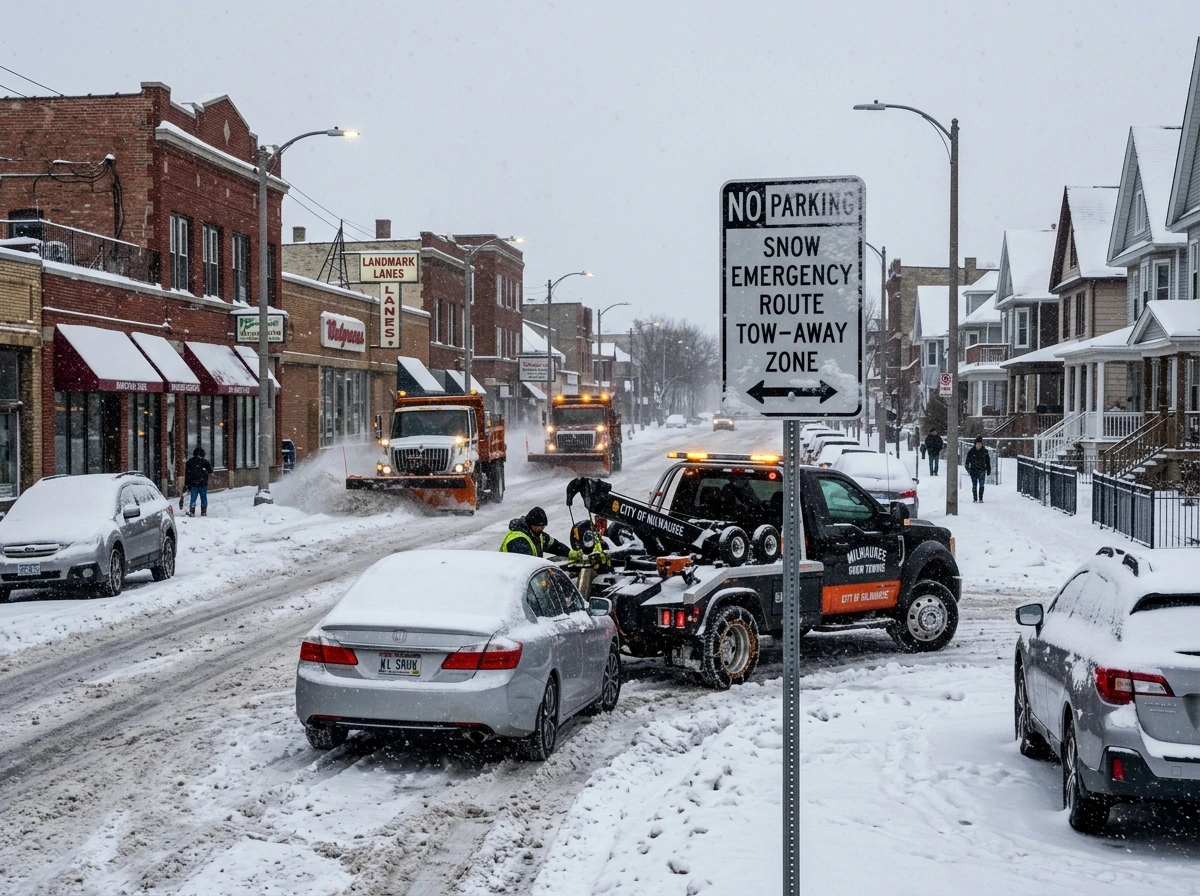
Every Milwaukee winter brings the same scene: a heavy overnight snowfall, a predawn city plow rolling through the neighborhood, and a row of cars buried some in compliance with the rules, some about to receive a $100 ticket and a tow. Milwaukee snow emergencies are a regular part of life in this city, but they remain genuinely confusing for many residents and visitors alike.
What exactly triggers a snow emergency? Which streets are affected? When do you have to move your car and for how long? What happens if you do not move it in time and how much will it cost you? These are questions every Milwaukee driver should be able to answer before the first major snowstorm of the season, not scrambling for answers at two in the morning after a surprise blizzard.
This guide breaks down everything you need to know about Milwaukee snow emergency rules: how they work, when they are declared, which streets they apply to, what the fines and towing consequences are, how to stay informed, and what to do if your car gets towed during a snow emergency.
Whether you are a longtime Milwaukee resident or new to the city, this is the definitive local reference for winter parking regulations.
Related Article: Ultimate Milwaukee Driver’s Guide
What Is a Milwaukee Snow Emergency?
A Milwaukee snow emergency is an official declaration made by the City of Milwaukee that activates a specific set of parking restrictions on designated streets throughout the city. The purpose of a snow emergency is to allow city snowplows to clear snow from the full width of the roadway without parked vehicles obstructing their path.
When deep or rapidly accumulating snow falls, plows can only clear the portion of the street not blocked by parked cars. This leaves dangerous, unplowed strips along curbs and creates hazardous driving conditions that persist for days after a storm. A snow emergency forces vehicles off designated streets so plows can do their job completely the result being cleaner, safer roads for every Milwaukee driver.
Understanding that snow emergencies exist for a genuine public safety reason and not as a revenue measure, helps make sense of why the enforcement is as strict as it is. The city cannot afford to have plows stalled or blocked on the city’s most critical routes during a major weather event.
Who Declares a Milwaukee Snow Emergency?
The Milwaukee Department of Public Works (DPW) is responsible for declaring a snow emergency. The declaration is typically made by the Commissioner of Public Works or their designee, based on weather forecasts, actual snowfall accumulation, and road condition assessments. A snow emergency can be declared at any time of day or night, including overnight, and takes effect as soon as it is publicly announced.
The DPW coordinates with the National Weather Service Milwaukee forecast office and monitors conditions on the ground before making a declaration. Declarations are not made for every snowfall they are typically triggered when significant accumulation is expected or occurring that requires full-width plowing on major routes.
| Key Point: A Milwaukee snow emergency is not automatically declared every time it snows. It is a specific official action taken by the Department of Public Works when conditions warrant full-street plowing. This is why it is critical to monitor official alerts rather than assuming a snow emergency is always in effect during winter storms. |
Snow Emergency Street Parking Rules in Milwaukee
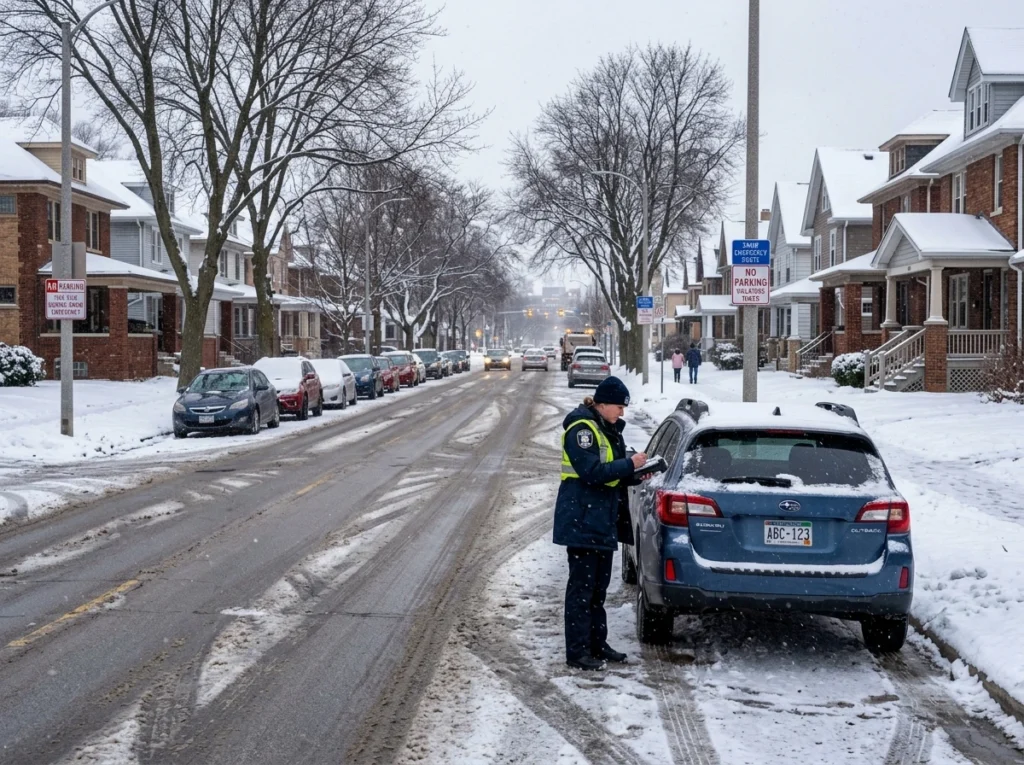
The parking restrictions that take effect during a Milwaukee snow emergency are specific, time-bound, and apply to designated routes throughout the city. Understanding exactly which rules apply and on which streets is essential to avoiding fines and towing.
Snow Emergency Routes: What They Are and Where They Are
Milwaukee designates specific streets as Snow Emergency Routes. These are typically the city’s primary arterial roads, bus routes, and high-traffic corridors where full-width plowing is most critical to maintaining traffic flow and emergency access.
Snow Emergency Routes are marked with distinctive red and white signs that read “Snow Emergency Route, No Parking During Snow Emergency.”
These signs are present year-round on every Snow Emergency Route in Milwaukee. This means you are expected to know whether the street you park on is a designated route before a snow emergency is ever declared, the signs are always visible during your normal parking decision.
If you see a red and white Snow Emergency Route sign on the street where you intend to park, know that parking there becomes prohibited the moment a snow emergency is declared.
When Do Parking Restrictions Begin?
Once a Milwaukee snow emergency is declared, parking restrictions on Snow Emergency Routes take effect immediately or at a specific time announced in the declaration, often within one to two hours of the announcement. Vehicles parked on Snow Emergency Routes must be moved within that window or they are subject to ticketing and towing.
The restrictions remain in effect until the snow emergency is officially lifted by the DPW which typically occurs once plowing on designated routes is complete and the streets are cleared to acceptable safety standards.
A snow emergency can last anywhere from several hours to multiple days depending on the severity and duration of the storm.
The Two-Side Alternating Parking System
Milwaukee uses an alternating-side parking system during certain snow events and as part of regular winter parking regulations on streets that are not designated Snow Emergency Routes. Under this system, parking alternates between the even-numbered and odd-numbered sides of the street on specific days typically odd-numbered addresses on odd days of the month and even-numbered addresses on even days.
This system allows plows to clear one side of the street completely before moving to the other. It applies citywide on residential streets during winter months and operates independently of snow emergency declarations meaning both systems can be in effect simultaneously during a major storm.
| Important Distinction: Snow Emergency Route restrictions and the alternating winter parking rules are two separate systems that can both be active at the same time. During a major snow event, you may need to comply with both the Snow Emergency Route prohibition AND the alternating-side residential parking rules. Check both sets of rules for your specific street. |
Parking Restrictions on Non-Emergency Route Streets
Even on streets that are not designated Snow Emergency Routes, Milwaukee enforces winter parking rules from December 1 through March 1 each year. During this period, overnight parking on city streets is restricted between 2:00 a.m. and 6:00 a.m. on any day when snow accumulation requires plowing.
Always check local signage and city alerts for current restrictions during winter months, as additional block-specific or neighborhood restrictions may apply beyond the citywide rules.
How to Know When a Milwaukee Snow Emergency Is Declared?
One of the most important parts of complying with Milwaukee snow emergency rules is simply knowing when one has been declared. The city provides several official channels through which snow emergency declarations are communicated.
Official Notification Channels
- Milwaukee city website: The Department of Public Works posts snow emergency declarations at city.milwaukee.gov, this is the primary official source.
- Social media: The City of Milwaukee and the DPW post snow emergency announcements on their official Facebook and Twitter/X accounts in real time.
- Milwaukee snow emergency hotline: The city maintains a dedicated phone line that provides current snow emergency status, check the city’s DPW website for the current number
- Local news and radio: Milwaukee television stations, particularly WISN 12, TMJ4, and Fox 6, broadcast snow emergency declarations prominently as part of their weather coverage, as do local radio stations.
- Milwaukee snow emergency alert emails and texts: Milwaukee residents can sign up to receive automated text and email alerts from the city when a snow emergency is declared this is one of the most reliable notification methods for Milwaukee drivers.
- Nextdoor and neighborhood apps: Many Milwaukee neighborhoods have active community apps where snow emergency alerts are shared quickly among residents.
Sign Up for Local Snow Emergency Alerts in Milwaukee
The single best thing a Milwaukee driver can do to avoid surprise snow emergency violations is to sign up for official city alerts before winter begins. The City of Milwaukee’s e-notification system allows residents to subscribe to snow emergency alerts that are delivered directly to your phone or email the moment a declaration is made.
Do not rely solely on word of mouth, social media friends, or the assumption that you will catch the news at the right time. Official alert subscriptions remove the risk of missing a declaration made overnight or during a workday when you are not monitoring local media.
| Pro Tip for Milwaukee Residents: Set up two alert methods, the city’s official email or text notification system, plus notifications from one local news station’s weather app. This redundancy ensures you receive snow emergency alerts even if one channel has a delay. The few minutes it takes to set this up in October can save you hundreds of dollars in fines and towing fees all winter. |
Milwaukee Snow Emergency Fines: What You Will Pay
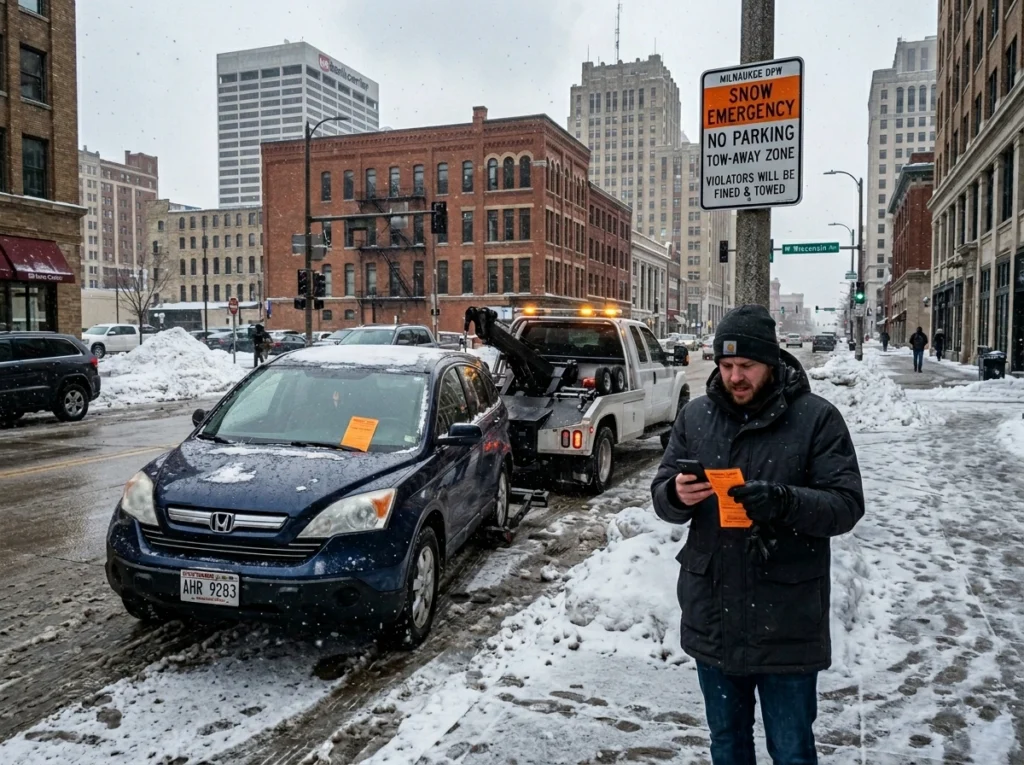
Failing to comply with Milwaukee snow emergency parking rules results in significant financial penalties. The city enforces these violations actively during and after declared snow emergencies, and the combination of a parking ticket and towing fees adds up quickly.
Snow Emergency Parking Violation Fines
| Violation | Fine Amount |
| Parking on a Snow Emergency Route during declared emergency | $100 |
| Parking violation – winter overnight restriction (2–6 a.m.) | $40 – $60 |
| Violating alternating-side winter parking rules | $40 – $60 |
| Failure to remove snow from parked vehicle blocking road | Variable – up to $100+ |
| Repeat violation within same snow emergency period | Escalating fines possible |
Fine amounts are set by Milwaukee’s municipal code and are subject to change. Always verify current fine schedules with the City of Milwaukee DPW or Milwaukee Municipal Court. Late payment penalties can increase the total amount owed beyond the initial fine.
Towing and Storage Fees During Snow Emergencies
Beyond the parking fine itself, vehicles towed during a Milwaukee snow emergency are subject to towing and daily storage fees that escalate rapidly. These fees are separate from and in addition to the parking violation fine.
| Fee Type | Typical Amount |
| Snow emergency tow fee | $75 – $150+ |
| Daily vehicle storage fee | $35 – $75 per day |
| Administrative release fee | $25 – $50 |
| Total cost (tow + 1 day storage + fine) | $210 – $350+ combined |
| Total cost (tow + 3 day storage + fine) | $330 – $575+ combined |
| Storage Fees Accumulate Fast: If your vehicle is towed during a Milwaukee snow emergency and you do not retrieve it promptly, storage fees pile up every single day. A vehicle left for three days easily results in over $400 in total costs when the fine, tow fee, storage, and release fees are combined. Retrieve your vehicle within 24 hours of discovering it has been towed. |
Snow Emergency Towing in Milwaukee: What Happens to Your Car?
Snow emergency towing in Milwaukee is authorized under Milwaukee’s Municipal Code and is carried out by DPW-contracted towing companies. When a vehicle is found in violation on a Snow Emergency Route after a declaration, a tow truck is dispatched and the vehicle is removed typically to a city-designated impound lot or contracted storage facility.
How Snow Emergency Towing Works?
- A snow emergency is declared and the restriction period begins
- DPW enforcement officers or Milwaukee Police patrol Snow Emergency Routes for violations
- Vehicles found in violation are tagged for towing, a notice is placed on the vehicle and a tow is called
- A contracted tow truck removes the vehicle to a designated storage lot
- The vehicle owner is responsible for all towing and storage fees in addition to the parking fine
- The owner must retrieve the vehicle from the impound lot during business hours and pay all outstanding fees before release
How to Find Your Towed Vehicle in Milwaukee?
If you return to where your vehicle was parked and it is gone during a snow emergency, follow these steps:
- Check first whether your vehicle has been towed or simply moved by a friend or family member, confirm before assuming it was towed
- Call the City of Milwaukee’s towed vehicle locator, the DPW maintains a phone line and web tool specifically for locating towed vehicles
- Visit the Milwaukee DPW website and use the online vehicle location lookup you will need your license plate number
- If you cannot locate your vehicle through DPW, contact the Milwaukee Police Department’s non-emergency line to file a report in case it was stolen rather than towed
- Once located, confirm the impound lot address, hours of operation, and required payment methods before traveling there
What You Need to Retrieve a Towed Vehicle?
- Valid government-issued photo ID
- Vehicle title or registration proving ownership
- Payment for all outstanding fees, towing charge, daily storage, and the parking fine (or proof that the fine has been contested and a hearing scheduled)
- Some lots accept credit cards; others require cash, confirm before you go
Stuck in the Snow or Need Emergency Towing in Milwaukee? MG Towing & Recovery — 24/7 Snow Recovery & Emergency Towing, All Winter Long. Call Now: 414-973-1902
Milwaukee Snow Ordinance: The Legal Framework
The Milwaukee snow emergency rules are grounded in the city’s municipal ordinances, which grant the DPW the authority to declare emergencies, enforce parking restrictions, and authorize towing. Understanding the legal framework helps you understand both your obligations and your rights.
Milwaukee Code of Ordinances – Key Provisions
Under Milwaukee’s Code of Ordinances, the Department of Public Works holds the authority to:
- Declare a snow emergency whenever accumulated or forecasted snowfall requires full-width plowing of designated routes
- Designate and mark Snow Emergency Routes throughout the city
- Enforce no-parking restrictions on those routes during declared emergencies through the issuance of municipal citations
- Authorize the immediate towing and impoundment of vehicles that obstruct snow removal operations
- Set and collect fees for towing and storage of vehicles removed during snow emergencies
Winter Parking Laws Milwaukee: The Broader Season Rules
Beyond snow emergencies specifically, Milwaukee enforces a set of winter parking laws that apply throughout the November through March season. These include the overnight parking restriction between 2:00 a.m. and 6:00 a.m. during snowfall events, the alternating-side parking schedule, and various block-specific restrictions in neighborhoods where street widths make winter parking particularly problematic for plowing operations.
Some Milwaukee neighborhoods particularly older, denser residential areas on the north and south sides have additional posted restrictions that go beyond citywide rules. Always read posted signs on the specific block where you park, as neighborhood-specific ordinances take precedence over the general citywide calendar.
Your Right to Contest a Snow Emergency Ticket
If you receive a snow emergency parking citation in Milwaukee and believe it was issued in error, you have the right to contest it through the Milwaukee Municipal Court. Grounds for a successful contest might include: the snow emergency had not yet been officially declared at the time of citation, the vehicle was parked on a street that is not a designated Snow Emergency Route, signage on the specific block was missing or damaged, or other mitigating circumstances.
To contest a citation, follow the instructions on the ticket for requesting a hearing. Note that contesting the ticket does not pause storage fee accrual if your vehicle has been towed, you must still retrieve the vehicle and pay storage costs while the citation is under review.
Winter Driving Safety in Milwaukee During Snow Emergencies
Snow emergencies affect more than just parking they coincide with the most dangerous driving conditions Milwaukee roads produce all year. Understanding how to drive safely during the same conditions that trigger a snow emergency is essential for every Milwaukee driver.
Roads During a Snow Emergency: What to Expect
When a snow emergency is in effect, Milwaukee streets are in active plowing mode. This means plow trucks are operating on major routes at all hours, often moving slowly with lights flashing and spreading salt or sand. Drivers on Snow Emergency Routes during active plowing should:
- Never pass a plow truck on the right, the right side is where snow is being pushed, creating an immediate visibility and debris hazard
- Maintain at least three to four car lengths behind plow trucks, the cloud of salt and snow they produce severely limits visibility
- Expect sharp lane changes and debris on road surfaces, plows push snow and ice fragments across lanes
- Reduce speed significantly below posted limits, plow-cleared roads may still have packed ice, and the sections between passes may have significant accumulation
Winter Driving Safety Tips for Snow Emergency Conditions
- Allow at least twice the normal travel time for any trip during or immediately after a snow emergency declaration.
- Keep your fuel tank at least half full during winter emergency stops in extreme cold with a near-empty tank can strand you in dangerous conditions
- Clear all snow from your vehicle before driving not just the windshield but the roof, hood, trunk, and all lights. Flying snow from your vehicle is both a safety hazard to other drivers and a citable offense in Wisconsin
- Brake early and gradually on snow-covered intersections, the approach to a plowed cross-street from an unplowed side street is one of the most common locations for winter accidents
- Use headlights throughout the day during snowfall, visibility for other drivers matters as much as your own forward visibility
- Avoid unnecessary travel during active snow emergencies, if you do not need to drive during peak storm conditions, waiting even a few hours dramatically improves road safety
| Wisconsin Law on Snow on Vehicles: Under Wisconsin law, drivers are required to clear snow and ice from their vehicles before driving. Snow that falls from a moving vehicle and causes an accident or injury can result in citations and civil liability. Milwaukee Police and State Patrol actively cite this violation during and after snow emergencies. A five-minute snow removal effort protects both your wallet and everyone else on the road. |
Snow Emergency Quick Reference Guide for Milwaukee Drivers
Use this reference summary every winter to stay compliant and prepared.
| Topic | Key Information |
| Who declares it? | Milwaukee Dept. of Public Works (DPW) |
| When is it triggered? | Significant snowfall requiring full-width plowing of major routes |
| Which streets are affected? | Designated Snow Emergency Routes – marked with red/white signs year-round |
| When must I move my car? | Within the window stated in the declaration, typically 1–2 hours |
| How long does it last? | Until officially lifted by DPW – hours to multiple days |
| Parking fine for violation | Approximately $100 on Snow Emergency Routes |
| Towing fee | $75 – $150+ (plus daily storage and admin fees) |
| How to get alerts | City email/text subscriptions, DPW website, local TV/radio, social media |
| How to find a towed car | DPW vehicle locator tool or phone line using your license plate number |
| Winter overnight rule | No parking 2–6 a.m. during snowfall events (citywide) |
| Alternating parking rule | Odd/even address side by date – applies on non-emergency route streets |
FAQs: Milwaukee Snow Emergency Rules
How do I know if the street I park on is a Snow Emergency Route?
Look for the distinctive red and white “Snow Emergency Route, No Parking During Snow Emergency” signs posted along the street. These signs are present year-round, not just during emergencies.
If you see one of these signs, assume that parking there during any declared snow emergency will result in a ticket and possible towing. Milwaukee’s DPW website also publishes maps of designated Snow Emergency Routes, which you can review before winter begins.
Does a snow emergency automatically start at midnight when it snows heavily?
No. A snow emergency is only in effect when it has been officially declared by the Milwaukee Department of Public Works. It does not automatically activate at a certain snow depth or time of night.
This is why monitoring official alerts is so important, you cannot assume a snow emergency is in effect simply because it is snowing hard. Always check the DPW website, the official city alert system, or local news for a confirmed declaration.
What if I cannot move my car because it is stuck in snow?
Being stuck in snow is not a legally recognized exemption from snow emergency parking rules in Milwaukee. If your vehicle is immobile on a Snow Emergency Route after a declaration, it is subject to ticketing and towing regardless of the reason.
Your best option is to call for snow recovery services immediately a professional provider can extract your vehicle quickly and at a cost far lower than the combined tow, storage, and fine penalties. MG Towing & Recovery provides snow recovery services in Milwaukee 24/7.
Can I contest a snow emergency parking ticket?
Yes. You have the right to contest a Milwaukee snow emergency citation through Milwaukee Municipal Court. Request a hearing using the instructions on your ticket. Valid grounds for contest include the emergency not yet being officially declared at the time of citation, incorrect street identification, or missing or damaged signage.
Note that contesting a ticket does not freeze accruing storage fees if your vehicle has been towed retrieve the vehicle first and contest the fine separately.
How quickly do I need to retrieve my car after it is towed during a snow emergency?
As quickly as possible. Storage fees of $35 to $75 per day begin accruing from the moment your vehicle arrives at the impound lot, on top of the towing fee and parking fine. A vehicle left for even two or three days can easily result in total costs exceeding $400. Retrieve your vehicle within 24 hours of discovering it has been towed whenever possible.
Are snow emergency rules the same throughout all Milwaukee neighborhoods?
The Snow Emergency Route rules are citywide and apply uniformly to all designated routes. However, some Milwaukee neighborhoods have additional block-specific restrictions posted on signs that go beyond the general citywide rules.
Always read the signs on your specific block particularly in older, denser residential neighborhoods on Milwaukee’s north and south sides as local restrictions take precedence.