


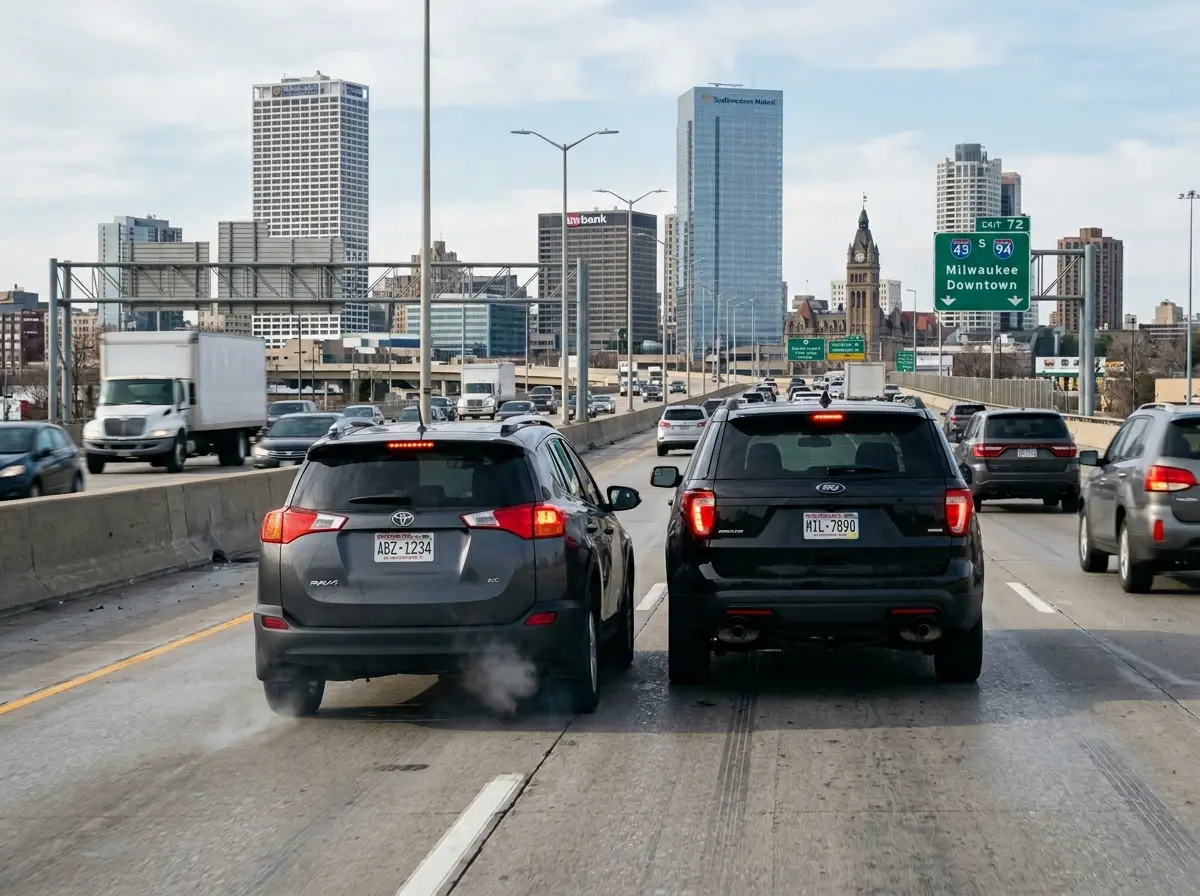
Data-Backed Analysis of Milwaukee’s Top Crash Causes and the Safe Driving Habits That Counter Each One
Milwaukee averages more than 80 fatal crashes and over 460 serious injury accidents every year. Behind every one of those statistics is a specific cause a decision made or not made, a road condition that exceeded a driver’s response, a moment of distraction or aggression or impairment that changed everything in the span of a second.
Understanding what actually causes Milwaukee traffic accidents is not an academic exercise. It is the most direct path to not becoming one of those statistics yourself.
Wisconsin crash data from the Department of Transportation, Milwaukee Police Department collision records, and National Highway Traffic Safety Administration analysis consistently point to the same cluster of causes year after year, on the same corridors and at the same types of intersections.
Some of these causes are behavioral: choices made by drivers that directly produce crashes. Others are environmental: road conditions, weather, infrastructure that creates risk independent of driver intent. Most fatal and serious-injury crashes involve a combination of both.
This guide examines the major causes of car accidents in Milwaukee in depth what the data shows about each one, how it manifests on Milwaukee’s specific roads and highways, and the defensive driving habits that directly address each risk.
At the end, a post-accident section covers what Milwaukee drivers should do immediately after a collision, including when and how to arrange emergency towing and vehicle recovery.
Related Article: The Ultimate Milwaukee Driver’s Guide
Milwaukee Car Accident Statistics: The Scope of the Problem
Before examining individual causes, the scale of Milwaukee’s traffic accident problem deserves context. Milwaukee County’s fatal crash rate has climbed significantly since 2014 rising faster than comparable urban counties in Wisconsin and faster than the national trend during the same period. In the 2018 to 2022 period, Milwaukee County averaged 81 fatal crashes and 464 serious injury crashes annually, figures that place it among the most dangerous urban driving environments in the Midwest.
Five of Wisconsin’s nine deadliest road stretches are located in Milwaukee, according to NHTSA data. The city launched a Vision Zero initiative with approximately $86 million in targeted safety investment aimed specifically at reducing fatal crashes on the highest-risk corridors. Despite these efforts, Milwaukee’s crash rate remains elevated — a reflection of how deeply behavioral and structural factors contribute to the problem.
| Milwaukee Crash Metric | Data Point |
| Average annual fatal crashes (2018–2022) | ~81 per year |
| Average annual serious injury crashes | ~464 per year |
| Wisconsin’s deadliest road stretches in Milwaukee | 5 of the top 9 |
| Vision Zero safety investment | ~$86 million |
| Leading behavioral cause (statewide) | Distracted driving |
| Elevated risk season | November–February (winter) |
| Highest crash concentration (time of day) | Afternoon/evening rush hours |
Drive Milwaukee Safely, but If an Accident Happens, Save Our Number for Fast, Reliable Towing Anytime. Number: 414-973-1902
Cause #1: Distracted Driving — Milwaukee’s Most Pervasive Crash Factor
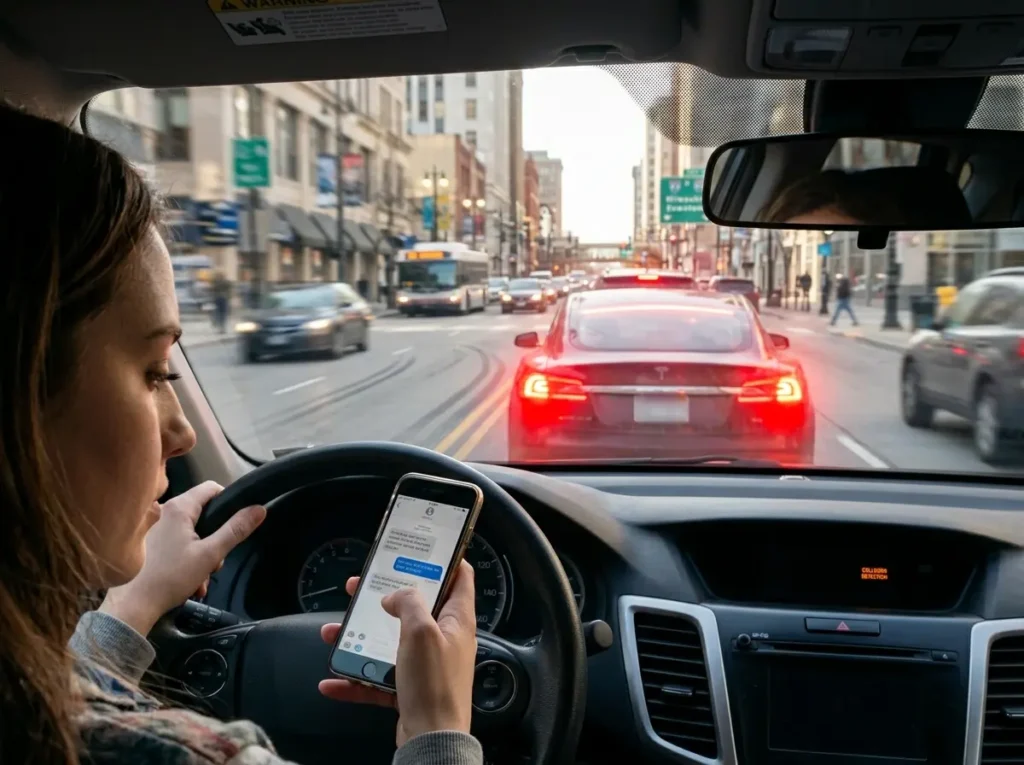
Distracted driving is the single most commonly cited contributing factor in Wisconsin car crashes, and Milwaukee as the state’s most populated urban area sees the highest raw volume of distraction-related collisions.
The Wisconsin DOT defines distracted driving as any activity that diverts a driver’s attention from the primary task of driving: visual distraction (taking eyes off the road), manual distraction (taking hands off the wheel), or cognitive distraction (taking the mind off driving). Phone use combines all three simultaneously, making it the most dangerous form of distraction.
At 40 mph on a Milwaukee arterial, a driver who looks at their phone for five seconds has traveled approximately 293 feet nearly the length of a football field without their eyes on the road. At that speed and distance, they have passed through at least one full intersection without visual confirmation of whether it was clear.
How Distracted Driving Accidents Happen in Milwaukee?
Distracted driving crashes in Milwaukee cluster in three primary contexts: rear-end collisions at intersections where a driver fails to notice a stopped vehicle ahead, failure-to-yield crashes where a distracted driver proceeds without confirming cross-traffic has stopped, and lane-departure crashes where a driver drifts out of their lane on an arterial or highway.
Milwaukee’s wide arterials, Capitol Drive, N. 27th Street, SR-59 are particularly vulnerable to distraction-related crashes because their relative straightness and multiple lanes create an environment where drivers unconsciously reduce their vigilance. The road feels routine, attention wanders, and the distance required to stop at arterial speeds provides little margin for a delayed reaction.
Defensive Driving Response to Distracted Drivers
- Put your phone in Do Not Disturb while driving, every major smartphone has this feature, and enabling it removes the temptation entirely
- Increase following distance on Milwaukee arterials to four or more seconds, this creates the reaction time buffer that compensates for delayed responses from distracted drivers ahead
- At intersections, pause briefly and scan even on green, a distracted driver running a red light is among the most common intersection crash patterns in Milwaukee
- Watch for the behavioral signals of a distracted driver ahead: erratic speed, drifting within a lane, inconsistent gap to the vehicle ahead, increase your distance from these vehicles immediately
| Wisconsin Distracted Driving Law: Wisconsin prohibits composing, sending, or reading electronic text messages while driving. Handheld phone use while driving is illegal under several provisions of Wisconsin statutes ( Cell Phones, Driving and the Law ). Despite these laws, phone-related distracted driving remains a top crash contributor in Milwaukee. The law provides consequences after the fact it does not remove the real-time risk to drivers who share the road with those who ignore it. |
Cause #2: Speeding and Excessive Speed for Conditions
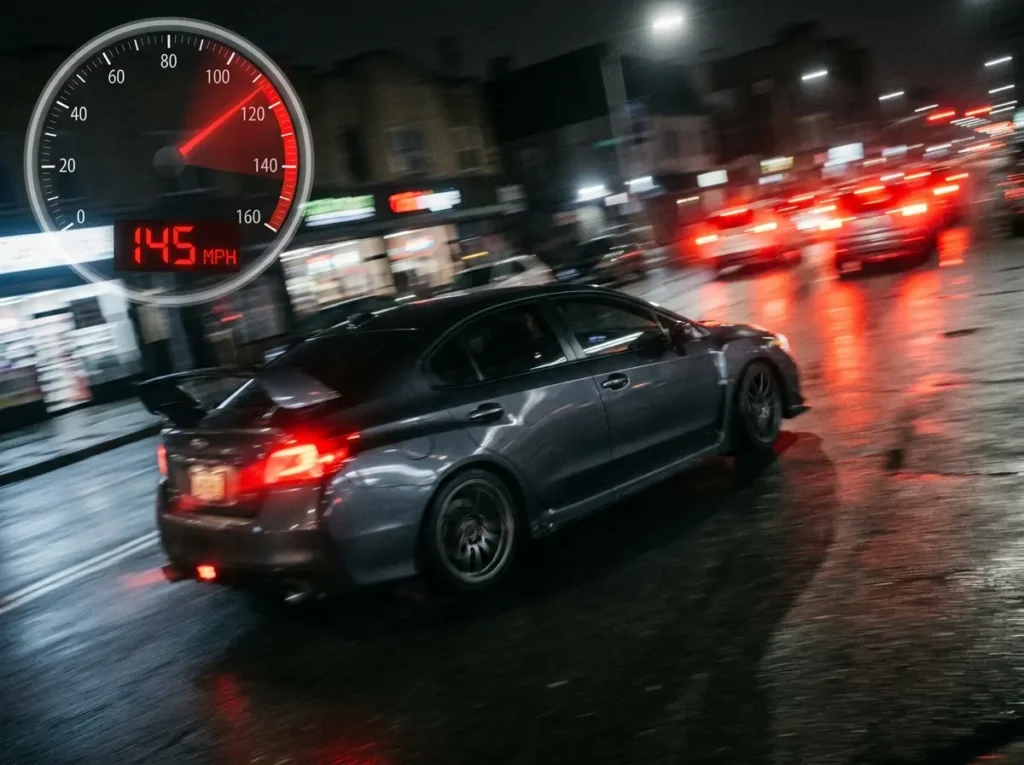
Speed is a factor in a disproportionate share of Milwaukee’s most serious crashes. Wisconsin DOT data consistently shows speed-related crashes producing a higher rate of fatalities and serious injuries than non-speed crashes, the physics of collision energy scales with the square of velocity, meaning a crash at 50 mph delivers roughly four times the energy of a crash at 25 mph.
In Milwaukee’s urban environment, this means that crashes on wide arterials and highways where speeds are higher produce dramatically more severe outcomes than low-speed neighborhood crashes.
Milwaukee crash analysts identify two distinct speeding patterns. The first is absolute speeding driving above the posted limit, particularly common on I-94 and I-43 where the posted 55 mph limit through urban sections is routinely violated by a significant share of traffic.
The second is speeding for conditions driving at the posted limit when weather, visibility, road surface, or traffic density make that speed unsafe. Rain-related car crashes and icy road accidents in Milwaukee frequently involve drivers traveling at or near the legal speed limit in conditions that require a significantly reduced speed.
Speed and Milwaukee’s Deadliest Corridors
The corridors identified in Milwaukee crash data as speed-related crash concentrations align directly with the city’s widest, most open arterials: Capitol Drive, SR-59, Highway 100, and the highway-to-arterial transition zones where drivers maintain highway speeds on roads that require neighborhood-level alertness.
Wide lanes create a visual signal that faster speeds are appropriate a design-induced false perception that Milwaukee’s Vision Zero program specifically addresses through lane narrowing and traffic calming measures.
Defensive Driving Response to Speed Risk
- Treat Milwaukee’s wide arterials as lower-speed environments regardless of what traffic around you is doing the limit is a ceiling, not a social expectation
- Reduce speed proactively in rain, fog, or snow, a wet road extends stopping distance by 40 to 50 percent over dry pavement; ice extends it by 300 to 400 percent
- On I-94 and I-43 through Milwaukee, match your speed to the actual traffic flow rather than the posted limit when traffic is denser than normal, speed differentials between vehicles are a crash risk independent of absolute speed
- Approaching intersections on wide arterials, reduce speed to a pace that would allow you to stop if cross-traffic appears do not rely solely on signal compliance
Cause #3: Drunk and Impaired Driving
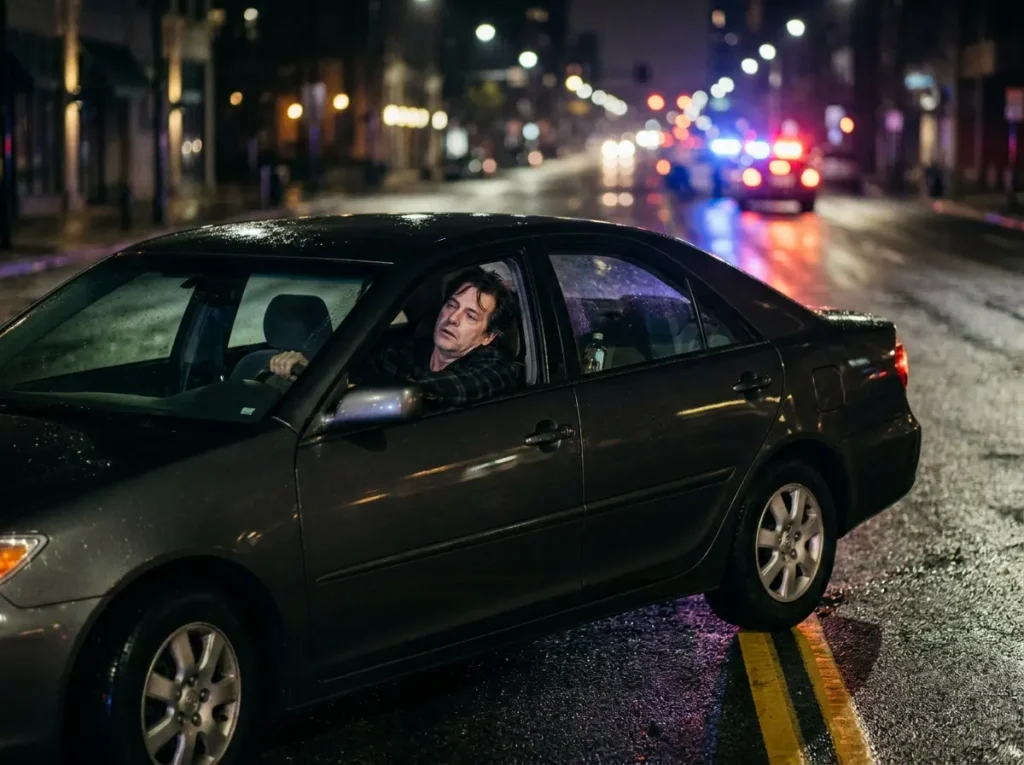
Drunk driving accidents in Milwaukee follow a predictable pattern that every driver in the city should understand: they are heavily concentrated on weekend nights, particularly in the hours between 11 p.m. and 3 a.m, and they cluster geographically near the entertainment corridors on the south side, Brady Street area, the Third Ward, and Water Street.
Wisconsin has historically had a higher rate of drunk driving than the national average a cultural and enforcement reality that produces real consequences on Milwaukee roads every weekend.
Wisconsin’s OWI (Operating While Intoxicated) statistics show Milwaukee County accounts for a disproportionate share of the state’s alcohol-related fatal crashes.
The legal BAC limit in Wisconsin is 0.08 percent, but crash data consistently shows impairment affecting driving performance at blood alcohol levels well below the legal limit particularly in reaction time, lane tracking, and hazard perception.
Prescription drug impairment, cannabis impairment, and polydrug combinations add to the overall impaired driving picture. As cannabis has become more accessible in Wisconsin with neighboring state legalization and Wisconsin decriminalization in certain jurisdictions, drug-impaired driving has become an increasing presence in crash investigation reports.
Defensive Driving Response to Impaired Drivers
- Avoid driving on Milwaukee’s entertainment corridor roads, SR-59, Brady Street, Water Street, National Avenue between 11 p.m. and 3 a.m. on Friday and Saturday nights when impaired driver density is at its peak
- Be especially cautious at uncontrolled intersections and left-turn movements during late-night hours impaired drivers are least predictable in these situations
- If you observe a driver exhibiting strong impairment signs severe lane deviation, extremely erratic speed, wrong-way travel increase your distance, do not attempt to pass, and call 911 with a location description
- Arrange sober transportation for yourself on nights involving alcohol the most effective defense against being in an impaired driving crash is ensuring you are not in an impaired vehicle
Cause #4: Reckless and Aggressive Driving
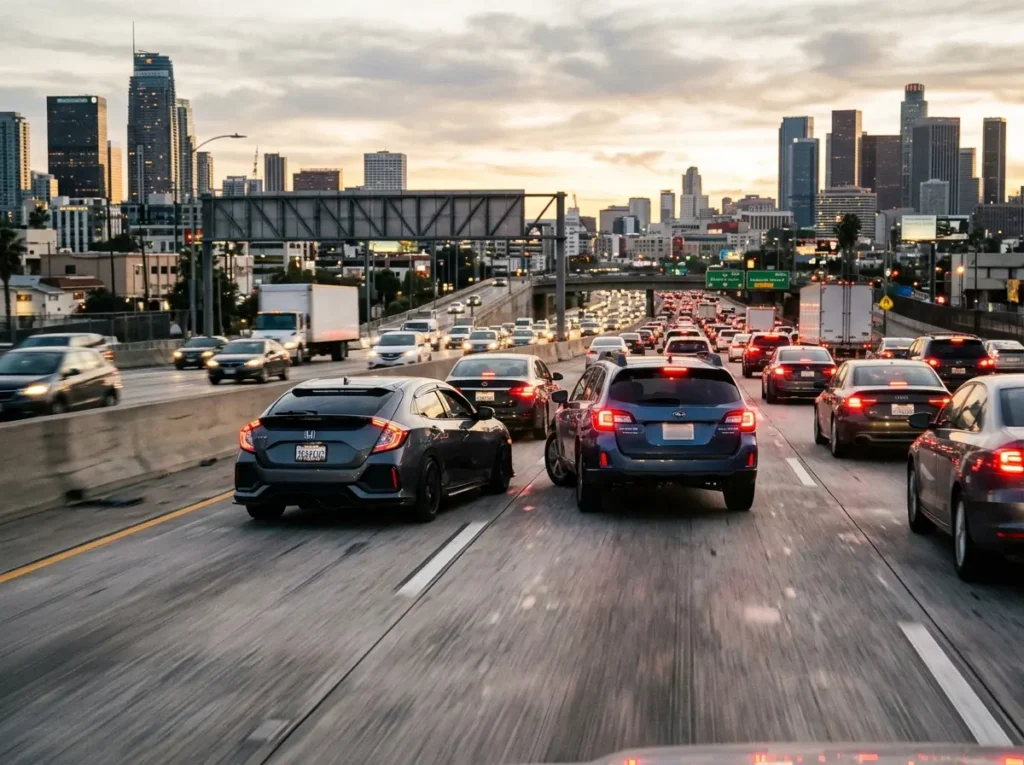
Reckless driving crashes in Milwaukee have increased significantly since 2014, with police and crash analysts pointing to a rise in high-speed pursuits, street racing activity, and aggressive driving behavior on both arterials and highways.
Milwaukee Police Department data documents a troubling increase in crashes involving vehicles traveling at extremely high speeds crashes where vehicles have impacted at speeds well above 80 mph on surface streets, producing catastrophic outcomes not just for vehicle occupants but for pedestrians and bystanders.
Aggressive driving tailgating, unsafe lane changes, cutting off other vehicles, brake-checking is a distinct category from outright recklessness but produces a significant share of Milwaukee’s collision total through rear-end chains, sideswipe crashes, and the reactions it provokes in other drivers.
Tailgating accidents are among the most preventable crash types: they result almost entirely from the following driver’s failure to maintain adequate stopping distance.
The Specific Risk of Aggressive Driving on Milwaukee Highways
I-94 and I-43 through Milwaukee are documented locations for aggressive driving behavior. The high traffic volume, multiple lanes, and the urgency of commuter traffic create an environment where aggressive driving behavior weaving, tailgating, speeding, last-second exits is common during peak hours.
The reduced shoulder widths in I-94 construction zones reduce the margin for error when aggressive maneuvers go wrong, which is why construction zone crashes have a documented severity premium.
Defensive Driving Response to Aggressive Drivers
- Do not engage with aggressive drivers do not brake-check, do not match their speed, do not make eye contact or gestures; these escalate the situation
- Increase following distance from vehicles exhibiting aggressive driving behavior, get away from them safely and let them pass
- On I-94 and I-43, stay in the right or center lanes during heavy traffic periods, the left lane on Milwaukee highways during rush hour is the highest-aggression environment on the road
- If you are being actively tailgated, signal and move right to allow the following vehicle to pass rather than maintaining position
Cause #5: Running Red Lights and Signal Non-Compliance
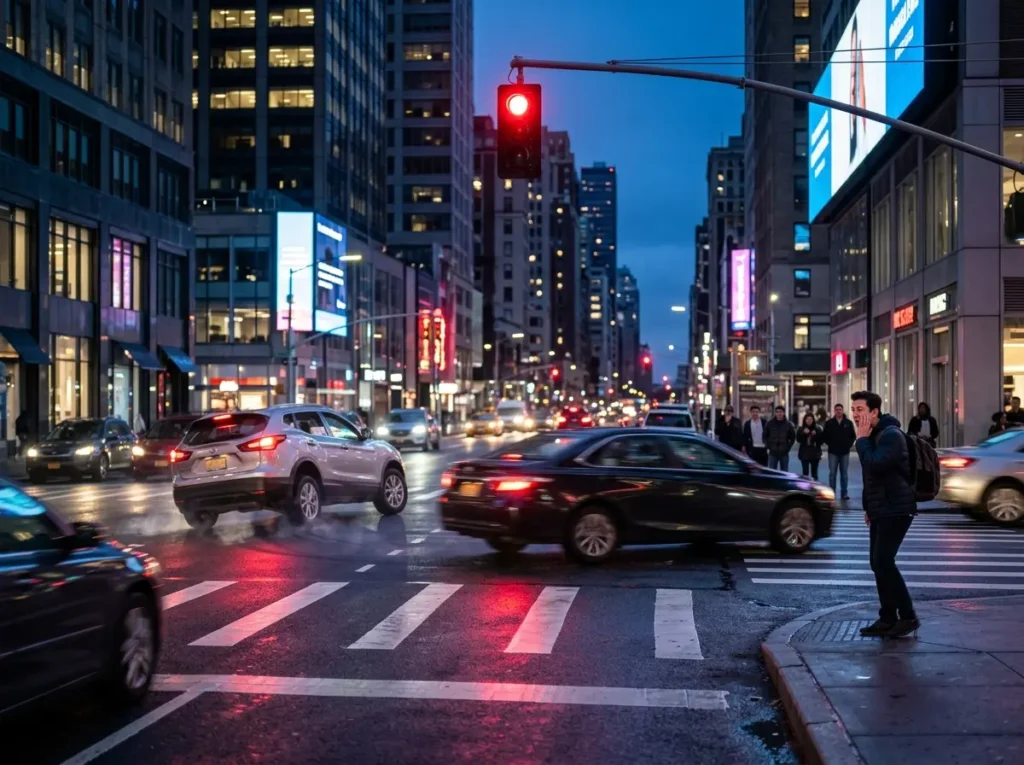
Running red lights is a documented epidemic at Milwaukee’s most dangerous intersections. Milwaukee Police Department crash data at intersections like N. 27th Street and W. Center Street, Capitol Drive and N. 35th Street, and the Fond du Lac Avenue cluster show hit-and-run incidents and right-angle crashes that are almost entirely attributed to signal non-compliance drivers running red lights at high speed.
Right-angle or T-bone crashes resulting from red-light running are among the most dangerous crash types because they impact the side of a vehicle the area with the least structural protection.
The high hit-and-run rate at Milwaukee’s worst intersections documented at nearly 40 to 50 percent of all crashes at some locations reflects an environment where signal compliance has degraded as a social norm.
Drivers who routinely observe others running red lights adapt their own behavior, including running late yellows and early reds themselves. This normalization compounds the crash risk.
Defensive Driving Response to Red-Light Running
- Develop the intersection pause habit: on green, look left, look right, and confirm before proceeding this costs half a second and catches red-light runners before they reach the intersection
- Do not be the first car to accelerate aggressively when a light turns green the most dangerous moment at a Milwaukee intersection is the first two seconds of green when red-light runners from the cross direction are still clearing
- When crossing in the left lane or the far lane from the stop line, look in both directions even after confirming the near lanes are clear a vehicle in the far lane running the light may not be visible from the near lane stop position
- At Milwaukee’s documented high-risk intersections Capitol Drive, N. 27th Street, SR-59 apply this habit with heightened consistency
Cause #6: Winter Weather and Poor Road Conditions
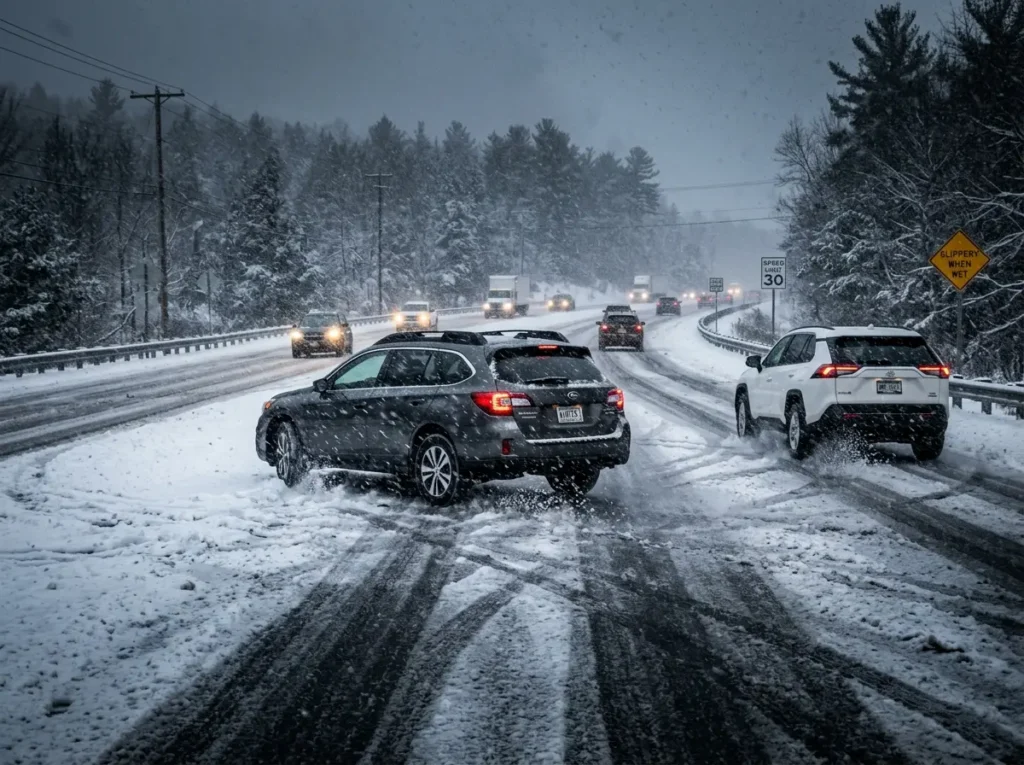
Milwaukee averages 47 inches of snow annually, and the city’s winter driving environment creates a specific, seasonal cluster of accident causes that differs meaningfully from warm-weather crash patterns.
Snow-related crashes in Milwaukee, icy road accidents, and rain-related car crashes all share a common thread: road surface conditions that reduce traction and extend stopping distances dramatically while many drivers continue driving at summer speeds as though conditions have not changed.
Black ice, a transparent ice coating that is nearly invisible on dark pavement is particularly dangerous on Milwaukee’s bridges, overpasses, and shaded road sections where the road surface freezes while adjacent sun-exposed areas remain clear.
The transition from a clear section to a black-ice section at arterial speed provides almost no reaction time. Wisconsin DOT data shows bridge and overpass crashes disproportionately concentrated in the temperature range of 27 to 32 degrees Fahrenheit the condition that produces the most treacherous ice while appearing clear to drivers.
Milwaukee-Specific Winter Crash Patterns
Several winter-specific crash patterns repeat in Milwaukee data year after year:
- First-snow crashes: The season’s first significant snowfall produces a crash spike as drivers re-encounter winter conditions without having recalibrated their speed and following distance habits
- False-thaw crashes: A mid-winter warm spell followed by overnight refreeze creates black ice that catches drivers expecting cleared roads these occur most often on January and February mornings after temperatures dip below freezing overnight
- Lake-effect snow squalls: Sudden visibility reduction to near-zero as lake-effect snow bands move onshore can catch highway drivers with no warning the I-94 and I-43 corridors are most exposed to these events
- Post-plow ice: Freshly plowed roads may have compacted snow and melt-refreeze ice at the edges drivers moving onto the shoulder during a breakdown encounter this when the main lanes appear clear
Defensive Driving Response to Winter Conditions
- Reduce speed to match conditions rather than the speed limit in light snow with accumulation, 35 to 40 mph on a road posted at 55 is appropriate; in heavy snow or on ice, even lower speeds are warranted
- Triple your following distance on any wet or snowy road the standard 3-second gap becomes a 9-second gap on snow, even longer on ice
- Test your brakes gently in a safe location at the start of any winter drive to calibrate your vehicle’s actual stopping performance before you need it in an emergency
- Cross bridges and overpasses at reduced speed in temperatures near freezing these surfaces freeze before road pavement and are disproportionately represented in winter crash data
- If a lake-effect snow squall reduces visibility to near zero on I-94 or I-43, reduce speed dramatically and activate hazard lights, do not slam brakes
Cause #7: Tailgating and Insufficient Following Distance
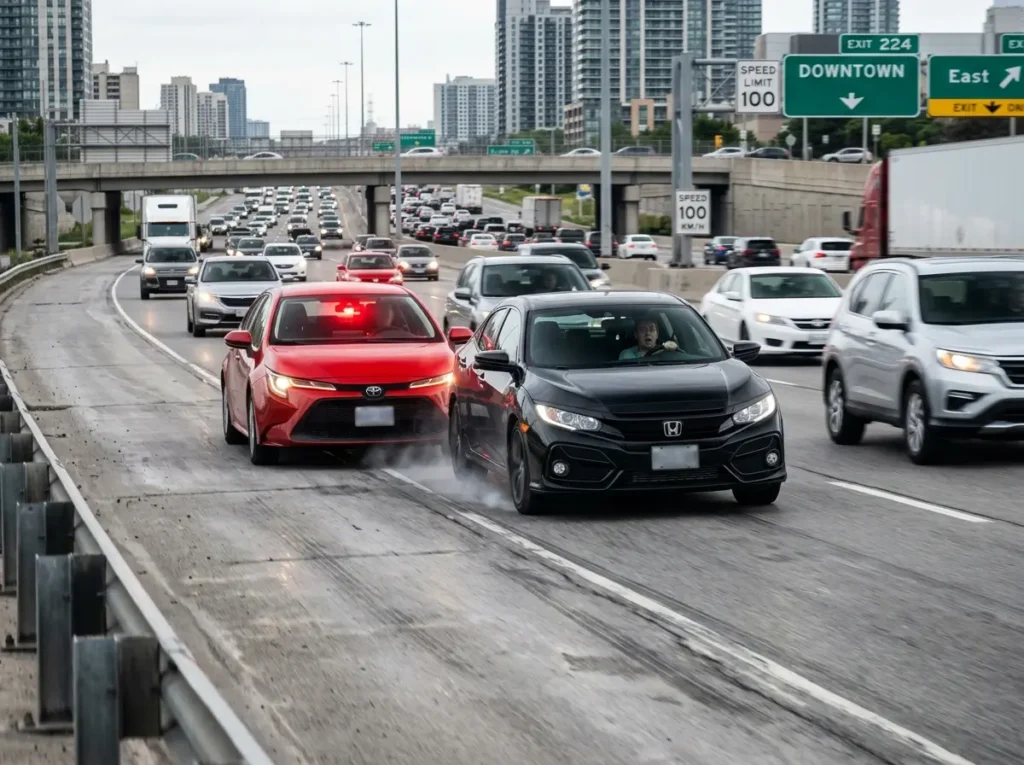
Tailgating-related accidents are among the most statistically preventable crash types in Milwaukee, because they result from a simple, measurable failure: the following driver does not have enough space between their vehicle and the vehicle ahead to stop before a collision when the lead vehicle brakes suddenly. Every rear-end collision on Milwaukee roads represents a situation where following distance was insufficient for the speed and conditions involved.
The three-second rule for following distance which requires that you pass a fixed point at least three seconds after the vehicle ahead passes it is the minimum recommended gap at highway speed on a dry road.
In Milwaukee traffic, this standard is routinely violated. Commuters on I-94, drivers on congested arterials, and aggressive drivers treating following distance as wasted space collectively create a highway environment where a chain-reaction rear-end pileup can develop from a single unexpected stop.
Why Tailgating Is Especially Dangerous in Milwaukee?
Milwaukee’s specific road environment amplifies the risk of insufficient following distance in several ways. The Zoo Interchange and Marquette Interchange on I-94 involve complex merge and exit movements that generate sudden speed changes in adjacent lanes, a driver in the center lane who is not following a vehicle ahead directly may still be struck from behind if a merging vehicle creates a speed disruption.
Defensive Driving Response to Following Distance
- Practice the four-second rule as your default in Milwaukee traffic, count four seconds between the vehicle ahead passing a fixed point and your vehicle passing the same point
- In wet conditions, double to eight seconds; on snow or ice, triple to twelve seconds or more
- On I-94 and I-43, check your following distance every few minutes during congestion the natural drift of traffic tends to compress gaps over time
- When a vehicle tailgates you, move right when safe to do so rather than braking, brake-checking a tailgating vehicle significantly increases crash probability
Cause #8: Low Visibility Conditions — Night, Fog, and Heavy Rain
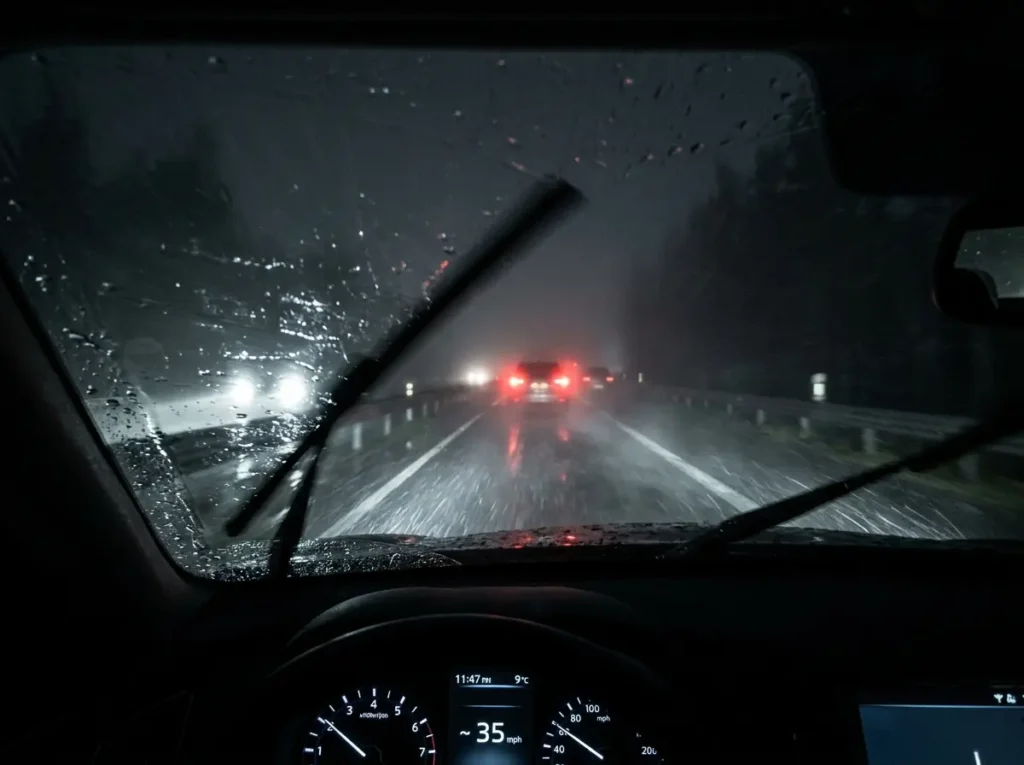
Low visibility driving accidents in Milwaukee encompass three distinct conditions: nighttime driving on inadequately lit roads, fog (including ground fog near the Menomonee River and Milwaukee River corridors), and heavy rain that reduces driver sight lines and makes road markings difficult to see.
Each of these conditions reduces the time drivers have to perceive and respond to hazards, effectively compressing the reaction window that safe driving depends on.
Nighttime crashes in Milwaukee are overrepresented in fatality statistics relative to nighttime’s share of total driving, a pattern consistent with national data showing that while only 25 percent of driving occurs at night, it accounts for approximately 50 percent of fatal crashes.
Milwaukee’s street lighting varies significantly by neighborhood, and the transition from well-lit commercial corridors to darker residential sections creates visibility changes that drivers may not fully register.
Rain-related car crashes on Milwaukee’s surface streets and highways involve both reduced sight distance and reduced traction simultaneously, a compound risk that requires speed reduction to address both hazards at once. Heavy rain at highway speed generates a spray environment that can reduce following-vehicle visibility to near zero.
Defensive Driving Response to Low Visibility
- Use low-beam headlights in fog, high beams reflect off fog droplets and actually reduce your forward visibility
- Increase following distance in rain to at least double the dry-road gap, spray from vehicles ahead reduces your visibility, and wet roads extend your stopping distance
- On unlit or poorly lit Milwaukee roads at night, reduce speed enough that your headlight range exceeds your stopping distance, the standard rule of thumb is ‘drive within your headlights’
- If fog reduces visibility to less than a quarter mile on I-94 or I-43, activate hazard lights and reduce speed dramatically and consider exiting the highway entirely if conditions continue to worsen
Cause #9: Poor Road Conditions — Potholes, Uneven Surfaces, and Road Defects
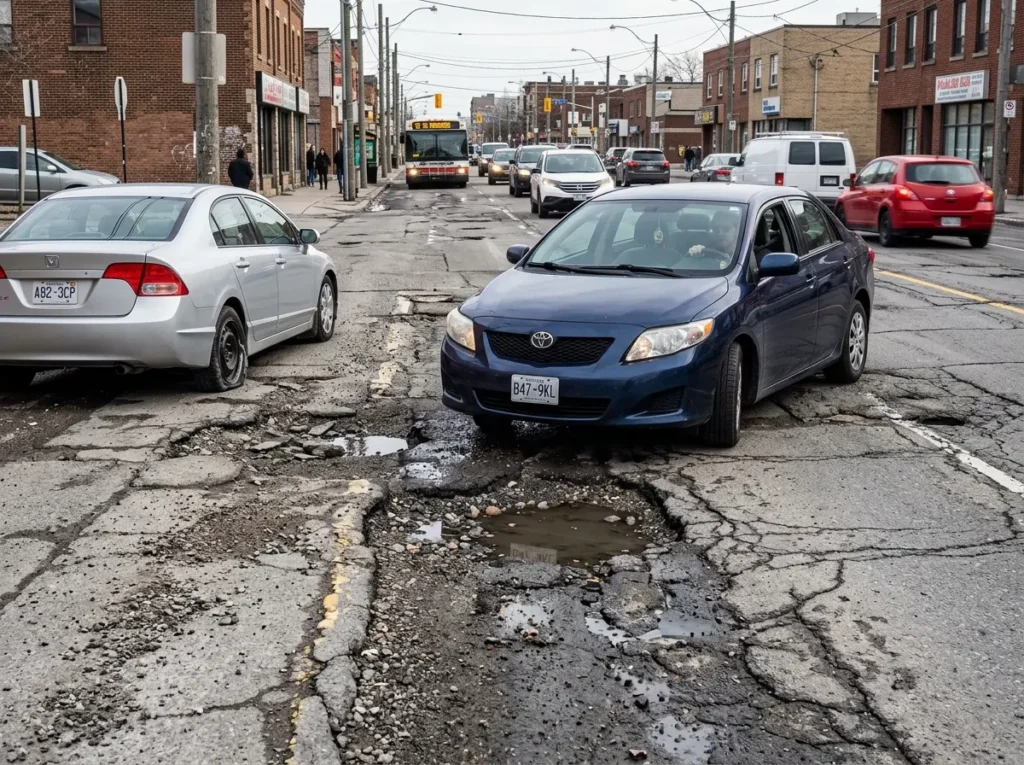
Milwaukee’s road infrastructure is under significant stress from the combined effects of heavy traffic, freeze-thaw cycles that crack and heave pavement, and aging infrastructure in many neighborhoods.
Milwaukee’s pothole season typically January through April produces road surface defects that can cause tire blowouts, wheel damage, loss of vehicle control, and accidents when drivers swerve suddenly to avoid a pothole and enter an adjacent lane without warning.
Poor road conditions accidents in Milwaukee involve both direct damage, a tire blowout from a deep pothole hit at highway speed and indirect crashes caused by evasive maneuvers. A driver who hits a large pothole on I-94 and swerves violently creates a hazard for vehicles in adjacent lanes that may not have been able to anticipate the movement. The pothole itself causes the first loss of control; the secondary collision with another vehicle is the crash in the data.
Defensive Driving Response to Road Condition Hazards
- Scan further ahead than usual on Milwaukee arterials during pothole season, looking 15 to 20 seconds ahead allows you to see surface defects and navigate around them smoothly rather than reacting suddenly
- Slow down in areas you know have poor road surfaces the damage from hitting a pothole at 40 mph is dramatically more severe than at 25 mph
- Report potholes on Milwaukee city roads to the Milwaukee Department of Public Works (DPW), the city tracks reports and prioritizes repairs based on volume and severity
- Check tire pressure regularly during pothole season, underinflated tires are significantly more susceptible to pothole damage and blowouts
After a Milwaukee Accident: What to Do and How to Get Your Vehicle Recovered?
Understanding what causes accidents is the prevention side of traffic safety. Knowing what to do after an accident is the response side and in Milwaukee, where high-traffic arterials and highway corridors mean accident scenes can become secondary hazard zones quickly, the post-accident response matters enormously.
Immediate Steps After a Collision in Milwaukee
- Check yourself and all passengers for injury before any other action, do not move anyone who may have a spinal or head injury
- Move vehicles out of travel lanes if they can be driven and it is safe to do so leaving a vehicle in a live travel lane on I-94 or Capitol Drive creates immediate secondary crash risk
- Turn on hazard lights immediately, regardless of whether the vehicle can be moved
- Call 911 for any injury, any blockage of a travel lane, or any significant property damage Milwaukee Police Department reports are required for insurance purposes and for hit-and-run documentation
- Do not admit fault or make statements about the crash beyond factual descriptions to police, fault determination is for insurers and courts
- Document the scene thoroughly with photographs before vehicles are moved when safe: vehicle positions, road conditions, traffic control devices, skid marks, and damage to all vehicles
- Exchange insurance, license, and contact information with all involved drivers
Accident Towing Services in Milwaukee
When a vehicle is undriveable after a Milwaukee collision, professional accident towing services ensure the vehicle is handled safely, documented properly, and transported to the right destination. MG Towing and Recovery provides collision towing service in Milwaukee with operators trained in the specific requirements of post-accident vehicle handling:
- Pre-tow documentation of the vehicle’s condition and position before movement
- Correct towing method for the vehicle type, flatbed towing for AWD, luxury, and significantly damaged vehicles
- Careful handling of vehicles with deployed airbags, fluid leaks, or structural damage
- 24/7 availability for emergency towing after accidents on I-94, I-43, I-894, Milwaukee arterials, and city streets
- Coordination with Milwaukee Police Department when the scene requires it
If your vehicle has been in an accident and is blocking traffic on I-94 or another Milwaukee highway, call both 911 and MG Towing & Recovery simultaneously, police will manage the scene while we dispatch the tow truck, minimizing total time in the hazard zone.
| Tow Truck After Accident: Know Your Rights: In Wisconsin, you have the right to choose your own towing company after an accident. If police dispatch a tow truck before you have made your own call, you are not obligated to use that company. You may request a specific tow provider. Additionally, if your vehicle is towed to an impound lot, storage fees begin accruing immediately, contact your insurer and arrange release or transport to your preferred facility as quickly as possible to minimize storage costs. |
Need Immediate Accident Towing in Milwaukee? Call MG Towing & Recovery Now — 24/7 Fast Response, Safe Vehicle Handling. Call Now: 414-973-1902
Quick Reference: Milwaukee’s Top Accident Causes and the Defensive Counter
| Cause | How It Happens in Milwaukee | Key Defensive Counter |
| Distracted driving | Phone use on wide arterials; intersection inattention | Phone on DND; 4-sec following distance; intersection pause |
| Speeding | Wide lanes invite excess speed; speed in poor conditions | Match speed to environment; reduce in rain/snow/night |
| Drunk/impaired driving | Late-night entertainment corridors; weekend evenings | Avoid high-risk roads late-night; plan sober transport |
| Reckless/aggressive driving | Highway weaving; street racing; tailgating culture | Stay right on highways; disengage from aggressors |
| Red-light running | Documented at Capitol Dr, N. 27th St, SR-59 | Intersection pause on green; never be first to accelerate hard |
| Winter weather | Black ice; first-snow; lake-effect squalls; plow effects | Triple following distance; reduce speed; test brakes early |
| Tailgating | I-94 congestion; arterial rush hour compression | Four-second rule; double/triple in wet/snow conditions |
| Low visibility | Night on unlit roads; fog near river corridors; heavy rain | Low beams in fog; drive within headlights; exit in severe fog |
| Poor road conditions | Pothole season Jan–Apr; sudden swerves; tire blowouts | Scan ahead; slow in known bad-surface areas; check tire pressure |
Frequently Asked Questions: Milwaukee Car Accidents
What is the most common cause of car accidents in Milwaukee?
Distracted driving, primarily smartphone use is the most commonly cited contributing factor in Wisconsin crash reports and leads Milwaukee’s behavioral crash causes. However, in terms of fatal crash outcomes, speed is the most significant amplifier: crashes involving distracted or impaired drivers at high speeds produce dramatically worse outcomes than the same behavioral failure at low speeds.
When are car accidents most likely to happen in Milwaukee?
Milwaukee crash data shows two distinct peak periods. Weekday afternoon and evening rush hours roughly 3 p.m. to 7 p.m. produce the highest volume of crashes, driven by traffic density, commuter fatigue, and the intersection of daytime and early-night visibility conditions.
Late Friday and Saturday nights 11 p.m. to 3 a.m. produce the highest rate of fatal and serious-injury crashes relative to traffic volume, driven by impaired driving. Winter weekday mornings from November through February are the third elevated period, driven by weather conditions.
Are Milwaukee highways or city streets more dangerous?
By raw crash count, Milwaukee city streets produce more total crashes due to the volume of intersections and cross-traffic interactions. By fatal crash rate crashes per mile traveled, Milwaukee’s highway corridors, particularly I-94 and segments of I-43, produce higher fatality rates because crash speeds are higher.
What should I do if my car is undriveable after an accident in Milwaukee?
Once the immediate safety steps are taken checking for injuries, calling 911, turning on hazard lights, call MG Towing and Recovery for emergency accident towing service.
Describe your location accurately (street intersection or highway mile marker), confirm your vehicle type so the correct tow equipment is dispatched, and remain with the vehicle with your seatbelt fastened until help arrives. Do not attempt to push or move a significantly damaged vehicle by hand in a live traffic environment.
Does Milwaukee have traffic cameras or speed cameras?
Milwaukee has red-light cameras at selected high-crash intersections these are primarily used for enforcement and evidence in crash investigations.
Wisconsin state law currently prohibits speed cameras on public roads, a restriction Milwaukee officials have publicly advocated to change given the city’s elevated speed-related crash rate. Construction zones on I-94 have Wisconsin State Patrol enforcement patrols with doubled fines for violations.
Understanding the Causes Is the First Step to Avoiding Them
The nine causes covered in this guide account for the overwhelming majority of Milwaukee traffic accidents. None of them are mysterious each has a clear mechanism, a clear risk environment, and a clear defensive driving response.
The drivers who go years without a crash in Milwaukee’s challenging road environment are not lucky. They are the ones who understand these causes deeply enough to recognize the risk before it becomes a crash.
Distracted driving, speed, impairment, recklessness, signal non-compliance, winter conditions, tailgating, low visibility, and poor road surfaces, these are the forces working against safe travel on Milwaukee roads every single day. The awareness you bring to each of them is the most powerful safety technology available to you.
Been in an Accident in Milwaukee? We’re Ready to Help.
MG Transportation LLC — 24/7 Accident Towing & Emergency Roadside Assistance, Milwaukee