


The Complete Milwaukee Driver’s Guide to Dead Batteries, Starting Problems & Emergency Jumpstart Help
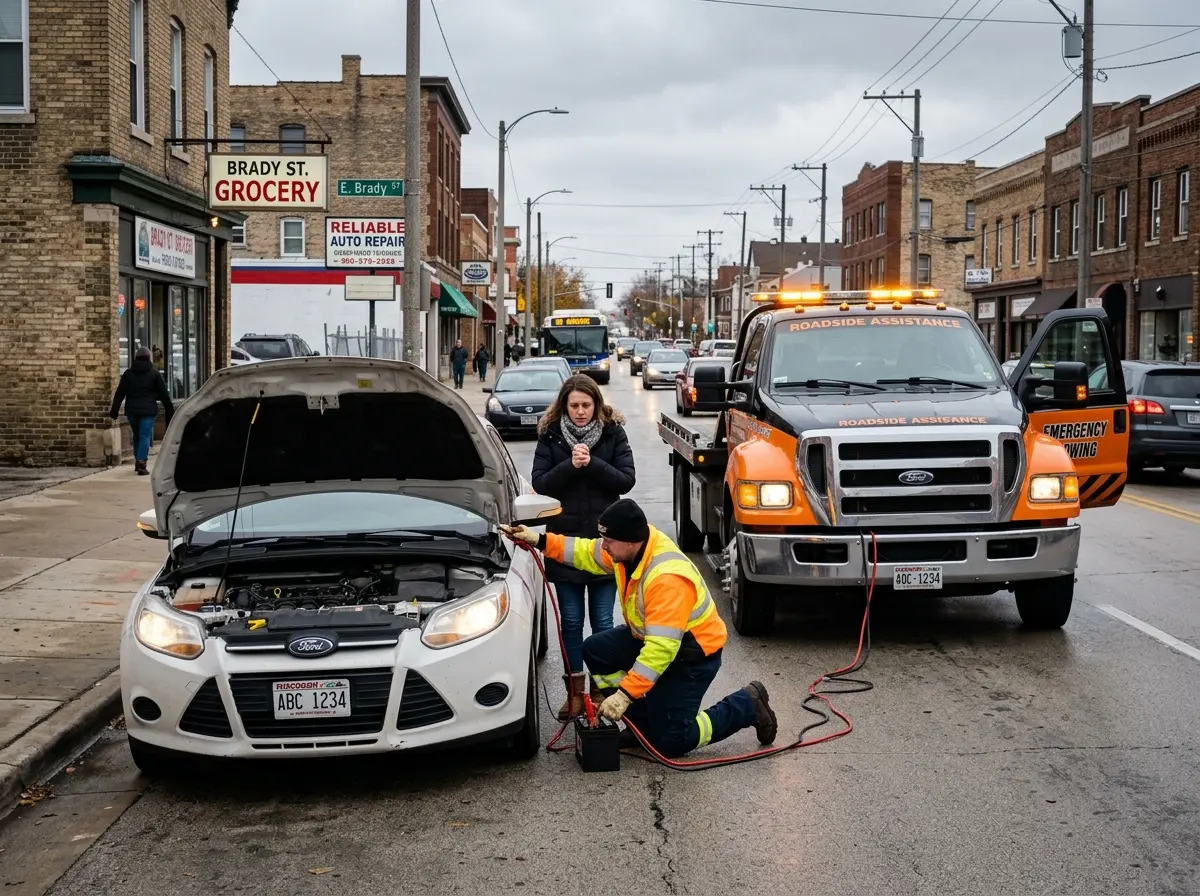
You are running five minutes behind schedule, you slide into the driver’s seat, turn the key and nothing happens. Or worse, you get a rapid-fire clicking sound, a slow groaning crank, and then silence. Your car will not start. In that moment, the first question most drivers ask themselves is: is it the battery?
Dead car battery issues are the single most common cause of a vehicle that will not start. According to roadside assistance data, battery-related calls make up approximately 40 percent of all emergency roadside assistance requests nationwide and in Milwaukee, that number climbs even higher in the winter months when sub-zero temperatures accelerate battery failure.
Knowing how to recognize a dead or failing battery quickly and understanding when a jumpstart will solve the problem versus when something more serious is happening, is knowledge every driver should have.
This guide covers the top warning signs that your car battery is dead or dying, how to identify whether a jump start will fix the issue, how the jumpstart process works, what cold weather does to your battery, what it costs to get professional jumpstart service in Milwaukee, and how to keep your battery healthy so you are never caught off guard. Whether your car won’t start right now or you want to be prepared before it happens, this is the guide you need.
Related Articles:
Locked Out of Your Car? Step-by-Step Guide for Milwaukee Drivers
Ran Out of Gas on a Milwaukee Highway? Here’s What to Do
What to Do If You Get a Flat Tire on the Road?
Stuck in Snow in Wisconsin? How to Handle It Safely
Top Signs Your Car Has a Dead or Failing Battery
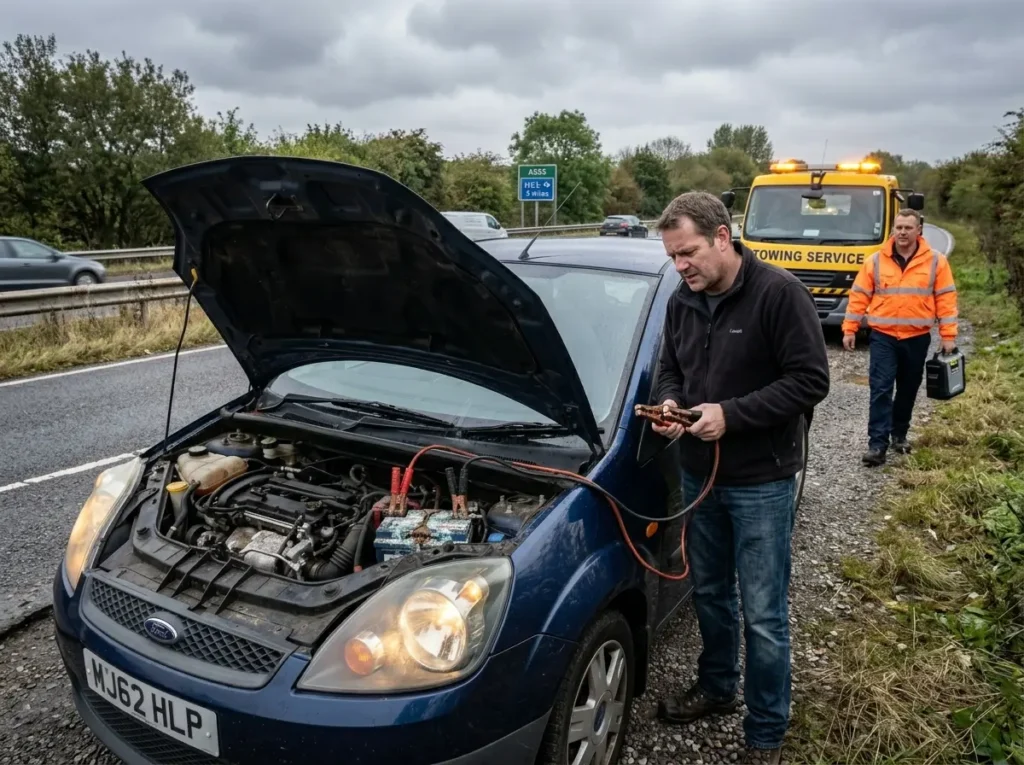
Not every no-start situation means your battery is dead. But the battery is the most common culprit, and these specific symptoms are strong indicators that a jump start service is what you need rather than a tow to a repair shop.
1. Rapid Clicking Sound When Starting the Car
This is arguably the most recognizable sign of a dead car battery, and almost every driver has heard it at least once. When you turn the key or press the start button and hear a rapid series of clicks often described as the sound of a typewriter or a machine gun that is the starter solenoid firing repeatedly without enough power from the battery to actually engage the starter motor.
Each click represents the solenoid attempting to connect and failing due to insufficient voltage. A fully dead battery may produce only one or two loud clicks, while a partially discharged battery produces the rapid multiple-click pattern. Both are strong indicators of a battery problem and both respond well to a professional jump start service.
2. Slow, Labored Engine Cranking
If your engine cranks meaning you can hear the starter motor turning over but does so very slowly, as though the car is working extremely hard just to try to start, your battery is low on charge.
A healthy battery delivers strong, quick cranking. A weak car battery produces a slow, dragging, increasingly sluggish crank that may eventually stop altogether.
This symptom is particularly common on cold Wisconsin mornings when a battery that is borderline functional during warmer weather reveals its weakness under the added strain of cold temperatures.
If you recognize this sound, do not ignore it a battery showing weak car battery signs like slow cranking is usually days or weeks away from complete failure.
3. No Sound, No Crank – Complete Silence
When you turn the key and absolutely nothing happens no clicking, no cranking, no sound at all the battery may be completely dead or there may be a severe connection issue.
Complete silence points to total voltage loss: there is simply not enough electricity reaching any of the vehicle’s systems to produce a response.
Before assuming the worst, check two things: first, are all the doors and the trunk fully closed? Modern vehicles often have safety interlocks that prevent starting if a door is ajar.
Second, is the gear selector fully in Park (for automatics) or is the clutch pedal fully depressed (for manuals)? If everything checks out and there is still complete silence, this is a dead battery situation requiring jump start car service.
4. Dim or Flickering Dashboard Lights and Electrical Issues
Your vehicle’s electrical system is powered by the battery even before the engine starts. If you notice dashboard lights that are unusually dim when you turn the ignition to the accessory position, interior lights that seem weaker than normal, or electrical features that are behaving erratically power windows moving slowly, radio cutting in and out, clock resetting these are car battery failure symptoms pointing to low voltage.
A healthy 12-volt battery should read approximately 12.4 to 12.7 volts when the engine is off. Dashboard electrical behavior typically starts showing signs of weakness below 12 volts, and many systems begin failing below 11.5 volts. If your electrical accessories are behaving strangely without any other explanation, battery health should be your first investigation.
5. The Engine Starts Then Dies Immediately
A scenario that confuses many drivers is when the engine briefly fires and then dies within one or two seconds of starting. This can be caused by several issues, but a failing battery one that can provide just enough power to fire the engine but not enough to keep it running until the alternator takes over is a common culprit.
The alternator is responsible for maintaining battery charge once the engine is running. If the battery is too depleted to sustain the initial moments before the alternator engages, the engine will die.
A successful jump start often resolves this by providing enough external charge to bridge that gap though it may also indicate the battery needs replacement rather than just a recharge.
6. Swollen, Corroded, or Visibly Damaged Battery
If you pop the hood and examine your battery, visual clues can confirm that the battery is the source of your trouble. Signs to look for include:
- White, blue, or greenish corrosion around the battery terminals this residue interferes with electrical conductivity and can prevent a full charge from reaching the vehicle
- A swollen or bloated battery case, this indicates the battery has been exposed to excessive heat or has been overcharged, and the battery cells are compromised
- Cracks or leaks in the battery casing, a damaged battery is a safety hazard and needs replacement immediately
- Loose or disconnected battery cables, sometimes the issue is simply a connection that has worked loose, particularly after driving on rough Milwaukee roads
Corroded terminals can sometimes be cleaned to restore a connection, but a swollen, cracked, or leaking battery should never be jumped it needs replacement by a professional.
7. The Battery Warning Light Is On
Modern vehicles have a battery or charging system warning light typically shaped like a battery symbol that illuminates on the dashboard when the vehicle’s electrical system detects a problem.
If this light is on while driving, it usually indicates the alternator is not charging the battery properly rather than a dead battery per se. However, if this light comes on and the car later fails to start, the two events are connected.
A battery warning light that has been on for several days while you continued driving may result in a battery that was slowly drained because the alternator was no longer maintaining it. In this case, a jump start gets you mobile, but the underlying alternator issue still needs to be addressed at a shop.
Signs That a Jump Start Will NOT Fix the Problem
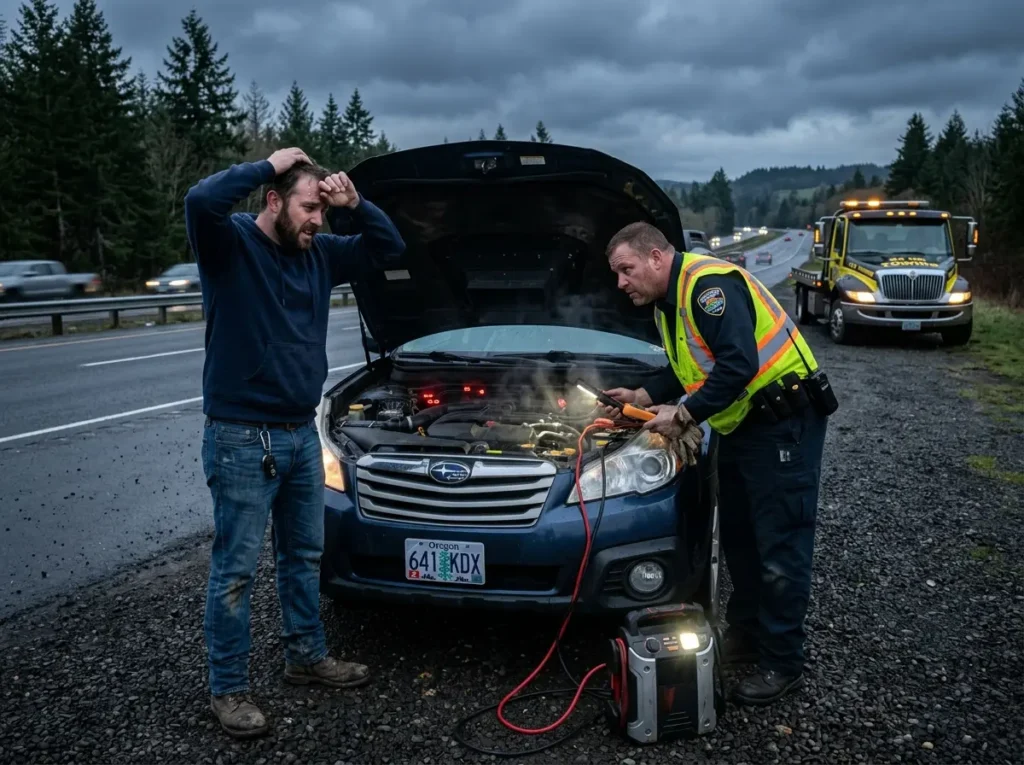
Not every no-start situation is a battery issue. Knowing when a jump start is not the solution saves you time and frustration, and helps you make the right call for professional service.
Here are the most common non-battery causes of a car that will not start situations where a tow to a repair shop is the appropriate next step rather than a jump start service.
1. Starter Motor Failure
A single loud click not a rapid series of clicks, but one definitive clunk when you turn the key is a classic sign of starter motor failure.
The battery may be fully charged, but the starter motor that actually cranks the engine has failed mechanically. A jump start will not resolve a dead starter the vehicle needs to be towed to a repair facility.
2. Fuel System Problems
If the engine cranks normally strong, quick turns but the car still will not fire and run, the issue is likely not the battery at all. A fuel system problem empty tank, failed fuel pump, clogged fuel filter, or a fuel injector issue prevents combustion regardless of how much power the battery provides.
Listen carefully to whether the engine is actually cranking. If it cranks well but does not start, the engine itself is getting power and the battery is probably fine.
3. Ignition System Issues
A failed ignition switch, a broken ignition key transponder, or an immobilizer problem can all prevent the engine from starting despite a fully charged battery.
Many modern vehicles have sophisticated immobilizer systems that will prevent starting if the key fob battery is dead or if the transponder chip is not recognized. If the security light flashes rapidly when you try to start, an immobilizer issue rather than the car battery jumpstart need may be what is going on.
4. Seized Engine
If you turn the key and the starter motor makes a grinding noise or the engine feels impossibly stiff to turn over, the engine may be seized meaning internal components have locked up due to oil starvation, coolant intrusion, or mechanical failure. This is a serious mechanical emergency that requires towing, not jumping.
| Quick Diagnostic Tip: Before calling for any service, try this quick check: turn on your headlights. If they are very dim or do not come on at all, the battery is almost certainly the issue, proceed with a jump start request. If the headlights are bright and normal but the car still will not start, the problem is likely not the battery. Describing this observation to the dispatcher helps them send the right service. |
Car Won’t Start in Milwaukee? We Are Ready to Help. MG Towing and Recovery – 24/7 Emergency Jumpstart Service, Milwaukee & Surrounding Area. Call Now: 414-973-1902
Car Battery Problems in Milwaukee Winters: What Cold Does to Your Battery?
If there is one city where understanding winter car starting problems is non-negotiable, it is Milwaukee. Wisconsin winters are genuinely hard on car batteries, and Milwaukee drivers experience a predictable surge of dead battery assistance calls every year from November through February.
The Science of Cold Weather Battery Failure
A car battery works through a chemical reaction between lead plates and sulfuric acid electrolyte. Cold temperatures slow this chemical reaction dramatically, reducing the battery’s ability to deliver the burst of current needed to start an engine.
At 32 degrees Fahrenheit, a lead-acid battery loses roughly 20 percent of its available power. At zero degrees a common winter temperature in Milwaukee it loses approximately 50 percent. At minus 10 degrees Fahrenheit, cold weather battery failure can affect even relatively healthy batteries.
At the same time, cold temperatures make your engine harder to start the oil is thicker, the engine components are contracted, and more energy is required to crank the engine over.
You have a battery delivering less power being asked to do more work. The result is cold weather battery failure at temperatures that the same battery handled fine during summer.
Winter Car Starting Problems Specific to Milwaukee
Milwaukee’s winter conditions create several battery-related starting problem patterns that local drivers recognize:
- The overnight dead: A battery that started the car fine yesterday dies completely overnight when temperatures drop suddenly. This is extremely common in Milwaukee during the first hard freeze of the season, when batteries weakened during summer heat reveal their true state.
- The morning struggle: The car starts but cranks slowly and barely catches. This usually means the battery is borderline and will fail completely within days or weeks as winter deepens.
- The warming-up death: The car starts, you let it warm up, turn it off to go back inside, and it will not restart. Short trips that do not fully recharge the battery between starts can deplete it cycle by cycle.
- The post-storm failure: Temperatures drop sharply after a snowstorm, and a battery that was holding on at 35 degrees cannot handle 5 degrees. Calls for car battery jumpstart service in Milwaukee spike immediately after the first significant cold snap of each season.
How Cold Weather Affects Battery Age?
Battery manufacturers rate batteries by Cold Cranking Amp the amount of current a battery can deliver at zero degrees Fahrenheit for 30 seconds. A new battery with a high CCA rating handles Milwaukee winters well. But batteries lose capacity with each charge-discharge cycle and with age, and a battery that is three or more years old may have lost enough CCA capacity that it functions acceptably in summer but fails completely in a Wisconsin winter.
If your battery is three years old or older and you have not had it tested recently, autumn is the right time to test it before Milwaukee’s first freeze, not after you are stranded in a parking lot at 7 a.m. in January.
| Milwaukee Winter Battery Warning: The most dangerous dead battery scenario in Wisconsin winter is one that happens at night in a remote or exposed location during a cold snap. If you are planning a trip during a period of extreme cold and your battery is over three years old or has been showing weak signs, have it tested or replaced before you go. |
How Professional Jumpstart Service Works?
Many drivers have jumped a battery with cables from a friend’s car at some point. Professional emergency jumpstart service in Milwaukee takes that basic concept and applies it with the right equipment, the right technique, and the expertise to handle modern vehicle electronics safely.
What a Professional Technician Brings?
A professional mobile battery jumpstart technician arrives with equipment specifically designed for the task either a high-capacity portable lithium jump starter pack or connection cables attached to the service vehicle’s own battery system.
These devices provide a clean, controlled surge of current that is safer for modern vehicle electronics than the unregulated power delivery of a standard set of jumper cables connected to another car.
Modern vehicles with advanced electronics particularly those with start-stop technology, AGM or EFB batteries, or sophisticated battery management systems can be damaged by incorrect jumping procedures.
A professional technician understands these requirements and uses the correct approach for your specific vehicle.
The Jumpstart Process Step by Step
- The technician arrives and checks your vehicle’s battery condition, including terminal corrosion, cable connections, and basic diagnostic information.
- If corrosion is found on the battery terminals, it is cleaned to ensure a safe and proper electrical connection.
- The jump-start process begins with correct cable placement. The positive cable is connected to the dead battery’s positive terminal and then to the positive terminal of the power source. The negative cable is attached to the power source’s negative terminal and then secured to an unpainted metal ground point on the engine block instead of the dead battery’s negative terminal.
- After the connections are made, the technician waits briefly to allow a partial charge to build before attempting to start the engine.
- The vehicle is then started. A successful start indicates that the battery still had enough charge to respond to the jump-start.
- Once the engine is running, the cables are removed carefully in the reverse order of connection.
- The technician may perform a quick battery test to check its overall health and determine whether the battery is simply discharged or needs replacement.
- Finally, you are advised to drive the vehicle for at least 20 to 30 minutes so the alternator can recharge the battery before turning off the engine again.
After the Jump Start: What You Should Do
A successful jump start is not always the end of the story. Here is what to do in the hours after your vehicle is jump-started:
- Drive continuously for at least 20 to 30 minutes, as short trips do not give the alternator enough time to properly recharge the battery.
- Get the battery tested at an auto parts store or repair shop, where many locations offer free testing to check battery health and determine if a replacement is needed.
- If the battery dies again within a few hours or days, it is likely at the end of its life and should be replaced, since a jump start is only a temporary solution and not a permanent fix.
- If the vehicle stalls while driving shortly after a jump start, the alternator may be failing. In this case, arrange for a tow to a repair shop before the battery drains completely again.
| Important: Drive After the Jump: One of the most common mistakes drivers make after a professional jump start is immediately making another short trip or going back into a building for an extended period. Your battery needs sustained driving time at least 20 to 30 minutes of highway-speed driving to recharge meaningfully through the alternator. If you only drive five minutes home and park, you may find the car dead again the next morning. |
Jumpstart Service Cost in Milwaukee: What to Expect
Understanding the cost of professional jumpstart service in Milwaukee helps you know what fair pricing looks like and what factors affect the final price.
| Service | Typical Cost Range | Notes |
| Standard jump start (daytime) | $50 – $80 | Most common scenario |
| After-hours jump start | $70 – $120 | Night, weekend, holiday surcharge |
| Jump start + battery test | $60 – $100 | Includes on-site diagnostic test |
| Mobile battery replacement (on-site) | $120 – $250+ | Includes new battery and installation |
| Jump start via tow truck | $75 – $125 | If tow truck is dispatched for the service |
| Covered by roadside plan (AAA / insurance) | $0 – minimal co-pay | Verify your specific plan’s coverage |
Is Jumpstart Service Covered by Insurance or Roadside Plans?
Jump start service is one of the most commonly covered roadside assistance benefits. Before paying out of pocket, check these potential sources:
- Auto insurance roadside endorsement: Most roadside assistance add-ons include jump start services as a standard benefit, often without requiring a deductible.
- AAA membership: All membership levels include jump start assistance, while higher tiers may also offer battery testing and discounts on battery replacement.
- Credit card roadside benefits: Some major credit cards provide jump start coverage as part of their roadside assistance perks. It is recommended to review your card’s benefits guide for details.
- New vehicle warranty: Many new vehicles come with roadside assistance programs that include jump start services for the first few years of ownership.
- Manufacturer apps: Services such as FordPass, OnStar, Toyota Connected Services, and similar platforms can arrange jump start assistance through authorized service networks.
For affordable jumpstart service in Milwaukee, MG Towing & Recovery offers transparent, flat-rate pricing with no hidden fees. We quote our service fee before dispatching, and we accept credit cards, debit cards, and cash never cash only.
Battery Maintenance Tips to Prevent Dead Battery Emergencies
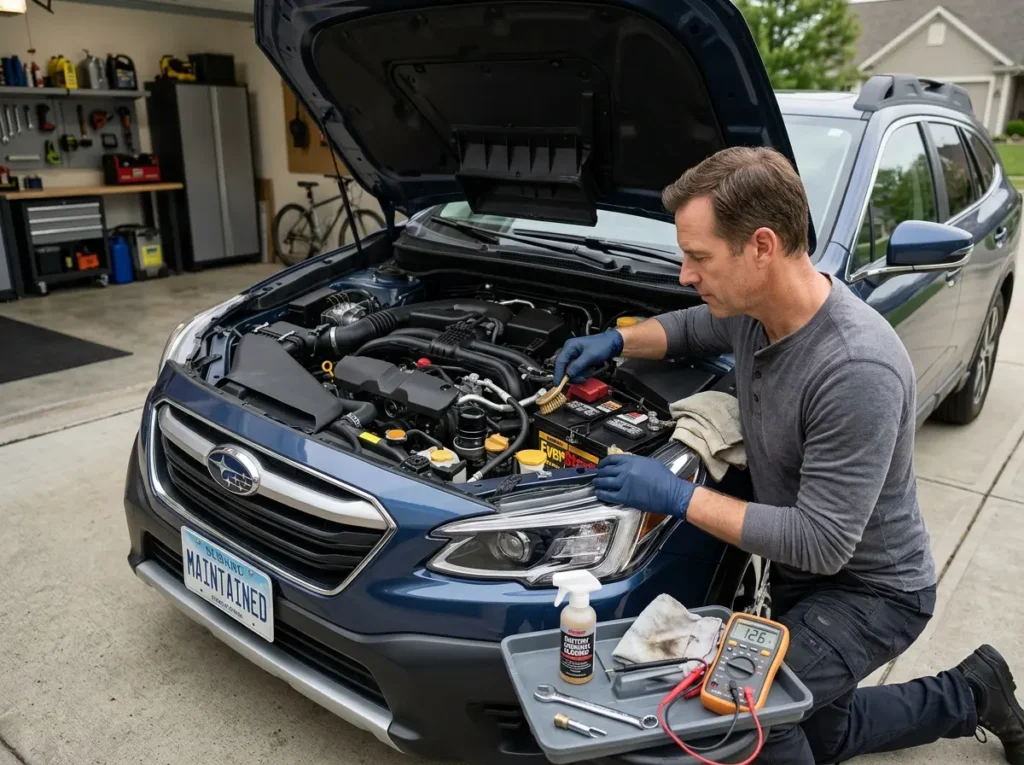
The best jump start is the one you never need. These battery care habits are especially important for Milwaukee drivers facing the specific challenges of Wisconsin winters.
1. Test Your Battery Every Autumn
The single most impactful battery maintenance habit for Milwaukee drivers is having your battery professionally tested before Wisconsin’s first hard freeze.
Most auto parts stores including AutoZone, O’Reilly, and Advance Auto Parts offer free battery testing. A test reveals the battery’s current charge, its actual capacity compared to its rated capacity, and whether it is at risk of imminent failure. A battery flagged as marginal in October should be replaced before January, not after you are stranded.
2. Know Your Battery’s Age
Car batteries have a typical service life of three to five years in moderate climates. In Milwaukee’s climate with hot summers that accelerate chemical degradation and cold winters that put extraordinary starting demands on the battery the realistic end of useful life is closer to three to four years.
Keep a note of when your battery was installed or last replaced, and begin testing annually once it reaches three years old.
3. Keep Terminals Clean and Connections Tight
Corrosion on battery terminals is one of the most preventable causes of battery-related starting problems. A thin layer of corrosion significantly increases electrical resistance at the connection, reducing the effective power delivered to the starter.
Clean terminals once or twice a year using a battery terminal brush and a mixture of baking soda and water, and apply a thin coat of petroleum jelly or terminal protector spray afterward to slow future corrosion buildup.
Also check that battery cable connections are tight, vibration from Milwaukee’s rough roads can work connections loose over time. A loose negative ground cable produces symptoms identical to a dead battery even when the battery itself is fully charged.
4. Avoid Excessive Short-Trip Driving in Winter
Every engine start draws a significant amount of charge from the battery. The alternator recharges that charge during driving, but needs a sustained period of operation to do so effectively.
If your daily routine consists primarily of very short trips under five miles particularly in cold weather when the battery starts at reduced capacity, you may be slowly depleting the battery cycle by cycle without fully recharging it.
If short-trip driving is unavoidable, consider using a battery maintainer or trickle charger overnight during winter months to keep the battery at full capacity. These inexpensive devices plug into a standard outlet and maintain optimal battery charge without overcharging.
5. Turn Off All Accessories Before Leaving the Vehicle
Interior lights, headlights left on, phone chargers, and other accessories left running while the engine is off draw continuous charge from the battery.
Modern vehicles have automatic shutoffs for many systems, but not all. Before leaving your vehicle, confirm that headlights are off, the radio is off, and any accessories plugged into the 12-volt port are removed or the port’s fuse is pulled if you will not be driving for an extended period.
FAQs: Car Won’t Start in Milwaukee
Q. How long does a professional jump start service take in Milwaukee?
The actual jump start process takes about ten to fifteen minutes from the technician’s arrival. Response time from a local provider like MG Towing and Recovery is typically 30 to 45 minutes for most Milwaukee locations.
Q. My car started after a jump but died again twenty minutes later. What does that mean?
If your car dies again within twenty to thirty minutes of a jump start, the alternator is almost certainly failing and not recharging the battery while the engine runs. The jump start gave the battery enough charge to start the engine, but with no recharging happening, the battery depleted again as you drove.
Do not attempt another jump start for a long trip arrange a tow to a repair shop to have the alternator tested and replaced. Driving further on a dying alternator risks being stranded in a worse location.
Q. Can I damage my car by jumpstarting it incorrectly?
Yes. Connecting jumper cables in the wrong order or to the wrong terminals can cause sparks, damage sensitive vehicle electronics, damage the battery of the vehicle being used to jump yours, and in rare cases cause a battery to rupture.
Q. How do I know if I need a new battery or just a jump start?
A jump start is appropriate when the battery has simply discharged from leaving a light on, extreme cold, or failing to charge after short trips. If the battery tests healthy after being recharged and the car runs normally, a replacement may not be needed yet. If the battery has failed cells, is over four years old, tests below 70 percent capacity, or dies again within days of a jump start, replacement is the correct course of action.
Q. Does MG Towing and Recovery provide jumpstart service in all Milwaukee neighborhoods?
Yes. MG Towing and Recovery provides 24/7 emergency jumpstart service across all Milwaukee neighborhoods and the surrounding metro area. Whether you are downtown, in a suburban shopping center, in a residential neighborhood, or on a highway, our local dispatchers send a technician from the nearest available location to reach you as quickly as possible.